


Note: This episode was originally published on October 8, 2025 and was one of our most popular conversations over the last 12 months. We're currently taking a summer break for the month of July, but we will be back with new episodes starting on August 5th.
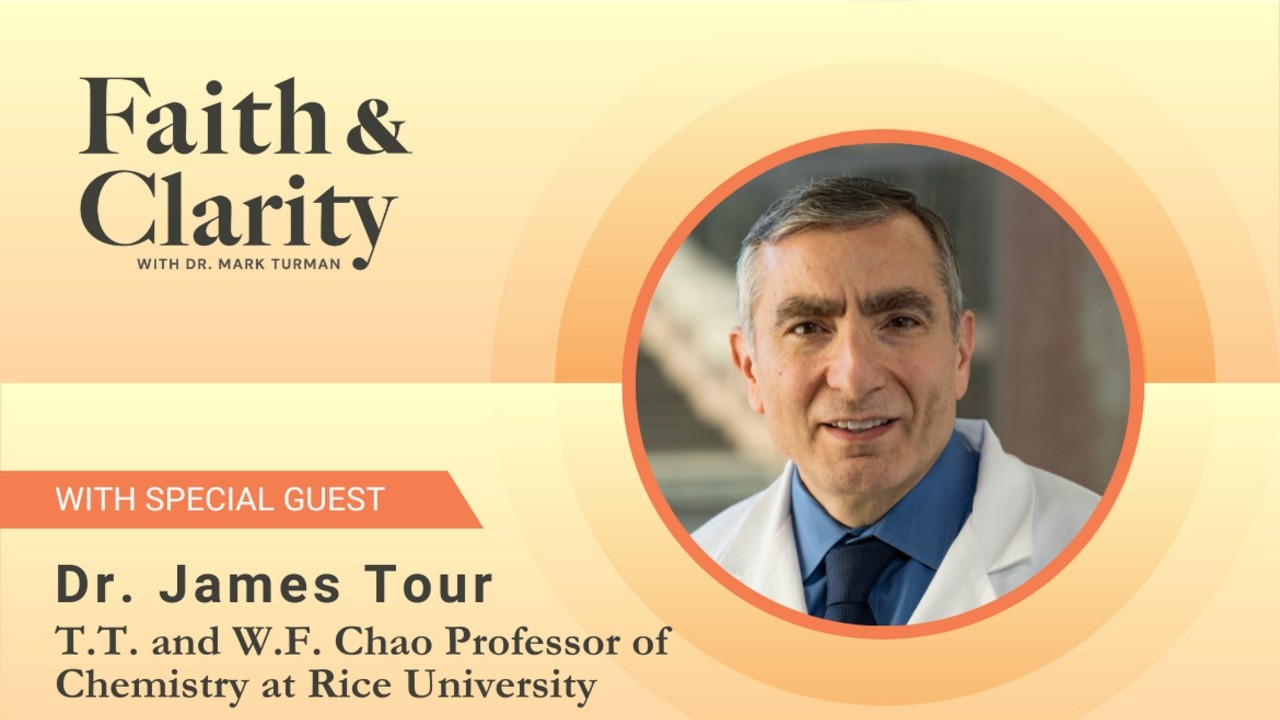
Dr. Mark Turman sits down with world-renowned scientist Dr. James Tour for a conversation that bridges faith and science in remarkable ways. Dr. Tour shares his story of coming to faith in Jesus—how a secular Jewish student became a passionate follower of Christ—and what that journey has taught him about truth, reason, and grace.
Together, they talk about the mysteries of life’s origin, the promises and pitfalls of artificial intelligence, and how Christian hospitality can open hearts to the gospel. Dr. Tour also reflects on his pioneering work in nanotechnology at Rice University and offers wisdom for students and parents seeking to hold onto faith in the world of higher education.
It’s a thoughtful, hope-filled dialogue about what it means to follow Jesus with both mind and heart.



Topics
(0:00) Introduction
(1:48) Meet Dr. James Tour
(3:20) From Judaism to Jesus
(12:28) Discipleship and church
(27:28) Hospitality as ministry
(34:29) Science meets faith
(42:42) Nanomachines vs. superbugs
(45:41) Origin of life debate
(49:10) Evolution and fossils
(57:56) AI jobs and society
(1:11:18) Conclusion
Resources
- Jesus and Science Foundation
- Personal Website: https://jmtour.com
- Dr. James Tour – YouTube
- Dr James Tour- Facebook
- Dr James Tour (@drjamestour) • Instagram photos and videos
- Dr James Tour (@DrJamesTour) / X
- Dr James Tour : Discord
- Apple Podcasts
- Spotify
- Dr. Tour’s weekly email newsletter
- Ask Us Anything: [email protected]
- Sign-up for a Denison Forum newsletter: DenisonForum.org/subscribe
About Dr. James Tour
Professor James Tour is the T. T. and W. F. Chao Professor of Chemistry, Professor of Computer Science, and Professor of Materials Science and NanoEngineering at Rice University in Houston, Texas. Professor Tour has over 800 research publications, over 140 granted patents, and over 100 pending patents. His h-index is 178, with total citations over 150,000. He is a member of the National Academy of Engineering and a Fellow of the Royal Society of Chemistry. His research group works in materials science, energy, medicine, electronics, and single-molecule nanomachines. He founded 17 companies based on his academic research, three of which are now public companies.
In addition to this, he has an active social media presence, @drjamestour, spanning YouTube, Instagram, TikTok, Rumble, Facebook, and X. In 2024, on YouTube alone, there were 24 million views of his content for over 2 million viewed hours, which spans topics on science, faith, and the origin of life. For 10 years, Professor Tour led weekly Bible studies in the living units of maximum-security prisons.
He has been teaching a weekly Bible study to college students for the past 26 years, and he and his wife, Shireen, have served about 75 meals to students per week in their home for that entire time. They also distribute dozens of weekly meals to local cancer patients residing in church facilities and elderly shut-ins in Houston.
About Dr. Mark Turman
Dr. Mark Turman serves as the Executive Director of Denison Forum, where he leads with a passion for equipping believers to navigate today’s complex culture with biblical truth. He is best known as the host of the Faith & Clarity podcast and the lead pastor of the Possum Kingdom Lake Chapel, the in-person congregation of Denison Ministries.
Dr. Turman is the coauthor of Sacred Sexuality: Reclaiming God’s Design and Who Am I? What the Bible Says About Identity and Why it Matters. He earned his undergraduate degree from Howard Payne University in Brownwood, Texas, and received his Master of Divinity degree from Southwestern Baptist Theological Seminary in Fort Worth. He later completed his Doctor of Ministry degree at George W. Truett Theological Seminary at Baylor University in Waco.
Before joining Denison Forum, Mark served as a pastor for thirty-five years, including twenty-five years as the founding pastor of Crosspoint Church in McKinney, Texas. Mark and his high school sweetheart, Judi, married in 1986. They are proud parents of two adult children and grandparents to three grandchildren.
About Denison Forum
Denison Forum exists to thoughtfully engage the issues of our day from a biblical perspective, helping believers discern today’s news and culture through the lens of faith. Led by Dr. Jim Denison and a team of contributing writers, we offer trusted insight through The Daily Article, a daily email newsletter and podcast, along with articles, podcasts, interviews, books, and other resources. Together, these form a growing ecosystem of Christ-centered content that equips readers to respond to current events not with fear or partisanship, but with clarity, conviction, and hope. To learn more visit DenisonForum.org.
All episodes are produced by Sound of a Rose. For more information, you can visit soundofarose.com.
EPISODE TRANSCRIPT
NOTE: This transcript was AI-generated and has not been fully edited.
Mark Turman: [00:01:00] Hi friends, this is Mark. Welcome to Faith and Clarity. Summer is here, and like a lot of you, our team at Denison Forum is taking a little time to rest, recharge, and reconnect with family and friends. So for the month of July, we're going to be taking a step back from producing new episodes, but we're not leaving you without something great to listen to. Over the next four weeks, we're going to be bringing back some of our most popular Faith and Clarity conversations, episodes that clearly resonated with you and that we think are worth another listen, or maybe a first time listen if you're newer to the podcast. These conversations are about faith, culture, and the questions that matter most. We're grateful for every one of you who tunes in, shares episodes, and keeps engaging with the things we talk about here. This community means the world to us. So enjoy your summer, slow down when you can, and we'll be back with brand new episodes in August. Until then, let's get to one of your favorites.
Mark Turman: [01:06:00] Welcome to the Faith and Clarity podcast, a podcast of Denison Forum. I'm Dr. Mark Turman. Glad to have you along with us as we look to and through some of the headlines of our culture and help you to live by faith, not by fear. Uh, one of our mottos at Faith and Clarity is we want to help you think critically. We want to help you live faithfully for Christ and serve intentionally to bring about flourishing for you, for others, and for all that we can until Jesus comes again. We're going to do that today around, uh, a topic that I'm calling discovering some of the creative grace of God through the intersection of faith and science. We're into the school year now. College students are back, uh, hard at work. School kids all all ages and families are settling into the fall routine. And, uh, hopefully this will be a great year of learning for you, for your children, your grandchildren, for all of us as we move into a deeper season of learning. [02:03:00] You will probably recognize, some of you will, the familiar words of Psalm 19. The heavens declare the glory of God, the expanse proclaims the work of his hands. Day after day, they pour out speech, night after night, they communicate knowledge. The seventh verse of that same Psalm says, the instruction of the Lord is perfect, renewing one's life. The testimony of the Lord is trustworthy, making the inexperienced wise. And so we want to just read a little bit from God's two primary books, the book of scripture and the book of creation. My pastor taught me years ago when I first became a believer that God reveals himself through both the telescope and the microscope if you're willing in humble faith to look and to learn. And we're going to have a conversation about that today with, uh, a person that I became a fan of probably five or six years ago when somebody recommended that I read a book. I want to introduce to you this morning, Dr. James Tour, and there is a lot that I could say about him from his resume. I think the thing he would most want me to tell you first and foremost is that Dr. Tour is a worshiper of Jesus. He is also a diligent worker and a compelling witness for the glory of God, for the person of Jesus, and for the opportunity of salvation by grace. Uh, I'll have more to say about, uh, his accomplishments a little bit later in the podcast. But let me just introduce him as a brother in Christ and as a scientist who teaches at Rice University in Houston, Texas. So, Dr. Tour, we're glad to have you along with us. Welcome to the Faith and Clarity podcast.
Dr. James Tour: [03:47:00] Thank you so much, Mark. It's my pleasure to be here.
Mark Turman: [03:51:00] Well, it's a joy to have you. I have longed for this opportunity for a while since I became, uh, a person in the podcast world. But I just wanted to talk about faith from a very foundational level for a few minutes and how faith has become a part of your story. Uh, can you give us the background of where you're from, a little bit of your family of origin and, uh, how you came to be a follower of Christ?
Dr. James Tour: [04:19:00] Okay, sure, I can do that. I'd love to do that actually. So I, I come from a secular Jewish home. I was born in New York City. In fact, I was born in Manhattan. My first home was in the Bronx, but I really grew up in White Plains, which is just a suburb north of the city. Uh, and I came to know the Lord, uh, when I was 18, uh, as a freshman in college. It was, it was, uh, early on in my freshman year, and I met a young man who was with the Navigators campus ministry, and we got to talking and I, uh, uh, uh, he asked if he could give me an illustration of the gospel. And I didn't even quite know what he meant. And, uh, uh, but he gave me the bridge illustration of the gospel and had me read some Bible verses and the first verse that we read together was, uh, uh, for all have sinned and fall short of the glory of God. And I said to him, I'm not a sinner. Uh, I didn't feel like a sinner. Uh, as a, as a modern secular Jew, by secular Jew, I means that ethnically I was, uh, ethnically I'm Jewish, but I was only in a synagogue once or twice a year. So I was non-practicing. We never discussed sin in my home. We never discussed God. That was never a topic of of, uh, our conversations. [05:44:00] And so the the modern secular Jewish perspective is that little things aren't sin. I mean, and I told him, I never robbed a bank, I never killed anybody. How could I be a sinner? And so then he turned to to Matthew 5:28 and it says, Jesus said, I I tell you that everyone who looks at a woman with lust for her has committed adultery with her already in his heart. And, and, uh, I was addicted to pornography from the age of 14. I was working in a in a gas station, uh, along the highway just outside New York City and there was one on the northbound side of the road, one on the southbound side. I worked on both. My job was to clean the restrooms and the parking lots and at the age of 14 and I started finding these magazines that that men would throw out on their way home from work and and, uh, I became addicted. And so here I was 18 years old and and and deeply addicted to pornography and I didn't think anybody knew. You know, back in those days, we didn't tell people our struggles. Now if you have a struggle, you start a podcast and you make that the topic of your podcast and everybody with that struggle just just comes into and they all talk about it. But, but, uh, uh, I was deeply convicted when I read that verse. Jesus said, uh, if you if you look at a woman with lust for her, and that's the only thing I knew. That's the only way I knew how to look at a woman. And, and, uh, uh, and then said, you've committed adultery with her in your heart. And I, I was, I was enough of a Jew to know adultery was wrong. That was one of the 10 commandments and, and, uh, but how could I do it in my heart? Adultery is a physical thing. And, uh, uh, so I didn't understand it, but the amazing thing, Mark, is that is that when Jesus is getting hold of your heart, his words have enormous power over you. And it shook me. It's the first moment that I realized that I was a sinner. Then he took me other through other verses in Ephesians, uh, 2:8 and 9 that that, uh, uh, that it it's by grace that we're saved. It's it's an undeserved gift. It's by grace. It's not by works. And, and that that Jesus gave of himself on the cross. He gave, he demonstrated his love for me. He demonstrated this. And then, and then, uh, uh, we went to Romans 10:9 that says, if you confess with your mouth Jesus is Lord and believe in your heart he's risen from the dead, you will be saved. [08:13:00] And, uh, um, I didn't give my life to the Lord at that time. He might have been able to close the deal if he knew a little better how to do this at that moment. But, but it was, it was three months after that, August, uh, yeah, three months after that, two and a half months after that, I was all alone in my room. And, uh, I got down on my knees and I said, Lord, forgive me because I'm a sinner. I was carrying that weight of sin for for those several months and I felt this amazing peace just start come over me. Amazing peace and forgiveness. And then just off to my right, Jesus was standing. Just three feet away, one meter away from me. Jesus is standing and it, as I reflect back now, you know, it, it wasn't a clear optical image. His presence was so strong and it was as if his hands were just, just palms up extended toward me. And I was amazed and I turned toward him. I put my face on the ground. I was already on my knees and I'm just weeping. It was like liquid love pouring over me. I mean, just so real was his love. And I felt zero judgment. There was no judgment, there was no condemnation. It was just love. It was just acceptance. And and he wasn't there just for a moment. He he was just staying there. And, uh, uh, I was just enjoying his presence and I was just weeping. [09:46:00] Um, I never had a day like that before in my life. I've never had a day like that afterward. That was November 7th, 1977. And then, I remember just getting up and wiping my eyes and I couldn't stop thinking about Jesus. I was thinking about Jesus all through that day, the next day, the next day. I would dream about Jesus at night. Uh, I'd dream of a very specific dream over and over again that I'm telling people about Jesus. So here's this Jewish kid in his dreams telling people about Jesus. Saying, you got to meet Jesus. You have to meet Jesus. And I didn't know, Mark, that that was, that was a prophetic dream. He was showing me what my life was going to become. Wow. I, I don't go a week. I don't go a week without telling somebody about Jesus. I mean, that's just, that's just, that's my life. And I'm, I'm talking about one-on-one telling people about the Lord, uh, every week. And, and, uh, um, if I don't lead somebody to the Lord every week, it's like a wasted week for me. I just, I feel terrible if I don't lead somebody to the Lord. And so he showed me a prophecy when I was 18 of what my life was going to be like. I didn't know I was having a prophetic dream. Right. But I didn't tell anything to anybody. And, uh, um, as I didn't know what to make of it. How do I know what to make of it? I, I didn't know what happened to me. Who's going to believe it anyway? It's a very strange thing who would believe it. Yeah. And the one guy who had shared with me, he saw me a couple weeks later, he said, Jim, have you received Jesus in your heart? [11:22:00] I said, I think I have. Why do you ask? He said, you, you haven't stopped smiling for weeks. I mean, something's happened to you. And he said something that really, really got me on the right path. I said, how can I stay close to God? I've never felt like this before. He said, if you read your Bible every day, you'll stay close to God. If you don't, you won't. And he handed me, he gave me a little Gideon's New Testament, a little green Gideon's New Testament, the college, the ones they would give out on college campuses. He gave that to me. And, uh, uh, because they hadn't yet come to our college campus that year. He had it from the year before. He gave it to me and that's all I had was a New Testament, Psalms and Proverbs. And not long after that, I started reading the Bible every day. And I've read the Bible every day for 47 years, every day. When I had COVID, when I had the flu, when I was in the hospital, I mean, I read the Bible every day. And so I still do it every day. And that's, that's my story.
Mark Turman: [12:23:00] Yeah. So, just an amazing, amazing testimony of how God uses not only his people, but also his word, um, and encounters us and brings us into that awareness and into that place of faith. It's just a a beautiful story. Um, tell us a little bit, you're married, father, grandfather, correct?
Dr. James Tour: [12:43:00] Yes, I'm a, I've been married to the same woman for 43 years. I met her when I was in college and, uh, um, uh, we have four children and, uh, we have two grandchildren.
Mark Turman: [13:01:00] Fantastic. So, um, Dr. Tour, I just was wondering, um, in your journey toward faith, uh, were there any particular obstacles? You mentioned pornography. Um, were there other challenges relative to difficult doctrines or, uh, things that you really struggled with? Um, I know you focus often on the physical resurrection of Christ. Can you talk about those things for a moment?
Dr. James Tour: [13:31:00] Yeah, I, early on, I, you know, I never really had many struggles as it regard in in regard to my faith. I think early on I, I probably had the same struggles that many people had, but the the the whole pornography thing was actually broken that day that Jesus came in my room. I never had trouble with pornography after that. Now, I had a whole lot of other sins in my life that I struggled with, that I still struggle with. But that one was actually broken. That one I, I never had problems with again. Uh, and that's unusual that that, but he, he used the pornography to, to show me my sin, and he used the deliverance from it to show me his power. [14:22:00] Uh, shortly after that, I got involved in a local church. Um, uh, that, you know, at first, I didn't really lock into the campus Christian groups. It felt odd for me coming from a Jewish background. I remember going to these meetings and people would be sitting on the ground and with their legs crossed and clapping and singing and it, you know, that seemed to me like kindergarten. I I didn't have a a good picture for that. Uh, I come from a Jewish background. That's not what we did. That's not the type of thing that we did. And, uh, um, so, so I, I never really felt comfortable with that. But at the end of my sophomore year, I remember, uh, there was a young lady I knew. Uh, I had met her in one of the cafeterias on campus and she said she attended such and such a church. She was going home for the summer, but she told me about that church. I said, well, I'm going to be here doing research in the summer. Uh, I'll go to that church. And so she, she had already gone home. I, I just went by myself to this church. And it was, uh, Indians, uh, Asian Indians at this church and it was right by campus. It was in fact, they were meeting in a sorority right, right across the street, right, right there on campus. And the chaplain, the the the pastor was the evangelical chaplain of the university, an Indian man. And, uh, um, uh, I remember I went in there and they go into worship and everybody got on their knees and started individually, you know, just giving thanks to God and worshiping God. So it's, and I loved it. I just loved it. I had no model for what church should be like. I thought churches do this. You know, you get on your knees and you, you, you, each person goes around and gives a word of thanks to God. And interspersed with singing songs to God of worship songs. I didn't know the songs, but I just listened to people. Of course, I didn't say anything at that point. And then they had a fellowship meal afterward where they walked down the road to the pastor's house and they, they had a meal in his basement there and people brought food and and I ate and then I went, I, I, I went back the next week and the next week and the next week and and, uh, uh, I was discipled there. I was discipled by Indians. Uh, and, and these are serious folks. Uh, they don't mess around. And, uh, then I, uh, they invited me to enroll in the discipleship house at the end of the summer for the school year. And so I moved in, it was the beginning of my junior year, I moved in with with nine other Christian guys into a house. So there were 10 of us in that house. I shared a room with with two other people were were living in the same room with me. Uh, there were, there were two bathrooms. One the toilet worked and the other one the shower worked. Uh, uh, I, I, I used to tease, it was the pastor owned that house. He'd rent it out to us and I, I told him that he could go to jail because, uh, uh, they do that with landlords when they, the heat doesn't work and and we'd be cold in the wintertime. I could would always wake up and see my breath because the the heater would always go out in the middle of the night and Right. But anyway, we we we had a really good fellowship time. There was another house of Christian guys as well that was actually a better house. I was in the misfit house. And, uh, uh, and then there was another house that had had young ladies in it. So there were three discipleship houses and we used to meet together, uh, two mornings a week for Bible study. And, uh, uh, the three houses would meet together for Bible study early in the morning. It was like at 6:00 in the morning we'd have that. Right. And then, and then as as a house, we would meet together once a week for prayer. And then twice a week we had to be home for dinner to have dinners together. So, so it's sort of a a communal sort of living program. And, uh, uh, one of the, one of the, uh, young pastors in the church would meet with us for those dinners. And, uh, um, and I learned so much in that program. So two years of discipleship in that house, it prepared me for my future marriage. It prepared me to to really know how to to live with other people and, uh, it was very good for me.
Mark Turman: [18:41:00] Yeah, it sounds like right from the very start, God led you into a place where the importance of worship, of Bible study, and of fellowship with other believers all became very, very important and very catalytic in the formation of your faith in an in an early way. Um, I just wonder, you talk about being engaged in scripture every day. Do you have a recommended plan? Do you have a particular method that you recommend to other people about how to engage scripture daily?
Dr. James Tour: [19:11:00] Yeah, yeah, it's really very simple. You go to page one, Genesis chapter 1 verse one, and you say, Lord, speak to me, speak to me through the scriptures. And then you start reading. You read very slowly, think about each verse. I read each verse multiple times and just think about each verse and just ponder it. And I don't get very far. I might, you know, I might only get 10 verses or something. And then I pick up at verse 11 the next day. Yeah. And I do that and then when I hit Revelation 22, I complete that and I start again. And I read it from beginning to end, beginning to end. That's just what I do. It's just the way, the way I do it. And, and, uh, um, so yeah, that that's, that's my program. I'm not saying everybody has to have that program. If if it's your first time reading the Bible, I would encourage people to start in John chapter one, the gospel according to John chapter one. And, and just even 15 minutes in the morning. I, you know, I just tell people, if you want to start, start with 15 minutes, but it has to be in the morning. I want you to start your day with this thing because that's the precedent that we have. Jesus, it says in Isaiah, speaking about prophetically about the life of the Messiah, Jesus, it says, he awakens me morning by morning, he awakens my ear to listen as a disciple. In Mark chapter one, it said he would go off early in the morning to a lonely place to pray. So in the morning, you get the word of God. If you, if you want to wash up first and have a cup of coffee, fine. But, but you do this before you get go about your day. And, and, uh, uh, start and before you start reading, pray, Lord, speak to me, speak to me because the Bible says in James chapter 4, we do not receive because we do not ask. So the main reason why we don't receive answers to prayers is because we never prayed. So we pray and ask God to teach you and now he's going to teach you. And then reach, read, I encourage people to read each verse twice. In the beginning was the word and the word was with God and the word was God. Read it again. In the beginning was the word, the word was with God and the word was God. And then break it up into parts. In the beginning, Lord, what does that mean? Means before there was time, before there was anything. In the beginning was the word. This is information. In the beginning was the word. It starts with information. And the word was with God and the word was God. Think about this. The word is information and it was with God and was God. And then verse two says, he was in the beginning with God. He was in the beginning with God. It puts a pronoun on there, he. So that word is an individual. It's not like a chair or a table, it's an individual. He was in the beginning with God. Wow. That word is an individual. Then you get down to verse 14, it'll blow your mind. And the word became flesh and dwelt among us. And we beheld his glory. We saw his glory. Glory is the only begotten from the Father full of grace and truth. That word that was with God, that was God, became flesh and dwelt among us, lived among us. That word, that Jesus, God took on human flesh. It says in in in in Hebrews chapter two, he took on flesh and blood because his children are of flesh and blood. In solidarity with us, he took on flesh and blood. The Bible says no man can approach God and live, which means makes sense. I mean, in his essence, who could approach one who could make all these galaxies that you look out and you see when you look through these these space telescopes, and then also create all the molecular level and life and the the the the atomic level and the subatomic level. If if one could do that, it's no wonder why we can't approach that one. They're too great. But he wanted to approach us. And he even says, you know, if I if I come and live among them, they'll be scared of me. So I'll be born among them. Because when when one is born among us, we don't fear him. And he's born among us and he grows up among us. And then he teaches us what it's like to worship the Father. How to worship God. This is how I know. I don't have to shave my head and go up on a mountain like a monk. Jesus lived among his own people. He had a regular life, a regular job, and he worshiped his father and he pleased him in every respect. And he taught us how to pray. He taught us how to live. God himself taught us. It wasn't some other teacher, it was God himself taught us. This is the remarkable thing about it.
Mark Turman: [24:12:00] Yeah, just a astounding understanding of the personal nature of Christ and and his willingness to identify with us in every way. Um, Dr. Tour, I wonder if you would comment a little bit on the the mission field where you spend a great deal of your time, which is on the college campus, not only at Rice, but other places, among college students and among other scientists, other academics. Uh, how would you describe these days the atmosphere at Rice and other universities with regard to faith? What are you what are you sensing among the people that you're trafficking with on a regular basis?
Dr. James Tour: [24:51:00] Well, I've been a professor now for 37 years and then before that, I was on college campuses as a student and a postdoc. So I've been on a college campus for almost 50 years. And and uh, uh, almost 50 years I've been on on college campuses. So I I, you know, so much of my life is on college campuses. You know, in every generation, people will complain about students, you know, they're this, they're that. I, I see every generation, there's people coming to the Lord. People coming to the Lord in every generation. You see some people excited about the Lord, you see some people that aren't. You see some people willing to gather and study the Bible and pray and other people don't. It was the same when I was an undergraduate. So I, I think there it's sort of like Solomon said, there's really nothing new under the sun. The people are kind of the same. What I am thankful for is that is that the administration at Rice University gives me total freedom to speak my mind, to to talk to people and and uh, uh, so I've never felt really restricted by the administration. I mean, uh, uh, so, so I, I like the college campus. I like the freedom that I have to speak and and everybody knows where I stand. I mean, most people know where I stand and and uh, I share with students all the time. I mean, this is just my life and what I do. And uh, uh, I share with them about my faith. I share with them about many things, but many students I talk about my faith with them. And uh, uh, I try to be sensitive not to not to have a differential of power. I never want them to feel like they have to accept these things because because I'm a professor. So I'm very careful. If they're in a class with me, I don't openly share with them unless they ask. After the class, after the grades are in, then sometimes I'll say, you know, I, I, I got something to share with you. Or I'll invite them to to look at my YouTube channel. Uh, uh, look at things that I've written. That way, I'm not there in front of them. Now, if they're working for me, if they show an interest, if they start asking me, that's the open door. If they come over to my home, we have lunches in our home. And, uh, uh, my wife will serve 60 to 70, sometimes often more people in our home every week for lunch. And so we have a lot of people come through our home. If they're in my home, I share with them. If they show up to one of my Bible studies, I've I've taught a Bible study at a at a church right by campus here. Uh, this is the 26th year that I'm teaching this Bible study. So I've I've had students that have gone through that Bible study when they were students, they've gone out, gotten married and their kids are coming into the Bible study as students. So I've I've seen, I've seen it all. Yeah. And, uh, um, I've seen, I've seen so many people come through, thousands of people come through that Bible study. I've seen. Yeah. And, uh, um, so I think that there is an openness. I haven't given up on the youth. When people give up on the youth, I think you, I, I, I never give up on them. I mean, it's just, it's just, it's just like every generation. There's some that that that are going to grow and it's just like Jesus said, you know, you you put out these seeds, some grab it and they grow up very quickly and then they kind of slip away. Others, they, they can be extremely fruitful and they they they they reproduce in in a spiritual sense.
Mark Turman: [28:27:00] Right. Yeah, it's just seems to be consistent over time for sure. I did want to ask you to just unpack for a moment a little bit more of what you just mentioned about, uh, the practice that you and your wife have of hospitality. Uh, a pastor friend of mine, uh, Glenn Packiam out in California recently said that perhaps the most profound thing that Christians have done for 2,000 years is to, uh, open up the table and welcome people in. Uh, we live in a society that, uh, sociologists tell us are more and more isolated all the time. Uh, talk about the practice of Christian hospitality, feeding kids, seem seems like there's so many videos I've seen of you, you just have people around the table, um, somewhere in your home or otherwise. Uh, help us understand why that is so powerful, um, of a way to not only share the gospel, but to grow people in faith as well.
Dr. James Tour: [29:22:00] Well, this is something that was demonstrated to us by Jesus. Jesus did not want to send away the masses hungry. He used food and and Jesus even said sometimes, look, I know you guys are coming just for the food. You know, Jesus knew it. But that didn't stop him and he told his disciples, you give them something to eat. He wanted them to participate in this. And they're like, Lord, we don't have enough money to buy all the food that's going to be for these people. He said, okay, let's let's do this together. And he let them do the get the people seated in groups of of 50 and he let them do the distribution of the food. Uh, he let them participate. He let them clean up, uh, afterward. Right. Uh, so that that's what Jesus demonstrated. And I learned this from my pastor when I was an undergraduate, Pastor T. E. Koshy, uh, at Syracuse University and he used to do this in his home and and uh, I learned it from him. And and uh, uh, you know, I learned from brother Bach Singh, which was a a great Indian pastor and teacher and uh, if there's older Indian people that are watching this video, they'll know of brother Bach Singh from India. And he used to talk about this, how we have these these meals of fellowship and and uh, these are important things. So I, I learned it at a young age. And in fact, the first time that I really ever noticed my wife, I was helping the pastor cut chickens because he farmers would bring him farmer friends would bring him just barrels of chickens. And, and these, these had to be butchered. And, uh, so, so I would was there one Saturday morning cutting chickens for the Sunday meal, getting it ready for this and and she happened to be there too helping. And so, so, uh, um, uh, I have fond memories of this. And then I remember when I had when we were lived in the discipleship house, we were tasked with with having people over to our home. This pastor who was over the house would assign us, look, you you have these meals together and you have to invite somebody to join you for these, invite someone, someone in to join you for these meals. And, and, uh, you know, like single moms sometimes we would invite them in, uh, uh, to join us for for a meal. And then so, so it was taught to me. And then my first year of graduate school, I I lived in a in a graduate dormitory and I would invite the guys on the floor in and and, uh, uh, my uncle owned a food company and he'd send me, you know, hot chocolate and, you know, this powdered chocolate stuff and he'd send me, he'd send me boxes of chocolate. I used to serve chocolate and hot chocolate. And, uh, students would come in and that's all I had. And then the the second year graduate school, uh, that summer after my first year, I got married and my wife and I just started opening up our home and we always did that. And, uh, I remember one year, you know, you know, college students were always so messy. They they it was just such a mess. And I remember it was really bothering me one year that that first year of what a mess they were making of my home. And, and, uh, um, and then that second year, we had a child, uh, then that second year and, uh, um, I remember seeing her chewing on a chicken bone that she had found from behind the pillow on the couch and and and I wanted, I had this thought of just stopping these these weekly meals that we'd have in our our little graduate student apartment. We'd have, we'd have 15 people in for a meal. And they college students, they they'll put their feet right up with their boots on, right up on the table, right up on the coffee table. They they'll do that. They don't even think about it. And they'll these big guys would plop down on a chair and the chair would just break and they they think it was kind of funny, you know, and uh, it was bothering me and then I remember reading in the in the in the book of Proverbs, it says, where no in Proverbs chapter 14, where no manger is, the people, the the where no manger is, uh, uh, where where no oxen are, the manger is clean, but much increase comes by the strength of the ox. And God spoke to me from that verse, you can keep your little apartment clean, don't have, don't have students in here. But if you want to see increase in these young people's lives, keep it open. And from that day, I said, we will never close our home. And we have always used our home for ministry in that way. Uh, uh, and serving and serving and serving. And we've, we never, we never took up a donation for it. We just, we just served. And, uh, to this day, we just, we just serve and this is what we want to do. And so, um, and the Lord, the Lord is always provided for us. The Lord has always been gracious and provided, but, but we use that and, and, you know, my wife is special. She, she can have 60 to 80 people in the home per week and she loves it. You know, me, all I have to do is just sit there and talk. I mean, and, uh, uh, but, but she loves it. And and for years and years, I'd set up tables and chairs and all of this and now it's a little harder for me now at this stage of my life, but we have people that help us now with this and and so we have assistance and and there's people that help my wife cook now and and help clean up.
Mark Turman: [34:56:00] Yeah, it's a great opportunity for all Christians on any scale. Uh, it can be one or two people or like you said, it can be 10 or 15 at a time, whatever, uh, God may lead you to. It's an opportunity for us to just do something that really is reachable for any believer in so many ways. Well, we're going to take a short break now and let everybody catch their breath and then we're going to come back and talk about some of the scientific work that Dr. Tour is doing and how that integrates with his life of faith as well. We'll be right back. [35:29:00] All right, we're back talking with Dr. James Tour. Let me tell you a little bit more about his professional background. He is a professor of chemistry, computer science, material science, and nanoengineering at Rice. He has more than 800 research publications, including 140 granted patents and more than 100 pending patents. Uh, his work has been instrumental and catalytic in the founding of 17 different companies, uh, in different areas of research, and three of those companies, uh, to date are public companies. Uh, he has also very much developed a very substantial social media awareness on YouTube and other platforms. Uh, there have been 24 million views of his content, totaling more than 2 million hours of viewed content. And in addition to that and the hospitality that he and his wife practice, they also serve in their church and they do a number of other ministries to help people in a lot of ways. Uh, Dr. Tour, I wanted to get some sense of your, uh, work as a scientist, but, uh, I'm going to make this a very low entry point for all of our listeners, which is, I heard you talk about what you see when you look at a tree. What do you see when you see leaves? A lot of us just see beautiful, majestic creations of God in different colors. We're headed into the fall. Um, people will be heading to different parts of the country to see the changing of colors. When you look at leaves, what do you see?
Dr. James Tour: [37:08:00] Well, so, so, uh, I'm, I'm colorblind, so I don't see colors as vividly as other people see. But what I see is what's going on in my mind's eye. In my mind's eye, I know that in that leaf, what you have is you you have a magnesium atom sitting in the middle of a porphyrin. A porphyrin is sort of like a bracelet. It's got these four nitrogen atoms that are poking inward that are binding to that magnesium atom. And what happens is in my mind's eye, I see that light comes in and it's actually funneled. The light photons, the photons of light from the sun are funneled to hit that magnesium atom. And then what that magnesium atom does is it then ejects an electron. And when it ejects an electron, that goes down a a a a cascade and it starts the photosynthesis process, which is taking carbon dioxide and converting it into carbon compounds that that tree is going to use to build itself. So it's it's reducing it and it's going to carbohydrates and in the process, it it's, uh, uh, making oxygen. And that's how oxygen comes from from the making of of from the photosynthesis process in trees. So, so that's what I, that's what I see. So I, I, I see this, I see lots of different things. I mean, even, even when I'm speaking to you, I, I, I look in your eyes and I, I know, I know that that, uh, what's happening is as I'm speaking, there are these electrical signaling going on in your brain. There's this electrical signaling and that then is is then becoming protein synthesis. And, uh, um, if you think about these things for a long time and particularly when you when you sleep at night, that's going to go into hardwired interconnects and become memories for you. And you're going to be remembering this. So initially it's electrical, then it goes into protein synthesis, then it goes more into a hardwired system that that becomes a longer-term memory for you. And so I think about these sort of things. Every photon that's hitting your eyes, it's it's causing these these molecules that look like rhodopsin, they're vitamin A derivatives and they they'll they'll change their configuration. And that change of configuration will then signal something through your through your eye, through your optic nerve into your brain and that's that's how you're seeing the images that you're seeing. And, and, uh, um, so I think a lot about the chemistry that goes on behind the scenes that that most people would never notice. And, and it it gives me actually a greater appreciation for the for the beauties of God.
Mark Turman: [40:04:00] Yeah. I was going to ask, are are there, uh, two or three of your favorites, uh, or even just one of of a discovery that you've had in your work that has just taken your breath away as to the the magnitude, the beauty, um, the creativity of God when you when you discover something, have there been one or two that have just caused you to stop in awe?
Dr. James Tour: [40:29:00] That's not a fair question. And the reason it's not fair, that is like asking me, uh, which one of my four children do I love the most? You know, I mean, the thing that interests me most is is the thing that I'm looking at at that moment at. I I mean, I just love it all. It is is like, I feel like a kid in a candy store. I I have so much in front of me that is enjoyable. And, um, you know, sometimes you you want a piece of chocolate, sometimes you want, you you want a lollipop. I mean, it's it's just, just, uh, um, we have these these little molecular machines that can drill into cells and either kill them if it's a cancer cell or we can activate them through calcium channel activation to get them to to to fire so that you could, for example, cardiomyocytes, which are heart cells, you can get them firing at certain times just by shining a light at certain pulses and and uh, so I find this fascinating. Our little cars driving, nano cars driving across surfaces is fascinating to me, but our recent work in in being able to take waste, uh, uh, electronic waste and extract all these rare earth metals and all these critical metals that the nation really needs, being able to get our hands on these things, uh, figuring out how to do that is just so exciting to me. We have new synthesis of ammonia and hydrogen and uh, uh, these compounds that society needs so much of and we have these new ways of making them, which is just is really an an exciting thing for me. And then all of these carbon compounds and new ways we have, uh, uh, to to make compounds. So I, I really love the scientific process. I love learning about science. I love discovering new things that you do things every day that no one's ever done before. No one has ever known these things before. And we get to do these things and we get to see them. So to me, it's it's it's super exciting and and yeah, this has led to to now 17 companies. Uh, some of the companies have merged, some of the companies are no more, but, uh, uh, some of them take off and really start going well. And, uh, uh, we try to get them translated in in ways that that are going to help society and and help us do things and and we have pharmaceutical type companies and and materials companies and electronics companies and and uh, we try to go across a a number of different areas. So it's an exciting thing and then I get to work with the people who are doing this. And behind all of these discoveries, there's there's students. There's people that are in the lab doing it. I'm not in the lab doing it. So they they get to see it first. And that's part of the joy of working in a laboratory. And then they they come and tell me about it and then I'm like, wow. Yeah. That that that it did that. Wow. And, uh, uh, you get to see the beauties of of natural systems that that God has done this. Uh, it's just extraordinary.
Mark Turman: [43:41:00] Yeah. And some of the some of the things I've heard you talk about, lecture about are just amazing. Um, particularly bring it, bring this down to like the medical level. We all are aware of medicine. We're all aware. I think every human being fears the word cancer. Uh, I heard you recently talk about some of the medical science that you're working on with nanomachines that you mentioned a moment ago. Um, that you said, you know, it, I think the World Health Organization recently said it's not if we're going to have another pandemic, it's when we're going to have another pandemic. I heard you made a comment that, you know, if if we don't get better at chasing, uh, medicine that COVID will be like a walk in the park compared to what we may be facing down the road. How do things like nanomachines, uh, help us in that and address some of those things?
Dr. James Tour: [44:31:00] So what I was specifically talking about was super bacteria. This is bacteria. So, so COVID was a virus. This is a bacteria that, uh, are already upon us, but these little bacteria are are getting very good at evading the drugs that we have. And so super bacteria are bacteria that that have really evaded many of the drugs that we have and we might have only one drug that that knocks those things out. And sometimes they don't even knock it out very well. You may have heard of, uh, uh, MRSA. Uh, and and, uh, many people die of this in hospitals, uh, uh, because they have open wounds and and and, uh, uh, the the this bacteria gets in in and, uh, it can become really devastating. Well, with these little nanomachines do is they drill into these super bacteria and they just blow them right open. So the the the cell has this outer, outer membrane in the case of a bacterium, it is it is a cell wall. It's a double layer membrane, usually with a some other peptide layer, uh, uh, you you can have peptides, you can have, uh, uh, even carbohydrate layers, uh, between these and it makes it very hard to get into these these bacteria. But we just drill right through it with these little molecular machines and you you expose them to these tiny little molecular machines that are tiny even compared to a cell, then we shine a light and that light activates the machine that either it starts rotating or it starts stretching like a jackhammer. And this breaks open the the the cell wall and these super bacteria die. So these are the types of things that we're doing that we're looking at.
Mark Turman: [46:21:00] Yeah, just amazing work. Um, so many different examples. Um, you'll find if you go to drjamestour.com, you'll find on the internet stories and examples of, uh, like I love the story of the rat that had his, uh, spine re reconnected by some of the work that you're doing. Um, but I also noticed if if, um, you if we go and spend some time on your YouTube page, it's not very far before we run into a lot of conversation around this issue of origin of life. And we could spend the next number of hours talking about this, but, uh, tell me if I'm getting this right, about 25 years ago, God kind of opened a door and just kind of let you tumble into, uh, some of the conversation around the origin of life and the, uh, the chemistry issues around that. And it's really become, uh, a big part of your ministry these days. Uh, take us through a kind of a basic layman's understanding of what's going on in this conversation about the origin of life. Does it or does it not impact or relate to, you know, people's common understanding of Darwinian evolution? Um, people, uh, seem to subscribe to that pretty readily these days over the last 75 years. What's, what work are you doing in this area and why is it significant for believers?
Dr. James Tour: [47:47:00] Well, it was about eight years ago that I started studying origin of life and after these eight years of study, what I say is that we just don't know how life came about scientifically. The Bible gives us a perspective, but the Bible does not give us details. We know that God created certain things, but it doesn't tell us how these molecules got together. It doesn't, and you say, well, God commanded them together. Okay, God did a lot of things, but he doesn't give us a lot of details. So this is what science does. It tries to fill in a lot of these these, uh, details. And as far as origin of life, what it looks like to me in all of these experiments in origin of life, that that actually the experiments themselves cry out that we have no idea that it didn't happen that way. These origin of life experiments are usually so low yielding that it could not have happened that way. There's there's several classes of compounds that we have to solve. There's four major classes of compounds. There's the lipids, there's the carbohydrates, there's the the polypeptides, which are our proteins, and then there's the the the the nucleotides, the polynucleotides, which is DNA and RNA. You have to be able to make those four classes of compounds. We don't know how to build the small molecules to build those up. And then even if we had the small molecules, we don't know how to polymerize them to give what is needed in a prebiotically relevant manner, meaning that using what would be available on an early earth. We didn't have modern tools back then. But even with our modern tools, we do not know how to make life. I mean, we're very far from that. But, but, uh, making life in our lab is one thing. We don't know how to do that. But thinking of how life could have been made on an early earth, that's a much harder problem. We have no idea how that was done. And so, so I started coming out and and talking about how how, uh, the very experiments that people are doing in the origin of life realm are crying out, life could not have formed this way. And, uh, uh, I think that, you know, I've gotten certainly some pushback from that from the people doing those experiments.
Mark Turman: [50:12:00] So, Dr. Tour, how does that, does it relate at all to the common idea of evolution and does it, does it, uh, in any way address the common understanding of evolution?
Dr. James Tour: [50:26:00] Well, uh, uh, origin of life comes before evolution. Origin of life is taking non-living things and making something living. And that something is usually what people consider a a cell, the basic unit of what you need for multicellular organisms like us. So how did you make that first cell? That's what origin of life comes with. Evolution says, okay, from that first cell now, how do you get the diversity of life that we see? That that's that's where evolution comes in. And evolution has its own set of problems. Again, many steps in evolution we just don't know. This Darwinian model that you have in your mind of, uh, slow mutations, mutations in populations that are slow, and natural selection, the weak getting eaten and the strong surviving, for example. That has already been disproven. That's been disproven long ago. Uh, the fossil record does not speak of that. The fossil record does not speak of a gradual progression. It speaks of rapid change and then things stay the same and then rapid change again. Uh, so it it's much more in line with that. Plus there's many steps in macroevolution, the changing of a body plan, going from an invertebrate to a vertebrate. Uh, uh, nobody really understands this and and biological mechanisms are are hand waving in regard to this.
Mark Turman: [51:55:00] Okay. That's that's helpful. Uh, I wanted to ask also, you know that, um, artificial intelligence is much in the news and on the minds of many people. We're seeing technological companies that are emerging and growing very fast. We're concerned about, uh, the power, the potential of AI. Um, is AI helping in your research, in your lab? Is it accelerating things, harming things? What, what, uh, is your perspective on where we're headed relative to AI?
Dr. James Tour: [52:27:00] Well, it's helping us a lot. We've written several papers on the use of of machine learning packages, which is a subset of AI, to help us to to tune our machines, tune all the different parameters. When you have a a parameter space of say 10 different parameters that you can change, it's very hard to know how to have an optimal response. You know, you change this knob, well, does that mean I change this one in the other direction? It's very hard. You know, if it's just one knob, it's not that hard. If it's two knobs, we can kind of figure it out. But when you have 10 knobs to change, it gets really hard. So it it helps us to configure our instruments in that way. The other thing is we do a lot of predictive, uh, uh, predicting molecular structure, how it's going to help to kill these these bacteria that we have. And, uh, uh, so we look again at machine learning packages. We we flood it with a with the data that we have and it will look at different parts of the molecule and decide these are again machine learning packages. But just recently, I told a student to pit the machine learning packages which are made for doing the types of things that we're doing and put them right into large language models like ChatGPT and Grok, things that deal on language and see if they, those large language models can figure it out. Not only did the large language models figure it out, in many cases, they did better than the machine learning packages that are a subset of AI that were designed to do this type of thing. And so and you sit back, wow, this this thing is is really, uh, doing these in a way that's really hard to fathom how it did it so well. So I am, I am constantly amazed by the ability of AI to do things and I certainly use ChatGPT more than I use Google now. Uh, uh, it helps me to find things, helps me to really summarize areas. Uh, uh, and I think it does a terrific job. Uh, we use it for proofing our papers. So the manuscripts that I get from students now, uh, do not raise my blood pressure like they formerly did because the the the English was so bad and there were so many grammatical errors. Uh, uh, AI takes care of that. It really, you know, by and large, it takes care of that. Uh, so students can write a manuscript and they they they fix it. But there's there's other things that it makes it more challenging to actually teach classes. So for example, uh, uh, it used to be in the old days, I would go to the library and grab the latest issues of a journal and take problems from that and put it on on homework sets for for students to work on because, but now, and this has been around a long time, that that that so for the last 20 years, you can you can find all these instantly. So they can just type it in. But now, I sometimes would give them writing assignments. And, you know, ChatGPT can write so well. Uh, now, it's not the best writer, but what it's always going to give you, it's going to give you, it's going to give you the average. Now, now, uh, if you could train it on the on on the best writers and it's going to give you the average of the best writers. Uh, but it's really pretty good. And so even with invention, you know, I I have this class that I teach and I, I ask students to come up with an invention every week. I want you to invent something to to train their mind to come up with inventions. So this is the type of thing I would ask students to do. But now I can ask ChatGPT, give me a new invention for a bicycle. Give me a few new possible inventions that you could put on a bicycle. Something that's never been done before. Right. I mean, boom, it'll give me five things that could be built into a bicycle that's never been done before. And any one of those that I read, I would have given the student full credit for. So, so it it's changing the way I can educate because I can't challenge them. The only way I can challenge students now is to challenge them on an in-class exam. During class, you you don't have access to these tools. Now, now you got to show me you can do this. Uh, but these these grueling problem sets that you we used to use that I learned on, you know, staying up late at night working and that's really where I would learn this stuff. Uh, it's it's hard to do that. Now you can say, well, I don't want you students to use it. Uh, I find that hard to do because some might use it anyway and then all of a sudden somebody's got an unfair advantage. So, so I want them to learn how to use those tools now very well, very well. But they've got to learn the topic because if they don't, I'm going to get them on the exam. On the exam, they're going to, they're they're going to get nailed right there. So, so they've still got to learn it. So it just changes the way we have to teach. But, you know, I, I, we, we are using it as a help to us even in our research where we'll ask large language models, hey, what do you think of this? Uh, uh, has anyone ever done anything like this? And, and if not, you know, how might we modify it? And, and the, it's surprisingly good. Now, the problem is that every one now thinks they're a scientist. So people write to me and they're like, oh, well, you know, you may, you mentioned this on origin of life and ChatGPT, you said that this is a problem and it solved that problem and it shows, and I look at it, I said, that doesn't solve the problem. It doesn't solve the problem at all. Now, everybody's a scientist. You really have to know science to be able to critique what it gives you. Uh, uh, or else, you know, they, they talk about, they, they, they talk about, uh, uh, where the these AI packages can hallucinate, where they come up with things that that that aren't real. Right. Uh, uh, but, but they do come up with ideas and and then implementing these ideas is a whole another level. How would you implement this idea? What exactly would you build into this? But yeah, everybody's a scientist now and they critique the science that I say in my talks and they say, oh, ChatGPT has solved this, Grok has solved this. And I'm looking at this, this is not a solution. This is not a solution at all. And so, so you, it is good to know science so you can critique the use of the tool. But I find it extraordinary and it is definitely going to change things. And you, you asked me in the beginning about students, one of the things that worries students today is am I going to have a job when I graduate? Right. So for example, AI was written by coders, people that write computer code. It was written by coders. So AI does computer coding about better than it does anything else because it was written by coders. Right. And so there's a lot of coders that are now having trouble finding a job because a lot of the coding is being done by these large language models and it's good coding. Right. And so you could have one coder in your company and he or she could be doing the work of of five or 10 coders. Uh, uh, because the code is being written by these. So that that's kind of scary to people. Now, working in the lab, they still can't get in the lab and do things, but the robotics are getting pretty good. Just to be able to touch, you know, you know these little cups you have when you get water from like a the old-fashioned water cooler, they're like, they're just paper cups and they're sort of sort of like in a in a conical shape, in a cone shape. Right. It's very hard to hold one of those. You know, you're trying to hold it without crushing it and you're trying to fill it up with water. Well, these robots, their dexterity is getting so good, they can even hold one of those. You know, it used to be the, you know, they would just crush the thing and now now they're getting so good. So, so when you combine that with the ability to do this AI and you turn these loose in the lab to do things, I think it's going to be amazing. I mean, people talk about how nursing is going to be one of the slowest things to be taken over because you have this this human touch and it's you can, well, you know, if you can have a robot that can do that human touch and can can pick you up and lift the elderly person off the bed without hurting their back and blowing out their back like nurses do all the time and scoot the person up and and be there at their beck and call and just stand in the room. This is going to change a lot of things. So I think I think the world is going to undergo a lot of changes. Uh, I don't know how it's going to work. I think radiology in medicine is going to be taken over the first thing in medicine very quickly. It's already taken over. Right. Uh, uh, and and the ones that that that need the human touch are going to be taken over more slowly. But, uh, um, uh, there there's there's some big changes coming. When you have full self-driving and you do away with truck drivers, uh, you know how many people are employed driving trucks? Yeah. And this is a, this is a big part of our society. And if you don't provide work, particularly for young men, they end up getting into trouble. Uh, if you don't keep them busy. So that's why I give a lot of homework to students. It doesn't bother me a bit. I'm keeping them out of trouble. Uh, young men that don't, that are not busy, they they end up doing dastardly things. Uh, uh, so I I don't know what the future holds. I mean, just saying we're going to give you a basic income, uh, if you don't keep people busy, uh, they can, they they, they get into trouble. So, I I don't know exactly what's going to happen. I, I, this is, this, this is uncharted territory for all of us. But on the comforting side, Mark, I've read to the end of the book. I've read and I know how the world is going to end and I know how it's not going to end because I've read about it. Yeah. And, and so I know through all of this, throughout history, uh, uh, many people, you know, when computers first came in and people really worried it was going to take away all our jobs. And it led to more jobs. Right. And then when the ability to do things virtually came online and people could didn't have to travel anymore, they came to became virtual. You could do all these meetings virtual. They said, oh, it's going to do away with the airline companies and the airline companies said, look, we're building planes as fast as we can. Uh, uh, it just led led to more, more movement of people. So, every time we predict a demise, uh, uh, people kind of think of other things to do. So, so I, I, I think that's probably what would happen.
Mark Turman: [01:03:13:00] Yeah. Well, just a moment or two for maybe a couple of other questions if we can. I heard you recently say that, um, you, uh, used to think that if Christian parents brought up their children consistently in the faith and in the word, that they would be fine to send them to basically almost any university, uh, but maybe you don't feel that way anymore. Um, can you explain that? Why, what would you say to a an 18-year-old or to their parents about how to choose a university if they feel called to continue their education in a college?
Dr. James Tour: [01:03:47:00] Yeah. You know, I I know there's talk sometimes people now saying you don't have to go to college, you can just learn on your own and let me tell you something, if if you're talking about the STEM fields, science, technology, engineering, you can't do this on your own. You can't learn this on your own. Uh, you have to be around a big infrastructure to teach you the methods, to teach you the instruments. You need hands-on instrument use. You can't get this by reading this in a book. Uh, uh, just like you can't learn surgery just by reading a book on surgery. You have to get in there and do it over and over and over again. So there's things you you're going to have to go to school. And and uh, um, yeah, I used to say that that that you train your children well at home, they'll be they'll be fine in the university. And I don't say that anymore because I saw what happened to my own children. And and uh, I and and uh, I we had morning devotions every day of their lives, every day of their lives. We had morning devotions Monday through Friday, we had morning devotions. Sunday, we were in church together. And I'd take them through the word of God from beginning to end. And uh, we'd discuss it, we'd memorize it together. And I saw what the universities can do. Um, so I, you know, you need to pray. You need to pray, Lord, how do I handle this? Now, now, there are, you could say, well, I'll send them to a Christian university. And I'm all for Christian universities. The problem with Christian universities is sometimes it it's hard to hire Christian, people that love the Lord and that can also be really good in their field of science and engineering. It's it's hard. Uh, and I and I feel for the Christian universities because they're trying to get people with a strong Christian ethic. And and uh, and if you want people that can really do research as well and write grant proposals as well, the it's slim pickings. I mean, there's not many Christians out there to choose from. And so you end up with people that that could be teaching that are are are lethargic in their Christian walk or just nominal in their Christian walk. So then your your your children are seeing someone who claims to be a Christian and they really don't sound like it. And and uh, so that's the struggle that that that Christian universities have. In the secular university, it's the it's that professors have a certain viewpoint and they can project that viewpoint. Now, in the science classes, we don't generally deal with these these sorts of issues. I've I've heard of biology professors trying to to torture people in their faith if they were Christians. I've heard of that. I don't think that that's common. In chemistry, I've never heard of chemists trying to obliterate a Christian's faith through chemistry. I've never heard of it. Uh, uh, I don't think in engineering it happens. I mean, engineers don't care. They just give them, you know, you just give them some integrals and then they're happy. Uh, they're not trying to to obliterate anybody's faith. But in the in in in the social sciences and in the humanities, it can be very different. And that's that's where the the the struggling points come. And then there's these and and so, so, yeah, it it's in those classes in particular. And because of the well-rounded education that we like our students to have in the university, remember, university means means unity and diversity. We have all of these different topics. And unlike other countries, even though you may be studying engineering, you are required to take some courses in the humanities. You are required to take some classes in the social sciences because traditionally we've said it makes you a more well-rounded student. You know, maybe you never knew you like these areas and now you're exposed to it. At least you understand what these people do. And people in the humanities have to take some science classes. Now, sometimes they call it the quote unquote football class or whatever it is. Now, I've known football players take take really hard classes. So it's really a misnomer, but but there are science classes that are a little bit on the easier side. And the humanities people have to take those classes because we want well-balanced people. They you have to have a certain level of math competence. You have to do this. Our people in engineering have to have a certain level of language competence. You have to learn how to write in English. You have to learn how to speak a foreign language. So we force people to go into these areas and then you might get exposed to things that are outside of STEM and and uh, professors can have a big impact. So parents just need to uh, uh, need to really pray. What what is God going to do? What is what is the best way to lead people in this? And it it's not easy. But, you know, uh, uh, Christian schools can be very good, certainly at the undergraduate level, but if you really want to go on strongly, you've got to have, if you, if you want to be a chemist or you want to be a biologist, uh, uh, and and you want to excel in that or a physicist, you've got to go to graduate school. And, uh, um, and I think in graduate school, if you're studying in the sciences of graduate school, you don't have to take anything on the humanity side. And then you're okay. Uh, it's getting through those undergraduate years and, uh, it's going to take a lot of prayer. Now, some students thrive in it. Some people come in, they're not excited about the Lord and they leave passionate about the Lord. Then you see the flip side, people that came in excited about the Lord and after four years, uh, they have very different views. Not just very different political views, but I mean very different social views and very different religious and faith views as well. And they've, they've fastened on to something that that even a singular professor can can get them going in one direction or another. We professors have an enormous amount of of of power and I don't, I don't think most professors go in thinking, how many students can I mess up today and bring around to my view? I I don't think there's a lot of that, certainly not in the STEM that that that that we do this. Uh, uh, I I I don't I don't I I I think that that these things happen organically if I could use that word.
Mark Turman: [01:09:59:00] Right. Well, that's a lot for us to think about and a lot for us to pray about as well. Uh, I would love to continue our conversation, but we don't want to keep you too long. Uh, tell us, Dr. Tour, where can people find you on social media and learn more about you and your work?
Dr. James Tour: [01:10:28:00] Okay, so on social media, I'm at uh, DR James Tour. DR for Dr. James, so DR James TOUR. And that's on YouTube, it's on Rumble, it's on TikTok, it's on uh, uh, Facebook and uh, I think I have uh, a similar page on LinkedIn. But if they want to see my professional work, they can go to jmtour, jmtour.com and that is my professional website. And there I also have a lot of audio files that they can listen to. Before I started doing YouTube, I from 2005 to onward, I was just doing everything audio, all my teachings, audio files. I have a whole things cover the entire chronological life of Jesus, which covers all four gospels. It took me four and a half years to teach that through weekly Bible studies with the college students. And all of that is an audio form. So it's 183 messages, each one is about 35 minutes and and uh, it's all audio. And then it wasn't until the last year and a half that I started taking all those and and doing it video as well. So, so you can find but but it'll keep you reading. You'll you'll see a lot about our research, our publications and things there. So it'll keep you busy for a while.
Mark Turman: [01:11:47:00] All right. Well, we thank you for all of the ministry that you're doing, including spending some time with us here on Faith and Clarity. And uh, want to remind people to check out Dr. Tour in all of those opportunities, both on the faith and the scientific side. Uh, a wonderful integration of those two things together. Uh, the other thing I wanted to do, Dr. Tour is a passionate person of prayer and uh, he's agreed to close us in prayer today. So I hope you'll join us. Uh, keep your eyes open if you're driving, uh, or riding a bike. But Dr. Tour, would you close us in prayer today?
Dr. James Tour: [01:12:21:00] I'll close us in prayer and let me just mention if any of your listeners do not believe in the physical resurrection of Jesus Christ, you send me an email to tour at drjamestour.org and I will get together with you and you will come out believing after one hour. All right? So, so, uh, but that's not to believers because I just don't have time for all the believers that want to hear. They, well, I just want to hear how you do it. Yeah. Uh, uh, I, I just, I just can't meet with you. I just don't have the time. This is for unbelievers. So let's let reserve that time for them. Let me pray. Lord, thank you so much for this time that I've had on this podcast. Lord, I pray for the listeners here that you would draw them closer to Jesus, that they would come with a greater love for our precious Lord Jesus as a result of this, that they would be daily, daily in the word of God and thereby see their lives change. Father, I commit them to you. And Lord, I commit to you these these parents that want to send their kids to the university, but are wondering about these things that you would give them wisdom. And Lord, I pray for these young people that you would give them a real desire to be firm in their faith and to lock in with other Christians on campus and to go on in that way. Father, I pray for your blessing and your grace to abound on these fine people. Lord, protect them. The covering of the blood of Jesus over them, I pray for the glory of Jesus and in his name. Amen.
Mark Turman: [01:13:51:00] Amen. Thank you, Dr. Tour. Blessings on you. And I also want to thank our audience. Thanks for tuning in to Faith and Clarity. If you'd like to know more about our ministry, you can find us at denisonforum.org. We pray that God will bless you and we'll see you next time on Faith and Clarity. [01:14:12:00] I'm really glad you're here listening to Faith and Clarity. It matters that you're taking time to slow down and think biblically about what's happening in the world. But we're coming up on an important moment. Our summer campaign ends July 31st, and we're still working toward an $800,000 goal to keep this content going and growing. And the need isn't slowing down. People are still trying to make sense of a noisy, confusing culture. And without a clear biblical voice, they're left searching for answers in the wrong places. So if this podcast has helped you, now's the time to give. Go to supportdf.org before July 31st. Find a link to give in today's podcast episode notes. Because when you give, you help more people not just understand what's happening, but respond with truth, wisdom, and faith.










 Search