



Note: This episode was originally published on September 5, 2025 and was one of our most popular conversations over the last 12 months. We’re currently taking a summer break for the month of July, but we will be back with new episodes starting on August 5th.
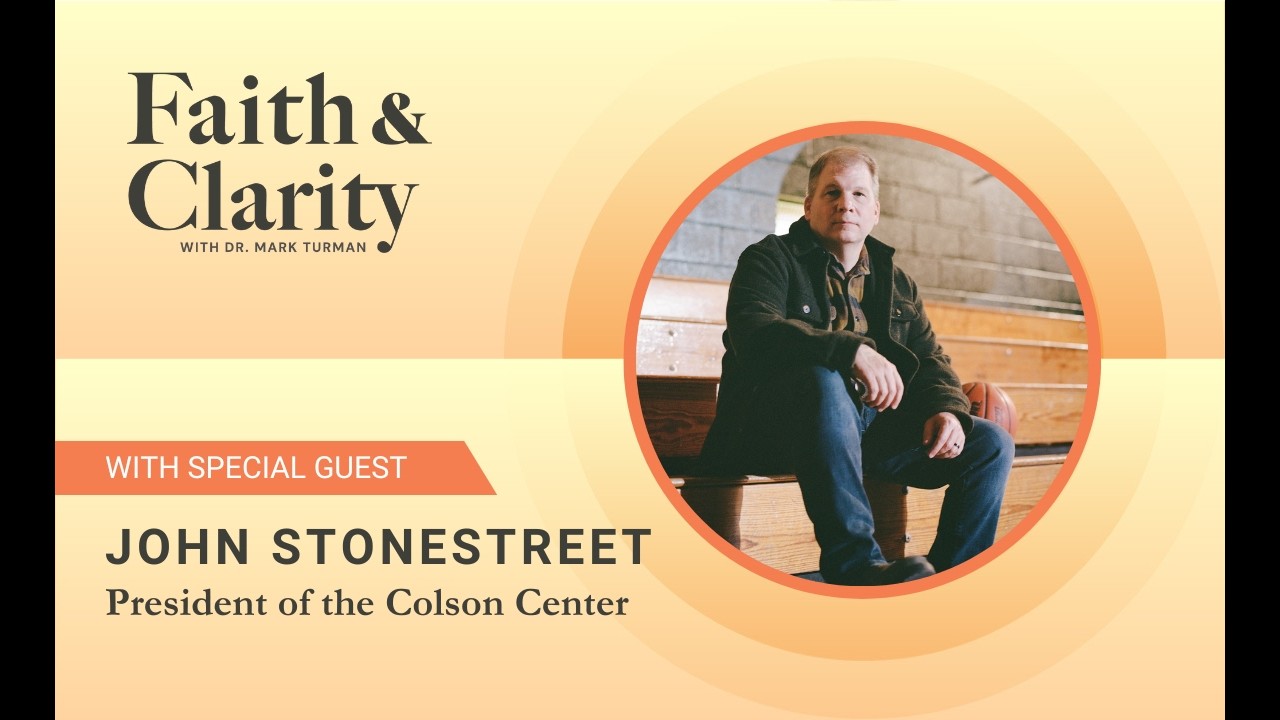
In this episode of Faith & Clarity, Dr. Mark Turman and Dr. Ryan Denison are joined by John Stonestreet, President of the Colson Center, to talk about the new documentary Truth Rising. More than a film, Truth Rising is a call to courage in a time when faith, identity, and morality are being redefined. Through stories of ordinary people making an extraordinary impact, the documentary points us back to the unchanging truth of Christ. Listen in as Mark and Ryan explore why this cultural moment matters, how you can access the film and study guide, and what it looks like to stand with clarity and conviction today.



Topics
(0:00) Introduction
(1:06) Podcast mission and scripture
(2:25) Meet John Stonestreet
(6:30) Colson Center mission
(10:55) Truth Rising documentary overview
(15:38) Os Guinness and his influence
(19:22) Existential crisis and revival
(25:14) Stories of courage and truth
(29:44) Ayaan Hirsi Ali's journey
(33:00) Chloe Cole and the power of truth
(34:40) Jack Phillips: A stand for truth
(37:36) The role of comedians and musicians in culture
(41:13) Accessing the documentary and final thoughts
(43:24) Conclusion
Resources
- How has Denison Forum impacted your faith?
- Truth Rising
- Truth Rising YouTube
- Truth Rising: The Study
- Truth Rising Film Instagram (@truthrisingfilm)
- Colson Center
- A Practical Guide to Culture
- Who Am I? What the Bible Says About Identity and Why it Matters
- Ask Us Anything: [email protected]
- Sign-up for a Denison Forum newsletter: DenisonForum.org/subscribe
About John Stonestreet
John Stonestreet serves as president of the Colson Center. He’s a sought-after speaker and author on areas of faith and culture, theology, worldview, education and apologetics. John is the daily voice of Breakpoint, the nationally syndicated commentary on the culture founded by the late Chuck Colson. He has co-authored five books including A Practical Guide to Culture and Restoring All Things.
Before coming to the Colson Center in 2010, John served in various leadership capacities with Summit Ministries and was on the biblical studies faculty at Bryan College (TN). John is an ordained deacon in the Anglican Diocese of All Nations (Anglican Church of North America). He and his wife, Sarah, have four children and live in Colorado Springs, CO.
In addition to hosting the Truth Rising documentary, he also serves as the instructor for the small-group curriculum to be released after the film.
About Dr. Ryan Denison
Dr. Ryan Denison is the Senior Editor for Theology at Denison Forum and the author of The Focus newsletter, contributing writing and research to many of the ministry’s productions. He holds a PhD in church history from B. H. Carroll Theological Institute and an MDiv from Truett Seminary. Ryan has also taught at B. H. Carroll and Dallas Baptist University.
He and his wife, Candice, live in East Texas and have two children.
About Dr. Mark Turman
Dr. Mark Turman serves as the Executive Director of Denison Forum, where he leads with a passion for equipping believers to navigate today’s complex culture with biblical truth. He is best known as the host of the Faith & Clarity podcast and the lead pastor of the Possum Kingdom Lake Chapel, the in-person congregation of Denison Ministries.
Dr. Turman is the coauthor of Sacred Sexuality: Reclaiming God’s Design and Who Am I? What the Bible Says About Identity and Why it Matters. He earned his undergraduate degree from Howard Payne University in Brownwood, Texas, and received his Master of Divinity degree from Southwestern Baptist Theological Seminary in Fort Worth. He later completed his Doctor of Ministry degree at George W. Truett Theological Seminary at Baylor University in Waco.
Before joining Denison Forum, Mark served as a pastor for thirty-five years, including twenty-five years as the founding pastor of Crosspoint Church in McKinney, Texas. Mark and his high school sweetheart, Judi, married in 1986. They are proud parents of two adult children and grandparents to three grandchildren.
About Denison Forum
Denison Forum exists to thoughtfully engage the issues of our day from a biblical perspective, helping believers discern today’s news and culture through the lens of faith. Led by Dr. Jim Denison and a team of contributing writers, we offer trusted insight through The Daily Article, a daily email newsletter and podcast, along with articles, podcasts, interviews, books, and other resources. Together, these form a growing ecosystem of Christ-centered content that equips readers to respond to current events not with fear or partisanship, but with clarity, conviction, and hope. To learn more visit DenisonForum.org.
All episodes are produced by Sound of a Rose. For more information, you can visit soundofarose.com.
EPISODE TRANSCRIPT
NOTE: This transcript was AI-generated and has not been fully edited.
Mark Turman: [00:00:01] Hi friends, this is Mark. Welcome to Faith and Clarity. Summer is here, and like a lot of you, our team at Denison Forum is taking a little time to rest, recharge, and reconnect with family and friends. So for the month of July, we're going to be taking a step back from producing new episodes, but we're not leaving you without something great to listen to. Over the next four weeks, we're going to be bringing back some of our most popular Faith and Clarity conversations, episodes that clearly resonated with you and that we think are worth another listen, or maybe a first time listen if you're newer to the podcast. These conversations are about faith, culture, and the questions that matter most. We're grateful for every one of you who tunes in, shares episodes, and keeps engaging with the things we talk about here. This community means the world to us. So enjoy your summer, slow down when you can, and we'll be back with brand new episodes in August. Until then, let's get to one of your favorites.
Mark Turman: [01:05] Welcome to Faith and Clarity with Mark Turman. I'm your host for today's conversation. We always want to help you find clear hope beyond the headlines so that you can live by faith and not by fear. We think that that means that we need to learn to think biblically, live holy, and then serve joyfully. Part of what the Apostle Paul wrote under the inspiration of the Holy Spirit to his friends at the church at Philippi, Philippians 1:9 includes this prayer from Paul for them. It says, and I pray this that your hope will keep on growing in knowledge and every kind of discernment so that you may approve the things that are superior and may be pure and blameless in the day of Christ. There's a lot there that we could talk about, but we really hope that our conversation today will help you to grow in the knowledge of God and of his kingdom and that you would learn to be discerning about the culture that we live in so that you can approve and follow and embrace those things which are superior, pure, blameless, and beautiful in the kingdom of God. And to do that today, we're talking about a special uh resource that is coming out, a new documentary called Truth Rising. So I have a couple of friends to talk with me today, Ryan Denison, our senior editor for theology. Ryan, say hello.
Ryan Denison: [02:21] Hello. Thanks for the chance to be here this morning.
Mark Turman: [02:24] Yeah, glad to have you back with us today. And we're also joined by John Stonestreet that may be a name familiar to some of you. John is the president of the Colson Center. He is a sought after speaker and author on the areas of faith and culture, theology, worldview, and apologetics. John is also recognized today as the daily voice of Breakpoint, a podcast syndicated uh across the country and was originally founded by uh the founder of the Colson Center, Chuck Colson, which some of you will remember that name as well from the 70s and 80s and other places. John has also co-authored five books including a practical guide to culture and restoring all things. John, welcome to the Faith and Clarity podcast.
John Stonestreet: [03:08] Hey, thanks Mark and Ryan, great to be on with you as well. Love the Denison Forum, all that you guys do and it's great to be on with you.
Mark Turman: [03:15] Well, we consider ourselves collaborators and partners with you. We cheer each other on in every way that we can. And uh we'll talk a little bit in a moment about the Colson Center because I want you to tell people about it in case they don't know about it. But before we get to that, tell us about John. Tell us a little bit about your faith journey, uh your own sense of calling to speak truth into today's culture and issues of the day and how did you get to the work that you're doing now?
John Stonestreet: [03:41] Well, you know, listen, uh I grew up in a Christian home. They introduced me to Jesus. Uh my parents did at a at a young age. Um uh through the the lens of basketball, uh I uh chose uh college and God had arranged that that would end up introducing me to this concept of Christian worldview, which for me was like a a second salvation. Um I had kind of gotten the impression that the the world was something to be opposed and resisted and complained about. Uh but the idea of engaging the culture that we're in, the idea that God has created human beings to be fruitful, multiply, fill the earth and subdue it, that there's not just a great commission, but a cultural commission. All this was kind of brand new for me. And also the life of the mind, just that faith is not just something to be uh believed and felt strongly about, uh but it's something to be thought through. And also that thing through which I'm supposed to think the world through. And that to me was huge. And so, uh big journey. Interestingly enough, when I was a senior in high school is when I first learned of Chuck Colson. I was too young to remember all the Watergate part of his story. Uh but my parents had Moody Radio on non-stop. And if you grew up in a household with Moody Radio, you never knew what time it was. You just knew who was on the radio and that's how you ordered your day, right? It's like when Chuck Colson's on the radio, I need to be headed out the door, you know, headed to school. But even then, even though at the time, you know, young faith hadn't really thought much about it, clearly Chuck was doing something different. You know, there was a lot of wonderful Bible teachers and then Chuck would get on and talk about, you know, international issues. He would talk about movies and films, he would talk about philosophers and ideas, he would talk about politics and culture and public policy. Uh he would talk about worldview. And I it was even then I recognized even though I didn't know what it was, uh how different what he was trying to do. And and in college, that approach just captivated my heart and I'm just passionate about helping Christians think about the world around them as if they have been called to this cultural moment because I I really believe that we have, you know, not just called to a ministry or to a job or to good works, but to a time and place. And here we are.
Mark Turman: [05:55] Yeah, it just really makes kind of kindred spirits between Colson Center and Denison Forum that verse out of the Old Testament about the tribe of Issachar, the men of Issachar understood the times and knew what Israel should do. Absolutely. Um they knew what uh they were seeking to know God intimately, but they also wanted uh their relationship with God to flow over into their understanding and engagement with the world, which uh I may have just done a really good commercial for the Colson Center, but in the chance that I didn't, um based in Colorado Springs, founded by Chuck Colson, uh tell us a little bit more about the Colson Center and the work that you guys are doing day by day.
John Stonestreet: [06:31] You know, Chuck had a a big legacy. No one can fill his I used to joke, you know, that Chuck had more good ideas by noon, uh you know, than the rest of us had for the rest of the month. He he just was so driven. He was super passionate about, as he put it, the church being the church, you know, being salt and light and everything that that mattered. Now, of course, people know that Chuck founded Prison Fellowship, uh which is the largest ministry to prisoners and their families in in the world. But he also founded that at a time where the prison population in America was exploding and he wanted to know why. And he wanted to know what the church's responsibility was. And so asking that question why led him to the public application of Christian theology. It led him to critique other worldviews and the secular explanations that, you know, increased crime is because of lack of education or, you know, poverty or racial consider, you know, whatever, that that no, this is actually about moral formation and moral formation is connected to what you believe about life in the world and where you get that is from your family. And if the family breaks down and the church breaks down, you know, and then he understood those dominos. And that's why he started writing and thinking about worldview. And that's really what the Colson Center has done is we have inherited that part of Chuck's legacy. And um what we try to do is help Christians make sense of the world around them and then understand what it means to be called to this moment. And we do that through podcast and content, you know, uh like the uh uh like what you guys do. And I mean, we quote each other all the time, right? And uh and we probably plagiarize each other too, but or at least I've I should apologize for plagiarizing you guys. Um but um we also do an in-depth training program called the Colson Fellows. Uh there's about 17, 1800 people uh around the country and around the world studying worldview and culture for a year, coming up with a ministry plan that God wants uh you know, to to lead them into. And so that's the work that we do is equipping Christians to make sense of the culture and live into this moment as as as salt and light.
Mark Turman: [08:39] Yeah, we would uh include this in the show notes of course, but we would really encourage people to check out the Colson Center, Breakpoint podcast and other resources. Uh I had a wonderful uh woman in my church who recently graduated from the Colson uh Fellows program, just really, really deepened uh her faith and her engagement in the world. Can't recommend that highly enough. Uh it's in depth, it's it's uh substantial. It is. It is. It is a commitment. It is a commitment. Uh it is commitment and but if you're looking for uh a hearty challenge that will uh really radically change and deepen your faith and your understanding of the world around you, uh Colson Fellows project is a really, really good one. But we want to talk about this new project, this documentary that is coming out on September the 5th called Truth Rising. It's a partnership between the Colson Center and Focus on the Family. Um just give us a summary of what this project and documentary is about and why did y'all choose to do this platform? Why a documentary film and what's a little bit of the backstory about how y'all got into this?
John Stonestreet: [11:21] Yeah, the Truth Rising project uh was something that kind of was born out of a partnership between Focus on the Family and the Colson Center. And of course, you know, Chuck is known for how now shall we live, the book on worldview and culture, helping Christians understand what the challenges of the moment that he and Nancy Piercy were writing in at the time. Uh Focus on the Family known for the truth project, right? Helping uh Christians understand truth and and and the the importance of uh Christian worldview, the importance of ideas. And that's really in the vein of how then shall we live, right? What Francis Schaeffer did when he walked around Western civilization uh wearing those, you know, uh cool pants and uh you know, with that awesome beard and and talking about, you know, where how Christianity uh provided the roots of Western culture and how those things were being undermined and what that would mean, a very prophetic piece and you can almost see that translation. What what I really think is what those guys really did in a theoretical way has existentially become true. In other words, we have sensed that Western culture is at a critical moment. In the film Truth Rising, uh Os Guinness, who's kind of the Gandalf of the film, and I think really in a lot of ways the Gandalf of of uh of of of the church right now, uh he calls this moment a civilizational moment. And what what he means by that is that these ideas have had consequences, right? Uh the bad ideas have had victims. Um and we feel, I think a lot of Christians like we're playing a game of cultural whack-a-mole, like this issue pops up, we're back, you know, and it's it's hard at times to get what's to what's underneath that, which is this these dramatic shifts in the Western world. And these are things that you can look back through history and say, well, civilizations go through this. Civilizations don't last forever, right? There there there are ideas that animate them, that bring them to life. And when those ideas are cut off, well, then the civilization has to survive on something else. And you either will attach to new ideas, which could be revolutionary ideas, it could be, you know, uh hedonistic or selfish ideas, uh or it'll just decay and die unless there's renewal. Now, I don't know what the future of Western culture is, but I do know and what drove this project is realizing we need to think hard and long about what moment we're in. We we need to take seriously not just these random issues that seem to pop up, but to to own up to the fact that we are in this civilizational moment and something that we've already talked about, God has called us to this moment. So, you know, we need to ask again, how do we live? What's it mean to live? You know, George Orwell said in an age of deception, telling the truth is a revolutionary act. Well, that's the baseline, right? I guess God wants us all to be those kinds of revolutionaries. This is Alexander Solson's great line, you know, live not by lies. Tell the truth, don't let the lie come through you. You know, and and and what we wanted to do was highlight uh this moment we're in and the fact that we're called to it. So it's a it's an ambitious journey we're asking viewers to go on, right? The history of civilization to your calling to this moment. That's the journey. And and how do we and how do we fit into this big picture that God has. And how do we fit into this big picture? And the good news is is God in his kindness um has has has given us examples of courage, of people willing to tell the truth, people even willing to admit that they were deceived and now tell the truth. And to me, that's the inspiration of the film or five stories of courage that we culminate the film with. So we really begin with this, I think a very understandable and accessible way of thinking about, okay, where are we? It's kind of like a big you are here uh you know, arrow uh and then culminating in, okay, what's it going to what's it going to mean for us to be the church uh that we need to be.
Mark Turman: [15:29] Yeah. Well, I'm going to let Ryan ask a question or two here in a second, but I have one last question for you and I've been ever since we came up with the idea of talking with you today, this is my favorite question. Uh you mentioned Os Guinness who is at the beginning of this. So my favorite question of the day, who is Os?
John Stonestreet: [15:44] What a great and wonderful guy. For those that may not. Yeah, for those who may not be familiar with who Os Guinness is, tell us a little bit about who Os is.
John Stonestreet: [15:53] You know, Os has written, I think more books than I can count. Um and as I kind of joked, he's kind of a Gandalf of our generation. He tells this story by the way in Truth Rising. It was an unexpected thing that we added in because he has watched the shift of great of at least one great civilization born in China, um in the middle of just a complete cultural upheaval, uh revolution, uh decline, a lot of death and how God has kind of positioned him uh to do that. You know, he's known as an author and and a social critic and he is probably one of those rare voices of our lifetime, um uh by the way, should be should should mention that, you know, a lot of his development and intellectual formation came at Labri. He was a a colleague and student of of Francis Schaeffer. Um but but I don't know anybody else that's written and and provided such wonderful help and thought leadership on both civilization and calling. And that's really what this film does, which is a weird combination, civilization, like how do we understand the world that we're in at that big of a level and then what does it mean to respond to calling? And you know, when I first came across the call, which is his best-selling book years and years ago, I was struck by this one aspect that he added to it. You know, at the time, I was at a Christian college and there was a lot of people writing about calling as, you know, do what you love and find somebody to pay you for it and God's called you, you know, to a particular line of work. All of which is true, right? You know, all good advice. But he said, the element that many people have missed in calling is the moment that they're in. The seriousness as he puts it of the hour, you know, because he's got that great British accent. Yeah. And um and I thought, I had never thought about calling in terms of the cultural moment. And then that's when I started to wake up when you look through scripture, all the way through scripture, God is revealing himself as this historically precise, chronologically, you know, precise God who's orchestrating history and putting people in times and places. What Paul says to the Epicurean and Stoics is that the God who made everything determines the exact times that people live and the boundaries of their dwelling place. And that he did that for a specific purpose. That's all that's all in that little Mars Hill sermon. And you think, man, that's a that that's loaded, right? I mean, what does that mean? And Os was the first to introduce me to that.
Mark Turman: [18:33] Yeah. Yeah, so if you haven't ever read any of Os Guinness's work or found him on YouTube or anything, we highly recommend you go do that as well. So, uh he's a big part especially of the first part of kind of setting the table uh in this uh experience called Truth Rising and uh then that kind of sets the table for other stories that come later. We're going to take a break for a couple of seconds here and let you catch your breath, let us catch our breath and then we'll come back. Ryan's got some questions that will take us a little bit deeper into this documentary as we talk about Truth Rising. We'll be right back.
Mark Turman: [19:06] I'm really glad you're here listening to Faith and Clarity. It matters that you're taking time to slow down and think biblically about what's happening in the world. But we're coming up on an important moment. Our summer campaign ends July 31st, and we're still working toward an $800,000 goal to keep this content going and growing. And the need isn't slowing down. People are still trying to make sense of a noisy, confusing culture. And without a clear biblical voice, they're left searching for answers in the wrong places. So if this podcast has helped you, now's the time to give. Go to supportdf.org before July 31st. Find a link to give in today's podcast episode notes. Because when you give, you help more people not just understand what's happening, but respond with truth, wisdom, and faith.
Mark Turman: [20:06] All right, we're back talking with John Stonestreet about the documentary coming out on September 5th called Truth Rising. Ryan, you had a question or two you wanted to pitch in John's direction.
Ryan Denison: [20:16] I do. Uh yeah, one of the parts that especially kind of in the second half of the of the documentary really comes out as a point of emphasis is the way that people in the present generation seem to be feeling the loss of meaning, truth, identity, purpose, all those really foundational concepts in a way that wasn't necessarily true a generation or two ago. And I was curious why you think that's the case and also just what opportunities that presents us to be able to minister in ways that we may not have been able to a generation or two ago.
John Stonestreet: [20:45] Yeah, you know, when I so I'm I'm so young, but I've, you know, still been teaching on worldview for about, you know, 20 years or so. And, you know, the early days reading, uh, you know, the apologist and the, um, uh, you know, kind of popular cultural commentators, you know, there was a lot of theoretical conversation, right? Like, oh, you know, if you compare Christianity with secular naturalism, Christianity gives you an ultimate source of meaning and truth and morality. Secular naturalism does not. We would talk about postmodernism in these theoretical terms early on. It's like, well, if there's no such thing as truth and everyone determines their own truth, uh, does that mean stop can mean go? Does that mean boy can mean girl? And we use that as an illustration and fast forward 20 years, we're not using it as an illustration. Like that boy can be girl is being pushed as public policy and the science is settled and medical I mean, this is a new level of the prophecies of a generation ago becoming real. And of course, I think the first guy who really prophesied this was Friedrich Nietzsche, uh, in the parable of the madman. One of the places where he said, God is dead. And it, you know, the other place was, thus spake Zarathustra, which was another parable in which he was saying, you know, look, um, this is we we need to get on with the death of God and now, you know, go to the Ubermensch or the Superman and become the dominant kind of force on the planet and and and shed religion. And the parable of the madman, he's really ushering a warning, like this is going to be messy. And he talks about straying as through an infinite nothing and not knowing what up and down is, things becoming darker and colder. And I remember going back to that and and and seeing the cultural conversations about gender, seeing the cultural uh conversations about the great resignation that happened in the wake of COVID and and and and the suicidality numbers, especially among young people and and the the the the the scramble of young men um to to figure out what life is all about and the crisis of meaning and so on. I think, man, Nietzsche was right. You lose God, you lose meaning. And it was always true, but on a civilizational level, we've now Oz puts it this way, we've cut the flower from its roots. We're a cut flower civilization. So there were ideas and of course in the film, some of the great thought leaders, many of some of whom aren't even Christian will point to one of the great ideas that animated Western culture, for example, being the dignity of the individual. What we've done is cut off the individual from the source of its dignity and basically said, oh no, you you you be you. You're autonomous. You create your own dignity. And everyone realizes that's a fool's errand. Like that's a that's a failed project. So, you know, I think that that's how it's different. It's that it was always theoretically the case and this is what Francis Schaeffer talked about, this is what Del Tackett talked about in the truth project. And we looked around, Jim Daly and I from Focus on the Family about three years ago and said, this is all existentially now come true. So we need this you are here and that's where the truth rising project came from. Now, what's interesting in the last three years, one of the things that we have seen is what, you know, folks in the UK, for example, are calling a quiet revival. We're seeing an explosion of young people come to church. You know, we're both old enough here to remember the rise of the nuns, you know, the N O N E's. Often times blaming how the church has let them down. And now we have a whole bunch of young people going back to church talking about how secularism let them down, right? So what an opportunity right now for truth to rise. And when when we talk about the the stories of courage at the end, the five stories, Ian Hersi Ali, Jack Phillips, the Baker in Colorado, Chloe Cole, uh who has de-transitioned from deception, um Seth Dylan from the Babylon B and Katie Faust, you look and you go, oh, there is an opportunity. Like telling the truth really is something that can make an incredible difference. Who could have imagined when the Babylon B refused to pull down a tweet that cost them their access to a million people on Twitter, all the all the cultural dominos that would have followed. I mean, if you kind of do the math of what happened, you're just like, no one could have written that script. Now they didn't know that, right? They were just saying, no, we're going to stand by what's true. We're not going to back off because of the pressures of cancel culture. Good for them. But look at what God put to, you know, worked out because of that. And there's so many of those stories. And so that's the opportunity, Ryan, I think is that um people are looking right now. They're desperate because that meaning crisis has become so existentially a part of their lives.
Ryan Denison: [25:45] And and one of the ways, one of the things I love about the way y'all frame that in the in the documentary is you go back to pick up all those threads that were in the past. And at the time were often seen as sort of straw man arguments like, oh, it'll never get to that point. And now you look at the present culture and it has. And I think the more we look back to that, it gives reason to have confidence in the validity of what we're saying today. And I I love like another one of the points you make in the film and you alluded to it before is how truth has to be more than a theoretical concept that we assent to. Um and I really wanted to see if you could expand a bit more on that thought as well.
John Stonestreet: [26:21] You know, each of the five stories highlight a different aspect of what it means to be a courageous voice of truth. And I have been captivated as many have by the story of Ian Hersi Ali, right? She was one of the new atheists. And we all remember the 90s, right? The new atheists were telling us that God's a delusion, religion poisons everything. Now even Richard Dawkins is telling us we need Christmas carols. And it's just, you know, what has happened? And her story is so fascinating. So, and I'm answering your question with her story because I think her story is what answers it. I was at the first arc conference when she announced she was a Judeo-Christian and a thousand people in the room gasped because we all knew she was an atheist and everyone's like, what's a Judeo-Christian? You know, what does that mean, right? And then there was questions. She's calling for cultural Christianity. That's not the same thing. She then writes an article in um a UK publication where she explains it and she says, I've realized that secularism is not going to provide the meaning that has been lost and that people are looking for. The last arc conference which we attend and was able to roll out truth rising and having had these conversations with with Ian in the middle, you know, she lays out the foundations of Western civilization in 10 points and puts Bible verses to each one. That's an 18-month growth right there. Now, in the film, what she then talks about is how she came to realize the emptiness of Islam. She became a critic of radical Islam coming out of her background. That led her to reject all religion. But the threat to her life that came because of the fatwa, uh because she had critiqued Islam, um followed her. She had a family and and and and she was depressed. Like she and she turned to alcohol. Uh I don't want to give away spoiler alert. I don't want to give away so much of this. But what the story she tells is not only this kind of intellectual journey of realizing the emptiness, the cruelty of Islam and the emptiness of of of atheism, but discovering meaning. And I don't want to give it away, but I just watched the film with a group of friends and they all pointed to this moment in the film where she talks about what her personal faith, her personal embrace of truth has meant, which is the fulfillment of her lifelong search for freedom. And the look on her face is worth the price of admission to this film, which by the way is free. But it's it's it's absolutely worth it. That's what I mean, Ryan. I I I mean, that's what we're trying to say is that and Chloe Cole puts it this way in her story. There's not my truth or your truth. Jesus Christ is the truth. This is the beauty of this. We're talking about truth with a capital T that has civilizational level ramifications and implications for our lives. But it has it's just as personal as finding freedom and finding hope and finding forgiveness and in Chloe's case, finding identity who God really made her in the image of God. It's it that's what we mean. And so the language we use in the film is not just knowing it, not just assenting to it intellectually, not rejecting the intellectual side. That's a whole big part of it, but loving it. And it's lovable because God loved us in Christ Jesus and and that this is actually not just some matter of personal faith, but our personal faith has incredible public and historic implications. And we're trying to connect all those dots, I guess.
Mark Turman: [29:52] Yeah, and I and I love how the yeah, I love how the film does that because it, you know, people may watch this documentary and they may they may say, oh, I remember that story. I remember the guy, the baker in Colorado whose story ended up all the way going up to the Supreme Court. Um but most people probably have never looked into that story with any kind of depth or even seen a picture of him. Um and then these other stories, they may have heard of the Babylon B if depending on what your involvement in the Christian community is. And then some of these other like several of these other stories, I hadn't heard anything about. But how y'all do a great job of connecting them all together and how they actually form kind of a a shared narrative, um which
John Stonestreet: [30:36] Can I can I can I jump in on on a point on this? Uh because you mentioned Jack Phillips. Jack's a friend. I've known Jack for years. I remember being on my front porch about an hour from his cake shop, not knowing Jack, reading in the newspaper about his story and thinking, oh man, that dude is in trouble, right? And he was for 13 years. The state of Colorado has relentlessly gone after him one after another. Uh and of course, one of the lies of the last generation and one of the things, as I said, I think each of the stories elevate a certain aspect of truth. We have been told that if you take a stand for the truth, you are unloving. Like if Christians are going to be continue to be relevant, we have to be tolerant. Right. Right? And we tolerated ourselves right out of orthodoxy. Jack refused to do that. Now, here here here's the interesting story. I'm not going to say who it is, but um we did an interview about the project recently. And the uh host admitted that she did not want to talk about that story. When she heard the Jack Phillips story was in the film, she's like, I don't want to touch that because I think he was wrong. I think he was unloving. I think he should have just baked the cake because that's what Jesus would have done and that. And she said, and then I watched the film and complete 180. And that's what she wanted to talk about. Because I think a lot of people have believed those headlines, right? That you know, here's this angry bigot in Colorado that just wouldn't bake the cake. Now, listen, there might be a nicer person on the planet than Jack Phillips. If there is, I have not met them. The Jack is like, like he's awesome. And and and to see how the the truth about how he took his stand has been so hidden and now God is vindicating him in such powerful ways. And so many people have been influenced. Um and that's what it's all about for him. Uh I I just I just think that's cool. And and what all these stories are is a calling for all of us. You are called to be a truth teller. You might be called to be a truth teller with your friends, with your family. You might be called to be a truth teller on a national stage. You might be called to be a truth teller at the next school board meeting. You might be called to but to be a Christian in this civilizational moment is is more than, but it's not less than being a truth teller. And that's really one of the key takeaways I think of the film. And by the way, I know we haven't talked about this, but there's a follow-up four-part study uh that goes into depth on what it means to be a courageous truth teller and what that looks like and what that requires of us. So that's really one of the punch lines we're getting at.
Ryan Denison: [33:18] Go ahead, Ryan, you have something you wanted to add.
Ryan Denison: [33:20] I was just going to say like and I love how y'all make that point throughout the film that with all the with all the people you talk to, there's their story is similar but different enough that it really kind of highlights that I think one of the things we have to do when we are going to stand up to be truth tellers to the culture is understand that the process of people accepting the truth is going to look different. And whether it's Ian Hersi Ali and her story versus some of the others, like I love that it just there is such a clear clear demonstration of just the need to give God time to work and not give up on hope and the as he works. And I kind of with that in mind, I was curious, uh you touched on the um kind of Os Guinness's comments about the civilizational moment before and kind of when you think about kind of how truth does develop in stages at times or how people progress differently. Uh where where do you see this kind of going? Like where do you think um not necessarily where will the culture end up, but like what do you think are the next steps that are coming up next?
John Stonestreet: [34:21] One of my friends says, you're asking me to to prophesy and I work for a nonprofit and so that's the uh that's a terrible joke. I'm sorry. But I I have lots of ideas about this and I think there's lots of factors to consider. I mean, the most truth for answer to that question is I don't know. And I don't know if this is a Wilberforce moment or a Bonhofer moment. And I and I use those names pretty carefully. I mean, both men found their culture at the edge of the abyss. I think clearly we're in a very vulnerable place in Western culture. Civilizations have rules. If you break those rules, you decline and die. And the West has broken those rules for a long time. Um you know, you um and so we're at a moment. Now, Wilberforce and Bonhofer uh both met their cultures at vulnerable moments and they both worked and they both collaborated and they both uh you know, built their uh uh cultural engagement around the gospel and Wilberforce saw renewal. Bonhofer saw collapse and and and and you know, everything Bonhofer tried failed. Everything Wilberforce tried, well, it failed for a while and then God blessed it. But neither man was a failure, right? And and so where God has us in his historical precision, I don't I don't know. I do know he has called us here and so that very factor. Now, I I know a lot of people are talking about the, you know, there was the in the UK, the quiet revival. You know, the number of people, five times as many young people going to church as a decade ago. Um you have prominent voices like Tom Holland, the historian and others that are, you know, showing signs of faith or at least publicly advocating uh for the faith. You have what many people are calling in the United States a vibe shift. Um and of course, a lot of that's just, you know, tied to the election. And um politics can't fix the problem. That's one of the things that comes up. Uh I'm grateful for the vibe shift. It's better when we have some push back on the relentless attacks against particularly children when it comes to sexuality. Five years ago, that seemed like a runaway train that couldn't be stopped. Um now it seems like there's been a vibe shift. The vibe shift, I think has primarily been a rejection of of of extreme lies. I'm not sure the vibe shift has fully been a reattachment to truth. And that's the opportunity for us, right? Yes, we need to point out that's a bad idea that will have consequences, that'll have victims. Um and and so we need to reattach. That's really the call of truth rising is let's be a part of of pointing people back to what is true and embracing what's true and living what's true, loving what's true in our own lives.
Mark Turman: [37:04] Yeah, and what was that a sufficient way, Ryan, to skirt your question? Because I tried. I love that way of framing it. So, okay. That is an excellent way to assess it. Yeah, and and you know, what we talk about all the time, uh and I know Colson Center does as well and the documentary as well is what what does it mean to both speak and live the truth in love? Uh we do know unfortunately that there are sometimes some passionate believers who are strident in in speaking up for the truth, but sometimes it doesn't look or sound too loving. Um and you know, we learned from Daniel, right? That there's a right way to be right. Um and that's part of what this film brings out as well. Um which kind of brings me around John to maybe one other question about one of the features of the film and it just seems it seems to be all over our culture, uh both inside and outside Christian communities, which is uh there's kind of a um a teaser into the five inspiring stories that are just really outstanding in and of themselves, but you guys spend a moment talking to musicians and a comedian. And you know, we we've got the biggest podcaster in the world is a comedian. Um why why touch base with a musician? Why touch base with a comedian? Why tell the story of the Babylon B and their uh opposition to censorship? What is it about musicians and comedians that we need to be paying attention to?
John Stonestreet: [38:31] You know, uh art is um uh a bell weather of culture. It both reflects culture and it leads culture. So I think that's one thing. I know Jim Daly, uh the my my uh my friend and and and co uh partner on this project at Focus on the Family, you know, he has said he really thinks comedians are kind of canaries in the coal mine, kind of, you know, pointing ahead and I mean, we remember the kind of the brutality of cancel culture and it came for comedians and sometimes they deserved it. Uh but sometimes, you know, they didn't. Um you have um so so that's that's really interesting. Those two in particular, you know, Constantine Kisin, who is a Russian immigrant in the UK, basically saying, look, I'll tell you what's going on. Um and and being very, very clear. Interestingly enough, he's not a person of faith at all. He's not a a a a Christian. He, you know, I think he's an agnostic. And isn't it and and we also have some others, David Berlinski in the first part of the film. And but these are the voices talking about the state of Western civilization and it's so interesting, he's one of those voices saying, we have a spiritual crisis. And you're like, well, you you you want him to make the connection and I and I hope he does. But it's interesting that there have been so many of these widely secular voices pointing to the very same things that folks like Francis Schaeffer and Chuck Colson and Os Guinness have been talking about. So that's that's part of it. Uh Constantine's uh uh identity as a as an immigrant, uh having been outside, particularly in Russia, and then seeing the critiques against the West, seeing the connection between the Marxism that, you know, he he saw uh you know, kind of tail off in in in Russia and the and the Marxism, the cultural Marxism that dominated the West in the form of kind of wokeism, that is a uh I think a really powerful part of talking about the ideas that really matter. And what are the ideas that animated Western culture and have now been abandoned. Yeah. Uh the the the other one, Winston Marshall was the lead singer of Mumford and Sons and many people might remember that. He was a victim of cancel culture. He was a victim of cultural Marxism and and and he decided not to back down. And a lot of people did back down. A lot of people did, you know, um say things that weren't true. And he says something really interesting. He goes, you know, yeah, I care about Western culture, but I care about the UK. I don't want the UK to be lost on my watch. Yeah. And the idea of cultural responsibility there, I think is really powerful. That's one of the, you know, reasons. And uh and so so yeah, I think both of those guys have some really interesting personal experiences. So we talk about, you know, this is the big picture of Western culture. This is the crisis facing Western culture. And here are two stories that highlight what this means right now. And now, you know, let's look at these stories of of of courage.
Mark Turman: [41:35] Yeah, it's just so many good ways to help people think about, okay, where's your part in this? Where's where's God calling you to be a person of truth and love? Uh and it it's right outside your front door. Sometimes it's in your living room. Um and sometimes it's bigger than that. Uh but we just we just wanted to take a moment, John, thank you. I know you need to get on to some other responsibilities, but we're just grateful for the work that you've done on this project, um and we want to highly, highly recommend that Christians uh and others uh check this out. Uh tell us again, how do people access this documentary called Truth Rising?
John Stonestreet: [42:13] The global streaming premiere, September the 5th, uh Friday, um and uh the website's truthrising.com. Uh we wanted to take down every barrier that we can. You go to truthrising.com, you can sign up to have access to the film, you can have um resources to host a watch party. If you're a pastor, uh you can show this in your church. We're going to be uh you know, doing a a screening at a at a church in Fort Worth in your neck of the woods. Uh uh of September the uh uh September the 8th, I think. Is that Monday, September the 8th at Birchman Baptist? Excited about that opportunity. Um and uh and then of course, you can also learn there how to get access to the four-part study. Uh and the four-part study is real simple. You know, the call is to be a voice of of courage, a truth teller. And then the four-part study are the four ingredients of that, hope, truth, identity, calling. Um understanding uh our you know, what's true about our cultural moment, understanding what's true about reality, what's true about the human person, and then how now shall we live? So the hope, truth, identity, calling peace, really accessible and hopefully, uh it's something that will captivate people. I mean, we we we want the the the win on this film is not even that a lot of people see it, although I hope a lot of people see it. Uh the win on this film is that people who see it then become these voices of courage wherever God's put them. You know, and that's how culture changes. It's not just with ideas, it's with people who embrace what's the these ideas. And if they embrace true ideas, uh then we can see renewal. That's the that's the idea.
Mark Turman: [43:47] Yeah. So my favorite uh John Street quote, I've used it, I don't know how many times I've used this quote. Good ideas or ideas have consequences, bad ideas have victims. And uh this is a great project uh for helping you to get clarity on the truth of God and how you can be a truth teller uh in faith and love and hope. John, thank you again for being a part of Faith and Clarity and being uh so instrumental in helping people to know how to live their faith out in the cultural issues and moments of our day. Uh I want to take a moment to thank our audience as always for tuning in. We hope that you'll check out Truth Rising uh at truthrising.com starting September 5th. Uh recommend it to others. And if this conversation's been helpful, please share it with your pastor, with other church leaders, uh with other friends and uh help them to connect to this as well. Uh remind you that uh Faith and Clarity is a podcast of Denison Forum and you can always find more resources there at denisonforum.org. So God bless you and we'll see you next time on Faith and Clarity.











 Search