




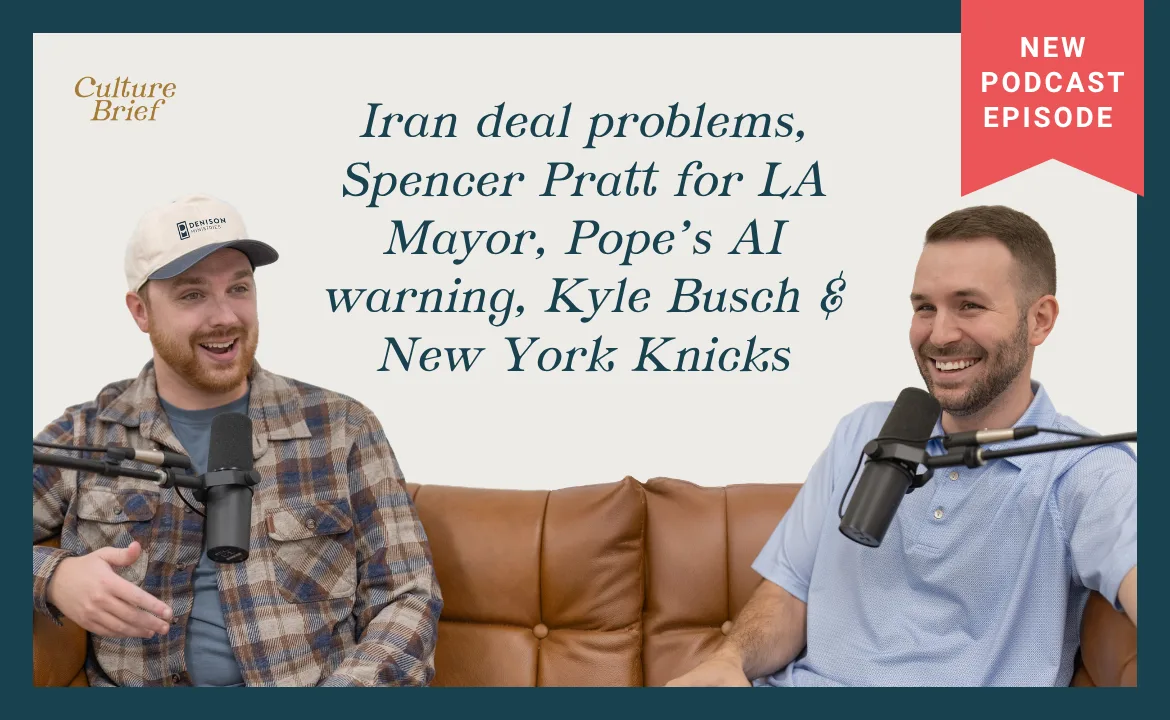
Culture Brief: Iran deal problems, Spencer Pratt for LA Mayor, Pope’s AI warning, Kyle Busch & New York Knicks | Ep. 71
In this week's Brief: An Iran deal is close—but is it the deal the US went to war for? We break down the deal’s framework, why three Republican senators are publicly questioning the entire operation, and why the biggest objective of the war—preventing Iran from getting a nuclear weapon—may not even be in the agreement.
From there, we dive into the enigma that is Spencer Pratt and his unlikely run for mayor of Los Angeles. How did a reality TV villain become a legitimate political force? We explore what's fueling his rise, the parallels to Zohran Mamdani in New York, and what it says about a culture that's desperate for someone—anyone—to finally fix what feels broken.
Plus, Pope Leo's stark AI warning, Tulsi Gabbard's resignation, NASCAR legend Kyle Busch's sudden passing at 41, the NBA Finals and Stanley Cup matchups, and a reminder that no politician can fully heal what's ultimately a heart problem—true restoration comes only through Christ.



Topics
- (00:00) Introduction
- (0:44) Iran war costs and stakes
- (2:45) Draft deal terms and nuclear gap
- (5:10) Midterms pressure and senator backlash
- (11:59) Negotiation snags and regional politics
- (17:52) Spencer Pratt LA mayor shockwave
- (25:03) LA disorder videos
- (26:22) Angry Angelinos surge
- (29:16) Election math runoff
- (32:09) Hope beyond politics
- (37:47) Pope warns on AI
- (39:20) Tulsi Gabbard resigns
- (40:42) Kyle Busch tribute
- (42:54) Sports finals preview
- (45:43) Conclusion
Resources
- Send us your thoughts, questions, and topic ideas: [email protected]
- Culture Brief Instagram
- Watch on Youtube
- Sign-up for a Denison Forum newsletter: DenisonForum.org/subscribe
Articles on this week’s top headlines:
- Three Big Political Story Lines to Watch This Week
- Trump Says a Deal for Talks With Iran to End War Is Near Finalization
- Republican MS Sen. Roger Wicker on X
- Sen Lindsey Graham on X
- Sen Ted Cruz on X
- US Military says it carried out ‘self-defense’ strikes in Iran, including on missile launch sites
- The Pratt Pack
- Spencer Pratt Is Running for LA Mayor. Could He Win?
- Everything is Reality TV. Spencer Pratt Knows It
About Conner Jones
Conner Jones is the Director of Performance Marketing at Denison Ministries and Co-Hosts Denison Forum's "Culture Brief" podcast. He graduated from Dallas Baptist University in 2019 with a degree in Business Management. Conner passionately follows politics, sports, pop-culture, entertainment, and current events. He enjoys fishing, movie-going, and traveling the world with his wife and son.
About Micah Tomasella
Micah Tomasella is the Director of Advancement at Denison Ministries and co-hosts Denison Forum's "Culture Brief" podcast. A graduate of Dallas Baptist University, Micah is married to Emily, and together they are the proud parents of two daughters. With an extensive background in nonprofit work, finance, and real estate, Micah also brings experience from his years in pastoral church ministry.
About Denison Forum
Denison Forum exists to thoughtfully engage the issues of the day from a biblical perspective through The Daily Article email newsletter and podcast, the Faith & Clarity podcast, as well as many books and additional resources.
All episodes are produced by Sound of a Rose. For more information, you can visit soundofarose.com.
EPISODE TRANSCRIPT
NOTE: This transcript was AI-generated and has not been fully edited.
Conner Jones: [00:00:03] Hi, I'm Connor Jones.
Micah Tomasella: [00:00:05] I'm Micah Tomasella.
Conner Jones: [00:00:06] And this is Culture Brief, a Denson Forum podcast where we navigate the constant stream of top stories in news, politics, sports, pop culture, and so much more. And we do it all from a Christian perspective. Micah, we got a loaded show. Seems like a big political week. You want to tell us what we're going on, uh, what we're talking about today?
Micah Tomasella: [00:00:23] Iran. Spencer Pratt. Pope Leo. Tulsi Gabbard. NASCAR legend Kyle Busch passes away. NBA Finals, Stanley Cup Finals. Let's jump into the brief.
Conner Jones: [00:00:37] The brief. [00:00:41] You said it. [00:00:43] You said it big and bold. Iran. That's how you came across when you said it a second ago. [00:00:48] Uh, yeah, I mean, let's let's hit on some Iran stuff real fast. I mean, this is something. It's your story, you know? Iran.
Conner Jones: [00:00:52] Yeah. [00:00:53] It's a thing. I this whole Iran situation is something that I feel like much of America has really started to forget about or they're trying to avoid it, ignore it. It feels like a distant far off thing, but the the ultimate impact is happening. You can't forget about it every time you fill up your every time you fill up your car, you can't forget it.
Conner Jones: [00:01:09] Yeah, I think you sent a picture the other day to me of a sticker on a gas pump that's it was Trump pointing up and it said, I ran up your gas prices, which, you know, that that's people leaving stickers at gas pumps. They did the same thing with Joe Biden, if you remember that. It was like gas prices were Joe Biden's fault. People will always blame the president when things are not going the way that they want, right? [01:27] Uh, and we're seeing that. I mean, the economic downfall of this operation Epic Fury, as they call it, it's it's hitting the the pocketbooks of everyday Americans through the gas pumps, through other things. It's obviously affecting the rest of the world too. It's just an expensive and costly war. It's also cost several dozen lives. Um, and so, uh, on the American side, not to mention everybody who has passed away just throughout the Middle East as well, uh, from those countries. So, it it's not exactly been the success that I think a lot of people were expecting. Um, and we're going to kind of dive into that and some of the details that are coming out about a potential deal. That's what we're talking about today. There does seem to be a deal on the horizon, a negotiation of some sort of peace deal, a way forward for Iran and the United States. Uh, Trump has been teasing this. He teased it over the weekend, got a little bit of backlash. So we're going to hit on that here. Um, because, you know, people are never going to be fully happy with what the results are going to be coming out of a war like this unless you are you win with a smashing success. And since that's not exactly the case, Iran is still operating, um, even though much of their leadership was decapitated and and, you know, killed off, they're still running. They're still shooting missiles when they want to, placing mines in the straight of Hormuz and they have that choke hold over the straight of Hormuz that is just, um, keeping the economy from flowing the way that it should throughout the Middle East and even over here in the United States. So, um, yeah, you know, on Saturday, Trump posted on True Social specifically announcing that a draft framework to shape the future end of war talks with Iran and to reopen the straight over Hormuz was near quote finalization and that the pact's terms are quote largely negotiated and that they would be revealed shortly. So that was Trump kind of giving a little bit of a vague introduction to, hey, we got a we got a deal here. We're on the finish line. [03:12] But then those details kind of started leaking their way to the press. You know how that works, Micah, where just different outlets start saying, hey, this is a part of the deal, this is a part of the deal. This point's being hit, this point's not being hit. Um, and here's what those different leaks were kind of suggesting. It basically was saying in this deal that should it be signed by Iran and the United States, and this was being negotiated by several other Middle Eastern countries as mediators, it would effectively end the military conflict by maintaining a ceasefire stance and allow for 30 to 60 days for more negotiations, specifically probably around some of the trade, some of the sanctions, some of the nuclear stuff. It would also, uh, cause Iran to put caps on their ballistic missile program and, uh, basically cut off its support for Iranian, uh, proxy groups, terrorist regional groups, think Hamas, think Hezbollah, uh, the Houthis. It would also cause the US to lift its naval blockade of Iranian ports while Iran would temporarily reopen the straight of Hormuz and wave transit fees as long as negotiations continue. So basically, any ship that is somehow getting through the straight of Hormuz is paying Iran a lot of money up to one to two million dollars per passage. So they're charging these massive tolls. So the US wants to relieve that. Uh, and then in return, the US would release $100 billion in frozen Iranian assets. You know, that's going to be money throughout the world in different banks and whatnot that the US is causing to be frozen. But here's the kicker, Micah, and this is the one that got a lot of people riled up. [04:36] This agreement does not have any formal language as of yet. It's still being, you know, negotiated out a little bit. It's taking a few more days. But as of yet, there's not an agreement that would prevent Iran from ever acquiring a nuclear weapon, which, if you remember, was Trump's number one objective of this entire war. Um, you know, so we'll see over the next few days, even weeks, uh, if they kind of iron out a detail there of getting rid of the enrichment, getting rid of the uranium that Iran already has, um, and preventing them from going forward. But that was the number one thing. So, I mean, Micah, what are your initial thoughts here?
Micah Tomasella: [05:10] I mean, I remember you and I talking about this when this started. Uh, you know, we were talking regime change. We were talking about, you know, how quickly this was going to go. And then there was kind of that lingering feeling in the back of our minds that like Iran is willing to let its people suffer for a very long time in order to maintain the grip of power that they have. You know, people were hoping for some sort of revolt, you know, that the citizens would take control or whatever it might be, you know, and they would get this, um, totalitarian regime out of there. [05:42] So I'm thinking about what all of the initial goals were and it just kind of seems like at the end of the day, like there was just an expectation from the American side that this would end quickly. [05:53] Um, and so over time, if the goal is still to end it quickly, you realize in the back of your mind, Trump's just trying to get this wrapped up before midterms. Yep. And so you just over time start to drift. You drift on what the initial goals were of this campaign. [06:10] Um, and so I I just see this as he's having to weigh, um, how long can this continue without Republicans getting absolutely demolished at the polls in November.
Conner Jones: [06:24] And we've mentioned that too. The the Iranians know the implications of midterms. They recognize that time is kind of on their side a little bit here. If they can just survive and drag these negotiations out closer and closer to the midterms and keep it in the conscience of the American people that Trump has this political, you know, this this thing pushing him towards a deal or an conclusion that he may not really, really want, but he might have to agree to to save face with the midterms and with the American public.
Micah Tomasella: [06:51] Yeah, and when you when you post, it's like the amount of times he posts that they're almost there, you know, I'm not sure like that they're almost there to a deal. I'm not sure if that's always the best negotiation tactic, right? Because you're like jumping the gun to give good news to the American people. [07:07] Um, and so like, you know, I mean, Iran's just willing to suffer for a long time, right? And it's unfortunate. The whole situation is unfortunate. Um, but, you know, [07:20] there there are a lot of reasons and I understand them for why this happened. And you and I aren't here to debate if America should have done it or not. But at the end of the day, we talked about this in 2024, uh, when when Trump was running against Kamala, what are the real issues facing everyday Americans? Like you can talk about all of these international issues, all of these government issues, the debt that's piling up, all that stuff. But what is affecting everyday Americans? And I filled up my truck yesterday. [07:54] That's affecting all of us, right? So, uh, energy prices are spiking, right? And it's causing some more inflationary things. So at the end of the day, like people are just going to vote based off of what they can see, touch and feel, you know, no matter how compelling the reasons are for making sure that a country like Iran and the terrorists there don't get a nuclear weapon.
Conner Jones: [08:20] No, you're exactly right. Um, and I think a lot of the senators and congressmen know that and they recognize that and, you know, they they also are getting elected and they're their elections look totally different and some of them are being elected this year. Um, so I kind of want to even read off the responses of three senators specifically, uh, who took to Twitter immediately after this deal was kind of these details were released to say, hey, we don't like this. These are three Republican senators and you're going to be shocked by the last one here, Micah. I'm excited for you to hear this reaction. But the first senator was Mississippi senator, he's a Republican, Roger Wicker. He tweeted, the rumored 60-day ceasefire with the belief that Iran will ever engage in good faith would be a disaster. Everything accomplished by Operation Epic Fury would be for not. So I think he's expressing the views kind of like what we just said. It seems like, hey, everything you went in for is not happening. So what was the point of this if you agree to this deal? [09:10] Uh, Senator Ted Cruz, obviously, um, friend of Trump, but also former foe of Trump. He said, I am deeply concerned with what we are hearing about an Iran deal being pushed by some voices in the administration. President Trump's decision to strike Iran was the most consequential decision of his second term, and he was right to do so, and we achieved extraordinary military results. But if the result of all that is to be an Iranian regime still run by Islamists who chant death to America, now receiving billions of dollars, being able to enrich uranium and develop nuclear weapons and having effective control over the straight of Hormuz, then that outcome would be a disastrous mistake. That is Senator Ted Cruz saying that.
Micah Tomasella: [09:44] He's got, I mean, he's got a point. It's kind of like what you and I talked about, right? It's like, what every that the biggest points of this of why why we did this in the first place, you would be backtracking on the majority of your your biggest reasons.
Conner Jones: [10:03] Yep. Okay, here's the big one. Here's the kicker. Senator Lindsey Graham, Republican out of South Carolina, uh, truly a friend of Trump who was in his ear for many months telling him to go bomb Iran. Probably one of the biggest reasons why we did this. He said, yeah, he's he's a big time warhawk. We've talked about that significantly. Uh, if a deal is struck to end the Iranian conflict because it is believed that the straight of Hormuz cannot be protected from Iranian terrorism and Iran still possesses the capability to destroy major Gulf oil infrastructure, then Iran will be perceived as being a dominant force requiring a diplomatic solution. It makes one wonder why the war started to begin with if these perceptions are accurate. I personally am a skeptic of the idea that Iran cannot be denied the ability to terrorize the straight and the region cannot be protected, cannot protect itself against Iranian military capability. It is important that we get this right. That is Senator Lindsey Graham saying, I wonder why we started this war when he's genuinely, a lot of people are calling him out for this. They're like, well, you're kind of the reasons. Um, but you can see where he's coming from, similar to Ted Cruz and Roger Wicker saying, hey, what what's the point of this if we don't take care of the nuclear arms part? That's what was the number one objective here. And then everything you said, Micah, too, like we were supposed to be instigating some sort of regime change, get democracy in Iran, all that. But that's always so much harder said than done. It sounds like a dream, uh, sequence and then to actually go and achieve that, very, very difficult. [11:32] Um, Trump seems to actually have heard these complaints. He's, I think he saw the backlash, uh, to not having that nuclear issue solved. Um, because then he started making calls to Middle Eastern counterparts, some of the the mediator countries and said, keep negotiating. So here we are on Wednesday morning. Uh, this will release on Thursday. We'll see if there's an update by then by the time you're listening to this. But as of Wednesday morning, they're still negotiating. Secretaries of State, Marco Rubio, Vice President JD Vance, they keep coming out with their own kind of statements. Yeah, we're so close. We're getting there. Maybe a few more days, all of that. There are a few complicating factors that are making this go longer than expected, I think, Micah. Uh, one of them is that Trump and Israeli Prime Minister Benjamin Netanyahu are kind of not on the same page. They've apparently had a few contentious calls. Trump's trying to keep Netanyahu in his place. They've also iced out Israel from any of the negotiation talk. Israel doesn't like that. They would like to be a part of those talks and negotiations since they're also kind of part of the war. That's the way they see it. Um, and they've, you know, the Wall Street Journal even said Israel has long expressed skepticism that Iran would abide by any agreement to dismantle its nuclear framework, uh, and refrain from attacks on regional nations. So that's what Netanyahu is trying to go for. That's a complicating thing. Also, Trump is now trying to get these mediating countries such as Saudi Arabia and Qatar and Pakistan to join the Abraham Accords that would actually normalize relations between the countries, uh, and Israel, which that was part of Trump's first term, right at the end of his first term, he got the Abraham Accords through that signed some deals with a few, uh, Middle Eastern countries to recognize Israel as an official state and basically a peace and treaty agreement. Some of those countries are like the UAE and Bahrain, Morocco, Egypt and Jordan had previous peace treaties with Israel. So he's trying to bring relationships together through this whole negotiation as well. So you're adding in a whole another level of like, hey, let's all agree to something if we can all agree to something.
Micah Tomasella: [13:16] That's a pretty good idea though, because, you know, in theory in the future, if if Iran acts out of line, if there's some sort of, you know, pact there like a mini NATO or something. I mean, I I don't know a ton about what it would look like for them for these countries to join, um, the Abraham Accords, but but it would be this concept of like if in the future, whatever's agreed to, if Iran steps out of line, these countries would band together, um, by what they've signed to kind of push back against Iran, which would hopefully allow America to not have to get involved in the future. So that's a good idea.
Conner Jones: [13:52] Yep, it could be. Uh, some of these Middle Eastern countries, I think Saudi Arabia and Qatar specifically are trying to push back a little bit. They're like, well, let's deal with that later. Let's not tie that into all of it. You can see why they would say that. Another complicating factor, on Monday, there was limited military action that actually took place for the first time in weeks, uh, when the US did what they called self-defense strikes on two Islamic Revolutionary Guard Corps ships that were attempting to lay mines in the straight of Hormuz. Uh, the US destroyed those, killed a few of those soldiers on there. Um, and then Iran responded by launching surface-to-air missiles at US aircraft. So that prompted some more American attacks on those missile launchers. So kind of some limited back and forth there and then it died off. But that was the first time things got hot again for a few weeks. And then here's the last complicating factor. The newly installed supreme leader, Ayatollah Mojtaba Khamenei, the son of the former Ayatollah, uh, as we've know, he's been injured, was injured in the initial strikes that killed his father and family and everything, but he survived and he's been appointed this Ayatollah, but nobody's been able to really identify where he is. It sounds like Israel and the US might have a better idea now, uh, of where he is and they even threatened his life. Uh, so it seems like they kind of know where he is. What they do know is he is only reachable by handheld notes. And so it's going through this like labyrinth of couriers, people running and passing notes and passing notes and passing notes to get to him. So it can take hours and or days to get a message to him and returned. Um, which makes negotiations take longer when if you got to go up to the Ayatollah and it's taking multiple days to get there, um, and then multiple days to get a return back. It's not like a quick phone call back and forth. That's just another factor of this whole thing. But really, Micah, this whole deal is just shaky. Uh, Trump, you know, he continues to reiterate that the US military is ready to go if he gives the green light. And so that's him continuing to place pressure on Iran. We've talked about, um, before having a solid foundation on things. It could be with this deal. You want a solid foundation that this deal is set on so that people can always look to and be like, this is what we agree to, this is the points, this is our, um, you know, final agreement, do not break these agreements. That's a solid foundation. You don't want a shaky negotiated deal here, right? You don't want something that's like, ah, they could maybe break this or that and get away with it. That's a bad contract, right? Um, same thing goes for our faith, man. We got to have a solid foundation in our faith and that comes from laying our faith in Jesus, having a solid foundation on Christ. [16:16] Uh, you know, a lot of us have heard these verses, but Matthew 7:24 through 27 says, everyone then who hears these words of mine and does them will be like a wise man who built his house on the rock. And the rain fell, and the floods came, and the winds blew and beat on that house, but it did not fall because it had been founded on the rock. And everyone who hears these words of mine and does not do them will be like a foolish man who has built his house on the sand. And the rain fell, and the floods came, and the winds blew and beat against that house, and it fell, and great was the fall of it. So yes, ceasefires, they might fail. Nuclear deals, they may fall through, but our Jesus does not, right? I mean, I love the song. I'm going to kind of quote here this first verse. I love that song, Firm Foundation by Cody Carnes. You've probably heard this one, Micah. Uh, really, really good song.
Micah Tomasella: [17:07] Actually, Connor, I haven't. Can you sing it?
Conner Jones: [17:09] I'm not going to sing that. You don't want that. We got to save everybody's ears. Uh, the but I will read this first verse. It says, Christ is my firm foundation, the rock on which I stand. When everything around me is shaking, I've never been more glad that I put my faith in Jesus because he's never let me down. He's faithful through generations. So why would he fail now? He won't. Amen. So where does your foundation lie today, everybody?
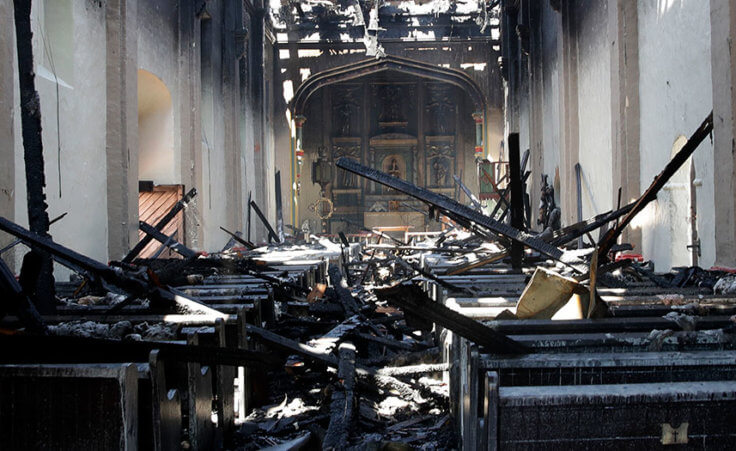
Micah Tomasella: [17:37] Great, great question. Love it. Thanks for taking us through all of that. Uh, guys, we will do our best to keep you updated on the Iran situation. It's it's uh continually evolving and there seems to be so many updates but so little updates all at the same time and we kind of walked through all of those things. All right, so next let's talk about Spencer Pratt. I entitled this the enigma that is Spencer Pratt. Now, I'm not comparing Donald Trump to Spencer Pratt. I'm just saying it in this way. I have only ever used the word enigma consistently, uh, when it comes to Donald Trump, right? There's just been no one like him. There's no one who can command a room like him or get attention directed to him. He can rally all of these people. The 2024 election was so impressive how he got together all just this coalition of people, many, many, many for many years, a lot of those people were democratic strongholds, right? Um, a lot of those demographics were, but Trump brought them together in that time in that way. Well, in the same way, Spencer Pratt is an enigma because what he's doing in the LA mayoral race, uh, it it is just completely and totally a race that is defined by, oh my goodness, we are in 2026. Unbelievable all the AI videos that he's releasing and just how like genuine he's coming off, just holding his phone up doing selfie videos, like nothing overproduced, just in the streets with the people of LA, really is coming off like one of them, one of the people. So if you told people, if you told me five years ago that Spencer Pratt from the Hills from reality TV, who was a villain for many, many years, uh, was not viewed positively for many years, would become a serious contender, and I serious contender for the mayor seat in Los Angeles, okay? Most people would have laughed. But heading into LA's June 2nd primary election, and yes, we're going to find out very soon if if this is going to happen or not. Major media outlets are now treating him like a legitimate political force. This localized election is becoming national news. And honestly, the story is about a whole lot more than Spencer Pratt. I want to talk about that. Pratt is running against current LA Mayor, Mayor Karen Bass, and then uh a progressive city council member, uh Nithya Raman. And the reason he's gained traction so quickly is because many people in LA feel like their city uh their city is slipping away from them. Many would say it has slipped away from them. Um the frustration goes far beyond politics, right? I'm just going to name a few of the issues, homelessness, open drug use in the streets, tent encampments near schools and playgrounds, public safety concerns, rising costs of living, higher taxes. And underneath all of it is a growing distrust that the city leaders are using these increased taxpayer dollars to actually spend the money wisely to solve the problems that they keep trying to fix. They keep saying that they're going to fix. So that frustration exploded, right? This is the something crazy had to happen for so Pratt is running as an independent, but many people view him more Republican. He's done everything he can to detach himself from that. He's focusing on local politics. He's done a pretty good job of that actually, right? But the majority of people in LA would say he's, you know, leans more conservative than the majority of their views there. So something crazy would have to happen to precipitate something like this, Connor, right? That that LA might actually hire somebody who's more, not hire, elect, I guess hire, elect somebody who's more conservative in LA, right? So that frustration exploded after the devastating 2025 fires in the Pacific Palisades and surrounding areas. Thousands of homes were destroyed and Mayor Bass faced enormous criticism, and we talked about this actually last year, after being overseas in Ghana while warnings about the extreme fire had already been issued. So she already knew about the issue and then stuff came out about how she had calls and texts and ignored them for many, many hours before she actually got to the issue while she was there in Ghana. Critics also pointed to concerns surrounding the fire department budget cuts that were done previous to that, water infrastructure problems. They had drained reservoirs, they had reallocated money, the fire department wasn't getting enough money. Like they just weren't ready to stop this fire. And what many residents viewed as a slow and disorganized recovery effort, which made the fire even worse, spread even farther, destroyed more homes and more lives. So that's where Spencer Pratt entered the picture, Connor. So what have you seen about Spencer Pratt so far, man? And does this remind you of anything else? I'm kind of leading you with this question. A local mayor race becoming front page national news.
Conner Jones: [22:12] Hmm. Have you ever heard of Zoran Mamdani?
Micah Tomasella: [22:15] Yeah, New York, right? Mamdani, right.
Conner Jones: [22:17] Mamdani, man. This is it's similar but different. One in terms of just their politics are completely different, but they're both doing a similar thing. They both found a way to grab attention outside of the legacy ways of grabbing attention. They are running these insane social media campaigns. They're being just open and out there and they're saying what they're what they want to say and what they want to think. Just in the streets with the people, man. Just in the streets with the people. Just out there. Like Mamdani would go into the bodegas and just do like talks with people and talking on the streets and posting them on Tik Tok and Instagram and Twitter. And that was how he got popular and he rose a younger vote. Pratt's doing a very similar thing and he's getting help from outside forces that are like creating these like insane AI videos that are showing like, you know, Governor, uh, Gavin Newsom as I I think like the Joker and and Karen Bash as the Joker and all of that. But Spencer Pratt has tapped into something that a lot of politicians are trying to figure out how to do. And that's finding a way to speak to the people and say, I'm one of you. I'm not a career politician. I don't even want to be doing this. That's this is what he's taking a page kind of out of Trump's playbook from 2016. Like, I don't really want to be doing this, which is probably not fully true, but that's the way that they speak about it. But I'm going to do this because I think somebody needs to step up and do it essentially. You need an outsider. You need somebody who's not from the quote unquote like swamp. They're not from city politics, they're not from state or US politics. They are coming in with an outside perspective and they are one of us. Now, Trump was obviously a billionaire and his own elite circles. Spencer Pratt is an LA media figure. I mean, he's got this like the Hills was the LA show in the 2000s and he was a just massive star out of that. And of course, he had a home in the Palisades. Villain, though. Villain. Yeah, but in a way, so was Trump. Trump was disliked across America too as like a this like TV reality TV villain/ real estate villain. Again, they're both enigmas, man. They're very unique. They're both you they're both enigmas.
Conner Jones: [24:07] Well, there's something about TV villains that like they have a way of drawing attention to themselves. And one thing about even on a reality TV show is you always remember who the villains were. You may not always remember the heroes. So when their name comes back up, when Spencer Pratt started making Tik Toks right after the fire a little over a year ago and was like, here's my home, nobody's doing anything. That's when he started getting like, you know, attention and people were like, this guy's got something going on. He can speak well. Then he goes on Rogan a couple months ago and it just blows up, man. He goes on Joe Rogan's show, which is another playbook. But yeah, man, it's it's interesting and it's very similar to Mamdani.
Micah Tomasella: [24:39] So, so Pratt lost his own home in the fires, like you kind of alluded to, right? The fires in 2025. And so since then, he's turned his massive social media platform into a non-stop campaign focused on what he sees as a civic, um, failure in LA. He constantly is posting videos. He will stand in these homeless encampments. I mean, and you see it, it's just as far as the eye can see, just open drug use, block after block after block after block, just not even safe, right? And he he talks about like Skid Row, like how a long time ago, you know, you kind of had this this uh defined area where those people would be in LA and now it's just spilled out. Now again, I I haven't been to LA ever, actually, but like, so I'm I'm only seeing what the media tells me. It's telling me. So like I'm just I'm trying to be fair there, but there's a lot of people in LA who are coming out affirming the things that he's saying. Um, so he's he's constantly posting those videos, public transit disorder, right? Drug activity, frustration from ordinary residents who just feel ignored by city leadership. I've seen a lot of videos of him just like conversing with different citizens, very mom Donny like, just sitting there and listening. Like he's just done a really good job of like sitting there and listening. And again, like I have no dog in this fight. I just I hadn't seen somebody do what Mom Donny did. Um, and and and what Mom Donny did was just so, you and I talked about this a lot, so kind of earth shattering of like, you might, you know, you might not agree with either of these guys politics, but they did this in a way really no one else has done before. And I think we're going to see this continue. But there's no question that Spencer Pratt has tapped into something very real for people, whether if you agree with his ideas or not. He speaks plainly, not like, I don't know, he just speaks like a normal guy, not using big words. He sounds emotionally honest. He talks with someone who's angry alongside voters instead of above them. He, uh, one article that I was reading from the Free Press described his political, uh, party this way. He's from the Angry Angelinos party, right? So this, you know, that's that's what they call themselves there in in Los Angeles, right? Like it's just they're fed up with the system. They're not Republican or Democrat, they're fed up with the system. What's especially interesting though, is that when they're polling people, many of the people quietly supporting Pratt are not traditional Republicans at all. Like a lot of his base are not traditional Republicans because not a lot of traditional Republicans live in LA, right? Some are Democrats who simply feel exhausted with what one article that I read by the Puck called polite progressivism and frustrated that visible problems in the city seem to continue getting worse while leaders keep promising improvement. And that's something we can all relate to, right? And at the same time, it's important to remember this, calling out problems is one thing. Anybody can do that. Actually rolling up your sleeves, getting your hands dirty and fixing them is an entirely different level. Everybody's good at calling out problems. Can you actually do something about it or will you actually do something about it? We've seen this many times before in politics, Connor. A candidate identifies real frustrations, says the right things, builds momentum, promises major change. That part's not new. But governing is much harder than campaigning, honestly. If Spencer Pratt were to actually become mayor, only time will tell whether he could truly follow through and deliver these meaningful results for the city. He's promising some big things, not things that I think are like unachievable. He's just basically just like wants to make the city safe and like wants to bring people in to crack down on fraud and, um, you know, things like that. But at the same time, it's there's probably a lot of layers to this onion, uh, of this government system there that has failed the people for so long. Any final thoughts there before I jump into the spiritual application, Connor?
Conner Jones: [28:44] Well, you're right. For instance, on Mom Donny, he's already starting to come up against some of those governing things, right? He's starting to realize he made a lot of big promises and it's not quite so easy to get an entire city government or policies, uh, to to work the way you think they're going to. I think he's already extending one of the rent-free policies he promised by a year because they're trying to figure out how to actually get that legislation done. Uh, Pratt will run up against that, but everything he's saying sounds really good to a lot of people in Los Angeles. That said, I I don't think he's like a sure fire win by any means. Like this is he's still got a long ways to go essentially. Like you said, I here in a couple weeks, we're going to find out if he can continue to go on and then I think the final election is in a week. Yeah, June 2nd. Yeah, so so if if he gets 51% of the vote on June 2nd, he'll become mayor. If not, it'll go to a runoff. The top two will go to a runoff, uh, later this year, October, November, something like that.
Conner Jones: [29:37] He's not going to get 51%. He's polling in the 20s and 30s right now. So it's likely going to be a runoff. I think that's what they're aiming for is just to force the runoff.
Micah Tomasella: [29:44] Well, I mean, I was looking at numbers yesterday. He's he's neck and neck with Karen Bass based off what I was reading yesterday. So, but there's a third candidate. Yeah, yeah, yeah, Nithya Raman. Yeah, so, yeah, he probably won't. Yeah, that's a good point.
Conner Jones: [29:57] I know that that's what they're aiming for and I think he's got a good shot to to to continue in the runoff. And if he can do that, then he gets, if you remember, Mom Donny was not polling super high either. And then they had that primary and he beat Cuomo, uh, in the primary and it was like, whoa, this guy could actually win the entire thing, uh, if he does this right. And then Cuomo had to run as an independent and he beat him again. Um, so the whole thing is just, uh, it's going to be interesting to see what happens. I think people in Los Angeles are fed up with a lot of stuff, but they also are very, it's a very blue, blue city. It's like the bluest city, that and New York City are so blue. And so they like their institutional democratic things that Los Angeles does have going that Karen Bass represents. So, uh, I will say, Spencer Pratt's bringing in a lot of billionaire money, a lot of celebrity endorsements. Um, not a ton yet, but a lot for a guy of his position. Yeah, people are staying quiet. Karen Bass has lost a lot of those endorsements and a lot of that fundraising because of her, I mean, she's just not governing the city well according to a lot of people there. So, and the fire is a big thing.
Micah Tomasella: [30:55] I do think, I do think because of these fires, I think he's going to win. I think it was going to take something like this where it's like, not only did the fires happen, not only was it mismanaged in putting out the fires, but also, I think I saw like one or two houses have been rebuilt. There's also a whole like zoning issue with the city and insurance issues that are preventing people from even rebuilding their houses. Well, that was what that the super viral video of him in the RV was like the the OG advertisement. He's like, this is my home. It's gone. His Airstream RV on his, uh, his burnt out home lot. That went very viral and it was like, whoa, is this how all these people are still living there? That's why I think he'll eventually win barring some sort of like major setback, you know, him shooting himself in the foot, some some major allegation come out. That's why I think he'll eventually win because if it wasn't for that, it would have been status quo, right? But I think so many of these people's lives have been affected and the fire has kind of been, you know, that's just like a a freak thing in terms of like God is sovereign, but something that you can't predict, right? And so, I mean, we'll just see what happens. But honestly, there's a steep, there's a there's a deeper spiritual meaning behind all of this as I was processing through this. So Psalm 146:3-5 says this, put not your trust in princes in a son of man in whom there is no salvation. When his uh breath departs, he returns to the earth, and on that very day his plans perish. Blessed is he whose help is the God of Jacob, whose hope is in the Lord his God. So scripture doesn't tell us leadership doesn't matter. It does. Justice matters, public safety matters, safety matters, truth truth matters, stewardship matters. Christians should care deeply about cities and communities of people where God has placed us. But the Bible also reminds us not to place ultimate hope in any kind of personality that we see out in this world right now. There's a lot of personalities and political figures and movements and charismatic leaders. Human leaders can identify real problems and they sure can call them out. We humans are really good at complaining and talking about the issues, right? They can bring meaningful changes at times too, these leaders can, but no politician can fully heal what's ultimately a heart problem, what's ultimately a a sin problem. Yeah. And maybe part of what we're seeing right now across the country is what happens when people become desperate for someone to finally fix what feels broken around them. The longing for restoration is real. It's put there by God in our hearts. But true restoration has never ultimately come through politics. And I don't think I'm convincing anyone of of of anything that they don't already know. I'm convinced, you know, I'm I'm definitely preaching to the choir on that one. But it comes through, what it does come through is it comes through the king who promises to never fail. He's the one who will heal and restore. That's it. That's all I got.
Conner Jones: [33:52] No, you're right. Uh, it's so easy to put our hope in politicians or rising politicians or whatnot for different things. And that can be good for, I really hope this person can help clean up our streets, help our community or whatnot, help our nation unite, whatever it is. But no, our true hope is it's like we said a minute ago, our foundation is on Christ. That everything else will falter and fall when the winds hit it too hard. It will collapse. Our foundation is Christ. So that's that's a really good point, Micah. Good stuff, man. It's important to talk about these mayor elections too, even though they're localized because I think in 2028, you're going to see a lot of the candidates start to tap into what Mom Donny and Spencer Pratt are doing for the next presidential election, uh, Senate elections, all of that. I think you're going to see people trying to stir up a social media storm, be very outspoken, get people almost a little shocked by what they're saying and where they came from. Um, get And I'll say this, there's going to be a lot of problems that come from that. But I that would actually bring me some hope if that's actually what came from this because I'll tell you what will happen is you'll get a lot of people running who are not career politicians and who actually will come in kind of bright-eyed and bushy-tailed into their positions and then maybe we will see some actual change, right? Like if if anybody from anywhere, not anybody from anywhere, but like, you know, Mom Donny was somewhat unknown, right? Pratt's been famous, but he was a villain, hated in some ways. Um, I think a good thing that could come from this is that we could actually get some of these career politicians out who have spent the last 30, 40 years governing and have lost their way. I think I think we, uh, most of us can agree they should go.
Conner Jones: [35:29] Yeah, there there's something to that for sure. And I think that's what people want, you know, that's why I'm saying that these guys can tap into. [35:37] All right, uh, let's jump into our mailbag real fast. We got a couple emails this week. Uh, one was from Gary who wrote us about our Spirit Airlines conversation a couple weeks ago. We talked about that and you know, we were very, we were very outspoken about how most of America did not like Spirit Airlines, but Gary wanted to defend them a little bit. So I figured this was fair to read. Oh, come on with it, Gary. He said he had they him and his wife actually like Spirit better. They usually fly them down to Mexico every year on their annual vacation to Mexico. But this year they took American and every time they take American, there are always delays. And I, you know what? I can attest to that. American Airlines delays me every single time I fly. They're never on time. And he said that Spirit was consistently on time and just always cheaper. It would typically save them around $600 round trip, which would buy them a couple more nights at their resort in Mexico. So, you know, there was something to spirit. There were people who really did like it. Um, and I should also say, I used a little bit of hyperbole when I was talking about Spirit Airlines and leg room. Uh, somebody called me out on saying it wasn't actually a legal, I said something like, you know, they had the least amount of legal leg room, you know, that you could possibly have. That's not true. There's no legal jurisdiction out there that's or or law that says the amount of leg room you can have. But they did have the I did go verify and I was right. They did have the least amount of leg room of any airline. So by like four inches to the next airline. So it was small. And then also we got an email from Stephen. I think this was in response, Micah, uh, to you and Dr. Ryan Denson. Y'all did a great job on last week's episode talking about anti-semitism and the fears of AI and kind of the backlash to AI. But Stephen wrote in to write, uh, to say that, um, you know, the growing animosity towards AI is real, but also there's good things about AI. His 78-year-old friend, uh, with no younger family members to help her, uh, and her husband who has dementia, they are using Grock to help with medical paperwork and formal communications with like the VA and the lawyers and financial institutions and hospital administrators. So yeah, it's true. There are great things coming out of AI. And you said that Micah last week. Um, you know, and we talked a lot about that. There's a lot of great things that are going to come out of this and there's a lot of bad things that are going to come out of it, just like with any major change or invention or you could go as far as to say, uh, revolution, you know, whatever it might be.
Conner Jones: [37:47] Yeah, it actually leads perfectly into our next statement, uh, here because we're going to jump into check in. [37:53] Pope Leo the 14th, uh, he gave his stark warnings about AI in an 83-page encyclical this week, uh, which is like a big document that gets sent out to other churches around the world. Remember, the Pope is looked up to by 20% of the world and almost half of the US population, uh, looks up to him in some format. So when he says something about any big topic, people listen and it matters, even though he's not forming any sort of legislation and we're not saying to trust in the Pope or anything. We're just this is an important thing. And he basically was calling out, um, AI. And he was said specifically, humanity is created by God in all its grandeur, and today it's facing a pivotal choice, either to construct a new tower of Babel or to build the city in which God and humanity dwell together. A more moral AI is not enough if that morality is determined by a few. So he's basically calling out all these AI companies saying, if you're giving the power to who knows how many, two dozen AI CEOs and leaders and developers and we're letting them choose the morality of this thing that's going to upend our understanding of the world. He he's just calling that out and he's also saying it needs to be disarmed, uh, in terms of not letting it make decisions on a military standpoint and all of that. So, a big warning there from him, uh, and take what you will with that. But Micah, any thoughts there?
Micah Tomasella: [39:09] Um, no, I I think I I think he's, yeah.
Conner Jones: [39:18] Something else, Tulsi Gabbard resigned. Uh, you know, you mentioned a minute ago, Micah, about Trump brought together a massive coalition including former Democrats. Tulsi Gabbard was one of those and he literally brought her into his cabinet as the director of National Intelligence. Um, she was kind of a more, she wasn't not like a full hard left progressive person in Congress, but she was, she was a Democrat. So when she came over, it was kind of like, oh, he is bridging the gap. Same thing with RFK Jr., right? Uh, she is now the fourth secretary to leave the Trump administration after she resigned, uh, or she's resigning effective June 30th to support her husband as he fights a rare form of bone cancer. That is the official word, um, coming out of her resignation letter. She's joined now Pam Bondi, Christy Noem, and Labor Secretary Laurie Chavez De Rimmer as those who have been fired or resigned. So four women, a lot of people have been calling out, uh, that four women from the administration have so far resigned from that cabinet. Trump did say she's done an incredible job and we will miss her in a true social post, but it's also being like widely reported and has been throughout the tenure that she had a tough relationship with the administration and was left out of discussions around the raid in Venezuela and she was not in favor of attacking Iran. And so several outlets just reported that Trump was likely actually going to fire her in the coming weeks if she didn't get on board. Um, so maybe this was kind of like a a well-timed thing, but also we're praying for her husband. That's really sad that he's got this bone cancer. [40:42] And then lastly here, Micah, NASCAR legend Kyle Busch, uh, he sadly, tragically passed away at age 41 from pneumonia and sepsis. Uh, he leaves behind his wife Samantha, their 11-year-old son Brexton and four-year-old daughter Linux. Just six days before his death, he won NASCAR Truck Series race in Delaware. After that race, after he won, he was asked on a, you know, an interview for television, why these moments never get old. And he responded, because you never know when the last one is. Golly. [41:13] Yeah. Um, as a man, childhood NASCAR fan, massive NASCAR fan all the way into my teenage years. I still dabble in it a little bit, not nearly as much anymore. Kyle Busch was just one of those guys, man, that was just always at the forefront. He's a legend in racing. He was so good. It was him and Jimmy Johnson and Jeff Gordon and Dale Hart Jr. Those were the like the the four stalwarts and Tony Stewart maybe, the stalwarts of NASCAR through the 2000s when it just had this massive surge of popularity. Kevin Harvick was in there. Yeah, you can name off a few more racers there, but Kyle Busch was winning all the time. He was seen as a guy who was gritty in his racing style and even in his talking style, but nobody could deny that he was just ultra talented. NASCAR had to change the rules for him, uh, because he was racing at 16 and they're like, we're not going to let you do that. You got to be 18. So he had to wait a couple more years before he could come in and race because he was winning at 16. He was winning at 16. He was that talented. And so it's just really sad. I feel for his family. Obviously, it just kind of came out of nowhere. Um, 41 years old, right in the prime, probably entering kind of the end of his racing career, but was probably about to get into kind of like team ownership and all of that, uh, and the next phase of his NASCAR career in that sense. So praying for his family and all that. And it's just a reminder, guys, you never know. You really never know. And so this is why it's crucial that we live for Christ every single day.
Micah Tomasella: [42:30] Enjoy, enjoy every moment, put away the things that distract you, stop doing things that don't honor God, because when you're not honoring God, you're not, you're not joyful. You're not at peace, you're not aligned. So when you are at peace and when you are aligned, your life is just so much better and that's just so poetic from Kyle Busch. God rest his soul, saying you never know when the last one is. Good reminder for all of us. All right, well, let's jump into tune in here real quick. [42:58] So the NBA finals is coming up. We know the New York Knicks have made it into the finals for the first time since the 90s. They lost that year to the Spurs. They have not won a national championship since, um, not a national championship. They haven't won a championship. I guess it's national, international because we have one from Canada. It's the final. Yeah, yeah, yeah, yeah, yeah. But like no one calls the finals a national championship. This isn't college. You know what they really say? Micah, they call them world champions in the NBA. World champions. Well, I mean, fair. I mean, the the best basketball is in the US. I mean, fair. I I I think that's fair. So, um, the Knicks haven't won since 1973. The Knicks have kind of been a laughing stock for many years, which is kind of crazy because it's in New York, right? The most influential city in the country. Um, but it's a huge deal for New York, right? So they'll be either playing the Spurs again or last year's champs, the Thunder. Good luck, Knicks. Uh, going to be a tough match up for you. The Thunder and the the Spurs. That's a wonderful series happening right now. Those are both very, very good teams. The cheapest ticket for game one at the Madison Square Garden, uh, Square Garden, which I've been to before, it's a beautiful arena, is currently $1,725 for a nose bleed ticket. Courtside tickets are going for over $100,000. It'll be riddled with celebrities. Then we got the Stanley Cup finals coming up. The Las Vegas Golden Knights swept the Colorado Avalanche, which was crazy by the way, because the Avalanche were like the best team all year, to move on to the Stanley Cup finals. They're either be playing the Carolina Hurricanes or the Montreal Canadians. And let's see, because if the Canadians can make the Stanley Cup finals somehow, I just wonder if they would be able to win and end this curse on Canada because a Canadian team has not won the Stanley Cup since 1993. Crazy.
Conner Jones: [44:41] Man, that's crazy. It's also crazy because the Las Vegas Golden Knights were literally founded in 2017 and this is their third Stanley Cup to go to. And yet, here we are as Cowboys fans and in our entire lives, we can't even make an NFC championship. It's so bad. How can a brand new team go, they've won a Stanley Cup. They've this is going to be their third one to go to. It's crazy. The Knicks, similar situation, but the Knicks actually finally made it. This this team that has all the money, all the celebrities, all the power, the influence, the cultural influence. Why you got to bring my Cowboys into this, Connor? Why you got to make this sad? Because of my Cowboys too, and they make me mad. They make me mad because I see these teams that do this and I'm like, why can't we do the same thing? I saw Michael Irvin this week said the the Cowboys are planning to the the locker room is trying to tap into whatever the Knicks have going on because the Knicks have figured out some sort of chemistry in their locker room that's like built up this hope, this pride of their team and they're they're working together and passing the ball better and all that and shooting. And yeah, there's just something to it. But you're right, dude, celebrity row in Madison Square Garden for a Knicks finals game, I can't even imagine. I mean, obviously Timothy Chalamet, Spike Lee, Ben Stiller's at all the games. So it'll be cool to see. [45:43] All right, well, that'll do it for us this week. [45:47] Thank you for joining us on this week's episode of Culture Brief, a Denson Forum podcast. All articles and videos mentioned in this episode will be linked in the show notes. If you want to help us reach more believers with truth in today's chaotic culture, please share this podcast around and leave a five-star rating and review. All episodes are produced by Sound of a Rose. For more information, you can visit soundofarose.com. See you next Thursday.









 Search