



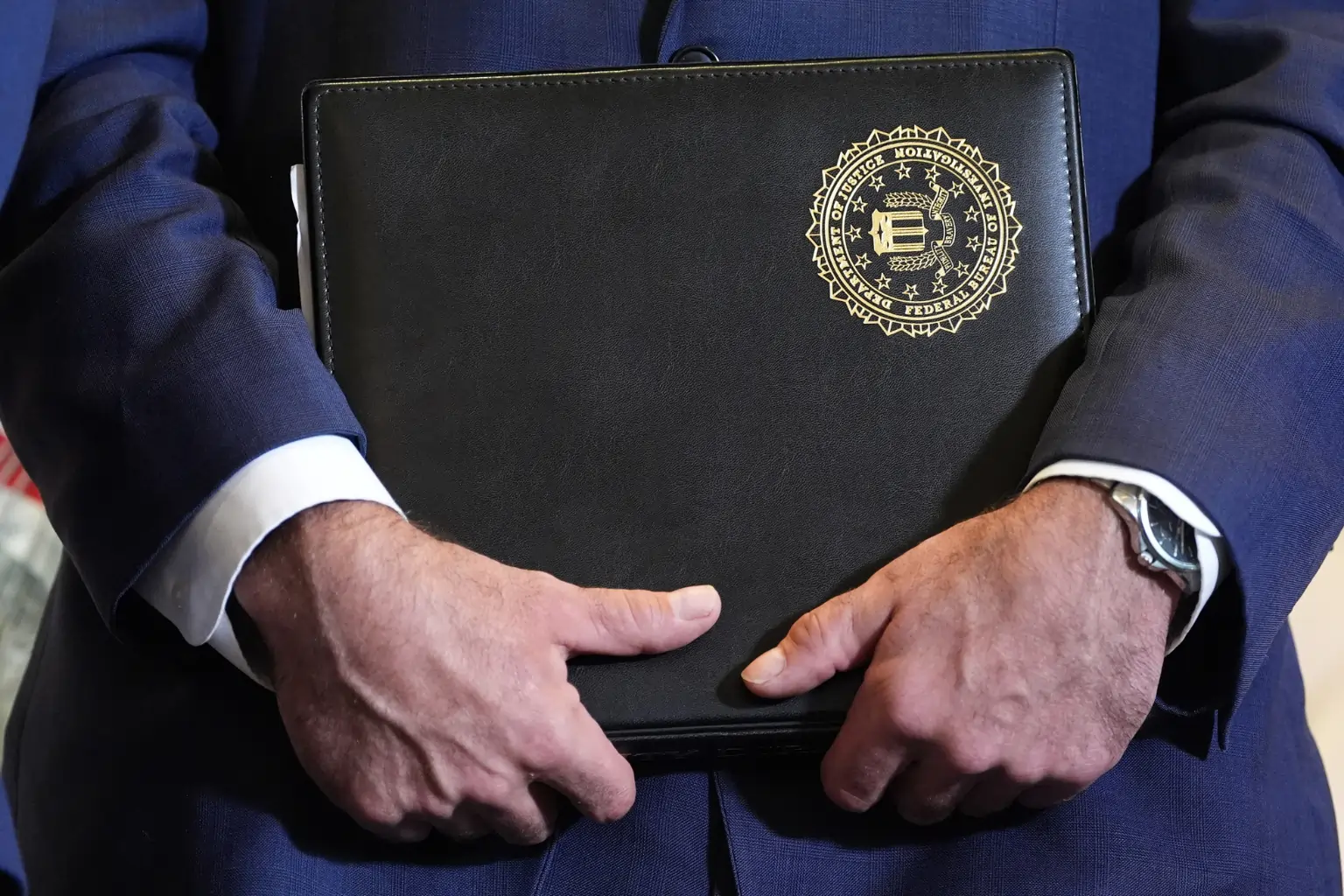
FBI Deputy Director Christopher Raia holds a folder marked with the FBI logo during an event where federal prosecutors announced charges against former Cuban President Raul Castro in the 1996 downing of civilian planes operated by Miami-based exiles, Wednesday, May 20, 2026, in Miami. (AP Photo/Rebecca Blackwell)


On Wednesday, the Justice Department announced that it was charging Raúl Castro, the ninety-four-year-old former leader of Cuba, with murder and conspiracy to kill American citizens. The allegations stem from Castro’s role in authorizing the Cuban military to shoot down two American planes operated by Brothers to the Rescue in 1996. Brothers to the Rescue was a group that helped fleeing Cubans find their way to the United States and also routinely dropped anti-regime pamphlets across the island nation’s border.
The group had a long history with the Cuban government, and the indictment against Castro claims that the regime planted spies within Brothers to the Rescue who relayed the group’s flight plans. They were purportedly told not to fly with the group in the days prior to the attack, indicating that the government’s decision to shoot down those planes was premeditated.
The attack took place over international waters—though the Cuban government claimed that the group had violated their airspace prior to the attack—and destroyed two of three aircraft that were being used in the mission. The third was able to return to Florida safely, and the organization’s members have long fought to hold Castro and others accountable for what happened.
Several lower-level figures were arrested, but Castro remained untouched because the Clinton administration was afraid of what would happen if they incited such a high-profile world leader. The fact that they had no clear way to extradite the Cuban leader against his will also played a role in their decision.
Unfortunately for Castro, however, that no longer appears to be the case.
Has the Trump administration learned its lesson?
When United States Acting Attorney General Todd Blanch spoke to the media about the indictment, he quipped that “There was a warrant issued for his [Castro’s] arrest. So we expect that he will show up here, by his own will or another way.” And it’s not hard to guess what that other way might entail.
That the US would look to bring charges against Castro thirty years after the initial attacks on American planes feels awfully similar to the way they charged former Venezuelan president Nicolás Maduro in order to create a reason to go in and capture him. You likely remember how that turned out, and many see the Trump administration following a similar playbook with Castro.
That said, there are a few key differentiators between what the US was able to accomplish in Venezuela and what likely awaits them in Cuba.
To begin, there’s no clear second-in-command to turn to should Castro—who, despite being ninety-four and technically no longer holding office, is still thought to lead the nation—be taken out of the picture. While US officials met with Castro’s grandson last month, he doesn’t seem to be a viable option to take over. Moreover, Maduro’s capture has put other leaders on heightened alert, so the same basic playbook is unlikely to work again.
As a result, should American forces remove Castro from Cuba, there’s a very real chance that no one better could be found to take his place. The war in Iran is currently in its third month, in no small part due to the fact that because so much of Iran’s leadership was wiped out in the conflict’s opening days, it’s unclear who—if anyone—has the power and authority to actually take charge.
Would removing Castro create a similar situation? The possibility can’t be ignored, but it’s also not the most pressing reason to make a decision soon on the fate of Cuba.
Time is running out
The situation in Cuba is deteriorating rapidly, with little sign of improvement. As The Dispatch outlines:
- Cuban blackouts routinely last for twenty-three hours
- Trains from the east to the west of the Island only run once every two weeks
- If you don’t work for the government, buying fuel is all but impossible
- A carton of thirty eggs costs roughly 40 percent of a Cuban doctor’s monthly salary
- Ninety-six thousand people are currently on the waiting list for surgery.
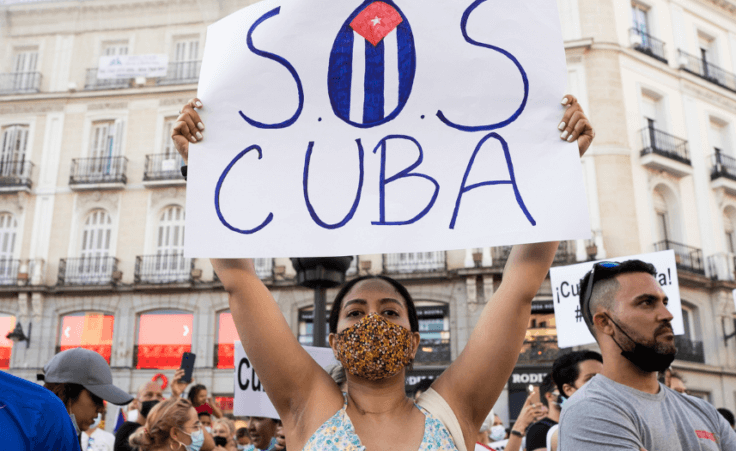
As a result, protests have popped up across the country, but they have yet to amount to any real change. The State Department has reportedly offered $100 million in aid to the island but insists on distributing it through “reliable” humanitarian organizations, such as churches, rather than through the government. Consequently, Cuban citizens have yet to receive a penny’s worth of that help.
Should the situation persist, Cuba may begin to resemble Haiti, where a nominal form of government technically exists but society is so broken that there’s little the nation’s leaders can do to help. Such an outcome could make the island even easier for foreign powers like China and Russia to use in their efforts to spy on the United States.
Closing Cuba to America’s adversaries is a large part of why the Trump administration has become so focused on our neighbors to the south, and they need the country to recover for that to happen. Removing Castro from the equation could help, but only if there is a clear, actionable plan for what to do next.
They were able to carry out such a plan for Venezuela, and the early results are promising. They were not in Iran, and the situation there is looking worse by the day as a result. When the time comes for change in Cuba, where it falls along that spectrum will likely depend upon how well the Trump administration has learned from its past mistakes.
And that same basic principle is one worth applying to our own lives today.
How to learn from your mistakes
Solomon has a lot of memorable sayings in Proverbs, but one of the more vivid is his statement that “Like a dog that returns to his vomit is a fool who repeats his folly” (Proverbs 26:11). While most of us would prefer not to see ourselves in that analogy, you probably don’t have to think very hard to come up with an example of when you were that fool. I know I don’t.
And I think part of the reason why is that we tend to want to move past our mistakes and follies before we learn from them.
It’s easy, in the moment, to recognize when something went wrong. Understanding why can be far more difficult. Yet, it’s only when we’ve truly learned from our mistakes that we’re equipped to avoid repeating them.
So, where are you most tempted to repeat the sins of your past today? Is there a particular mistake that’s proven difficult to avoid?
All of us have those areas where we’re especially vulnerable to temptation, but simply identifying them is not enough. Until you understand why you struggle with that particular sin, you’ll be the fool who keeps coming back to it. Fortunately, we serve a God who can help us do just that.
So, the next time you’re asking God to forgive your sins, take the time to also ask him to help you learn why you committed them in the first place. And if that conversation reveals an area of weakness or vulnerability, seek the help and accountability you need to learn from your mistakes.
My prayer is that President Trump and the people around him have taken the time to learn those lessons when it comes to pushing for regime change in foreign lands. Even more than that, though, I pray that we will heed the same warnings in our own lives.
Let’s start today.
Quote of the day:
“By repenting, one acknowledges them as sins—therefore not to be repeated.” —C. S. Lewis
Our latest website resources:
- Rise of antisemitism, America’s AI backlash & the heart problem underneath it all | Ep. 70
- Is there a biblical case for America as a chosen nation?
- Why are Americans turning against AI?
- Three purposes behind America’s founding
- How to disagree better on the role of women in ministry










 Search