



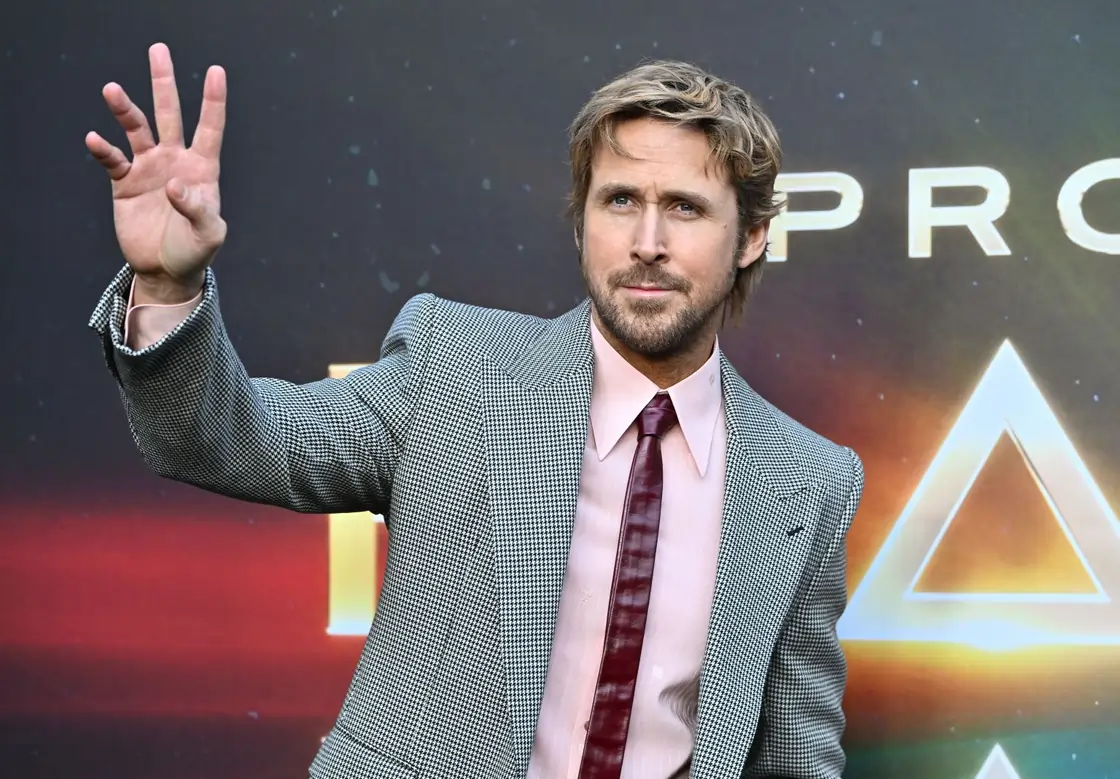
Ryan Gosling attends the premiere of "Project Hail Mary" at Lincoln Center Plaza on Wednesday, March 18, 2026, in New York. (Photo by Evan Agostini/Invision/AP)
Project Hail Mary is quickly rising up the ranks as the consensus favorite film of the year so far. The Ryan Gosling feature is the most prominent box-office entry yet in what is set to be a crowded 2026 for moviegoers, launching off to a startling $80.6 million domestic opening weekend. Only Oppenheimer has ever topped that showing among non-franchise films. Project Hail Mary has received an overwhelmingly positive reception, evidenced by an 8.5/10 on IMDb and a 95 percent on the Tomatometer.
The movie closely follows its source material, a 2021 novel by Andy Weir with the same title. Directors Phil Lord and Christopher Miller utilized a $200 million budget in their big-screen adaptation. The two directors have a diverse portfolio of prior projects together, including 21 Jump Street and The Lego Movie.
An otherworldly viewing experience
On the surface, Project Hail Mary is a sci-fi epic, a genre that audiences continually crave. But at its core, the film is a story of devotion, bravery, humility, and sacrifice. The fingerprints of cosmic classics like Interstellar, Arrival, The Martian (also a Weir novel), and even WALL-E are all over this film, and yet it still feels original in its own right.
Gosling stars as Ryland Grace, a scientist-turned-teacher who wakes up from an amnestic coma as the lone survivor on a ship in deep space. As his memory slowly returns, he’s able to piece together how he ended up on a journey to save the world. Despite the circumstances, Grace soon learns he is not actually alone, encountering an unlikely friend to assist him in completing his one-way mission.
Among the movie’s most impressive accomplishments are the visual effects. A surprising amount of the film is done with practical effects. Not a single green screen was used; the entire spaceship was physically constructed, and the alien friend, Rocky, was a 3D-printed puppet rather than a digital creation.
This realism is noticeable and refreshing in an era when big-budget movies often take computer-generated shortcuts to streamline the filming and production process.
Visuals aside, the story is captivating, and Gosling sells it with an outstanding performance for what, at times, feels like a one-man show. The stakes are high, and there’s no nuance in who to root for along the way. Moreover, the science presented is elementary enough for the general audience to grasp and sensible enough to be believable.
Importantly, you feel like you’re getting the whole picture alongside the main character, who slowly regains his memory throughout the film, creating a unique connection with the audience.
Set apart from the rest of Hollywood
Space thrillers can feel claustrophobic with so much time spent in a tight environment, but Project Hail Mary feels big. It feels important. It is certain to produce lots of laughter without fully embracing the comedy genre, but it also might produce some tears along the way. The characters are easy to get attached to, even (maybe especially) the non-human one.
Lord and Miller would be inching toward receiving a perfect review if not for the movie’s length. Two hours and 36 minutes is about 15 minutes too long. While the final act all matters, it does feel like the credits could have rolled at a couple of different points, and everyone would have walked away okay. There also might be a scene or two where the humor knob could have been turned down a little bit in favor of a more serious approach to add to the gravity (pun intended) of the moment.
Nitpicking aside, Project Hail Mary truly is a must-watch.
Despite the PG-13 rating, the movie is extraordinarily family-friendly, with no sexual content, no curse words, and no violence. There are intense sequences and some mature themes, but overall, it is impressively clean for a time when not even superhero movies can claim that descriptor.
In an interview with The Big Picture podcast, the directors shared they enjoy making movies that are at least 51 percent positive—and that is evident throughout this project. Amid all the dark, hollow, and vulgar content that is normative in movie theaters, Project Hail Mary is like a bright beacon for families or anyone seeking a dose of encouragement.
The importance of sacrifice
The idea of sacrifice is central to the plot. Every significant character has to make a sacrifice at some point, for the sake of someone they love or for the greater good.
It is not uncommon for movie protagonists to make sacrifices to achieve their goal, but often the sacrifice is made out of necessity or as a consequence for the hero’s prior failure or poor decision-making. In the case of Project Hail Mary, the hero operates from a place of humility, in which every sacrificial decision has a cost that he deems worth the price. His failure does not drive him to make costly choices, but rather his compassion does.
Hero archetypes regularly emulate aspects of Christ’s journey. Jesus exemplified humility in His incarnation. And then, every decision He made along the way intentionally led to the ultimate sacrifice, where he compassionately paid the cost he deemed worth the price, so that we did not have to.
That same compassion should drive us to live sacrificially. We are called to display that costly, humble love because Christ first loved us (1 John 4:19). It may not be a cute, faceless alien that you need to sacrificially care for this week, but there is almost certainly someone in your life who is worth the cost!













 Search