


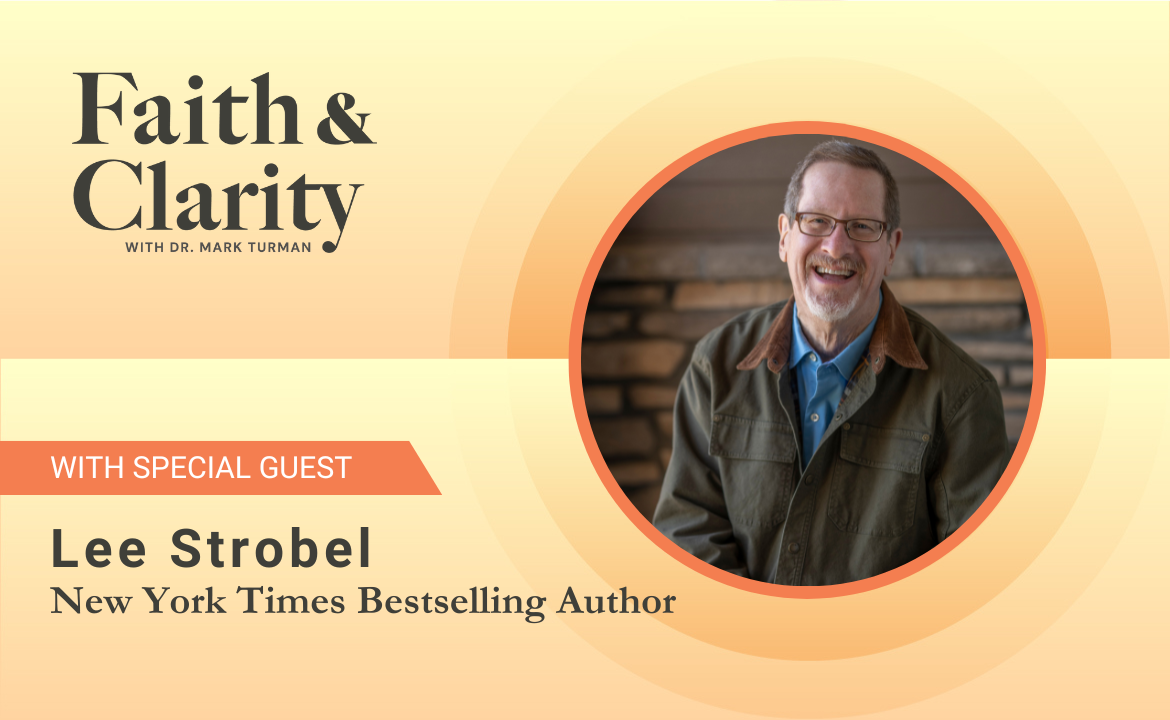
In this episode of Faith & Clarity, Dr. Mark Turman sits down with bestselling author and apologist Lee Strobel for a thoughtful conversation about miracles and why they still matter, especially during the Christmas season. Lee reflects on his own journey from atheism to faith, sharing how evidence, honest questions, and personal transformation reshaped the way he understood God and the world.
Together, they explore what miracles are, how to think about them with intellectual integrity, and why stories of God’s work, both dramatic and quiet, can open meaningful conversations about faith today. Drawing from his latest work and the upcoming film The Case for Miracles, Lee offers practical encouragement for engaging skeptics with humility, courage, and hope.
The episode closes with a pastoral and prayerful note, inviting listeners to take small, faithful risks in sharing what they believe and to live as visible reminders of God’s presence this Christmas season.
Powered by RedCircle



Topics
- (00:00): Introduction
- (00:59): Introducing Lee Strobel
- (03:44): Lee Strobel’s journey to faith
- (07:09): Encouragement for sharing faith
- (09:21): Engaging in spiritual conversations
- (13:26): Positive trends in faith among youth
- (22:14): The power of cinema in evangelism
- (26:29): Miracles in the movie: Real stories and reactions
- (29:12): The role of miracles in faith
- (35:05): Personal struggles with miracles and suffering
- (43:25): New book: Seeing the Supernatural
- (44:58): Final thoughts and prayer
Resources
- Ask Us Anything: [email protected]
- How has Denison Forum impacted your faith?
- Support Denison Forum 2025
- The Case for Miracles Movie
- THE CASE FOR MIRACLES – OFFICIAL TEASER
- The Case for Miracles: A Journalist Investigates Evidence for the Supernatural
- Lee Strobel
- Facebook: The Case For Miracles
- Instagram: The Case for Miracles
- The Case For Miracles (@caseformiracles) / Posts / X
- The Case For Miracles (@caseformiracles) | TikTok
- A review of Lee Strobel’s “The Case for Miracles” – Denison Forum
About Lee Strobel
Lee Strobel, former award-winning legal editor of the Chicago Tribune, is a New York Times bestselling author whose books have sold millions of copies worldwide. He earned a journalism degree at the University of Missouri and was awarded a Ford Foundation fellowship to study at Yale Law School, where he received a Master of Studies in Law degree.
Strobel was a journalist for fourteen years at the Chicago Tribune and other newspapers, winning Illinois’ top honors for investigative reporting (which he shared with a team he led) and public service journalism from United Press International. He also taught First Amendment Law at Roosevelt University.
A former atheist, Strobel served as a teaching pastor at three of America’s largest churches. He and his wife, Leslie, have been married for more than fifty years and live in Texas. Their daughter, Alison, and son, Kyle, are also authors.
About Dr. Mark Turman
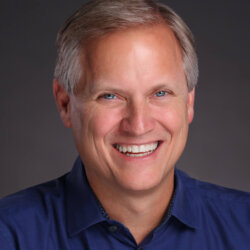
Mark Turman, DMin, serves as the Executive Director of Denison Forum, where he leads with a passion for equipping believers to navigate today’s complex culture with biblical truth. He is best known as the host of The Denison Forum Podcast and the lead pastor of the Possum Kingdom Chapel, the in-person congregation of Denison Ministries.
Dr. Turman is the coauthor of Sacred Sexuality: Reclaiming God’s Design and Who Am I? What the Bible Says About Identity and Why it Matters. He earned his undergraduate degree from Howard Payne University in Brownwood, Texas, and received his Master of Divinity from Southwestern Baptist Theological Seminary in Fort Worth. He later completed his Doctor of Ministry at George W. Truett Theological Seminary at Baylor University in Waco.
Before joining Denison Forum, Mark served as a pastor for 35 years, including 25 years as the founding pastor of Crosspoint Church in McKinney, Texas.
Mark and his high school sweetheart, Judi, married in 1986. They are proud parents of two adult children and grandparents to three grandchildren.
About Denison Forum
Denison Forum exists to thoughtfully engage the issues of the day from a biblical perspective through The Daily Article email newsletter and podcast, the Faith & Clarity podcast, as well as many books and additional resources.
EPISODE TRANSCRIPT
NOTE: This transcript was AI-generated and has not been fully edited.
Dr. Mark Turman: [00:00:00] I am Mark Turman and this is Faith and Clarity. First of all, lemme just say Merry Christmas as this podcast is coming to you. In this season, we’re celebrating the miracle of God becoming one of us, to save us from sin, from death, and literally to save us from ourselves. Jesus’ birth and mission.
It’s the thing that empowers us to live by faith and not by fear. And that’s something to celebrate. That’s not just good news. We like to talk about it as the best news because of Christmas, because of Jesus, we can live faithfully, beautifully and abundantly, and we want to try to help you do that even more.
We’re gonna talk. Today about things like miracles and how you and I can do the best job possible of the privilege that we have of being ambassadors, representatives, witnesses, spokesman for Christ, and how we can do that perhaps in a unique way during. Christmas season, so we’re gonna jump right in.
My conversation. Partner [00:01:00] today is no less a person than Lee Strobel, and many of you will immediately recognize that name. Lee, I just gotta tell you the story. I have a really close friend who’s. In his early thirties living across the street. He also works in movie distribution. And I said, Hey, I just watched this movie.
We’re gonna talk about the movie in a little bit. And I’m having a conversation with Lee Strobel. He goes, oh yeah, Lee Strobel the case for Christ. He was immediately. Clued in. So whether you’re 30 or 90, you probably if you live in the, in the faith community, you know the name Lee Strobel he served as a pastor started off as a legal journalist.
He is a New York Times bestselling offer author of more than 50 books, and those books have 18 million copies plus worldwide. Former award-winning legal editor, as I said, for the for the Chicago Times or Tribune, I should say, and is known for that book, the [00:02:00] Case of Christ, of the Case For Christ. I’m stumbling over my words today, Lee.
That and other works have been translated into 40 languages, so Lee Strobel, welcome to the Faith and Clarity podcast.
Lee Strobel: Thanks so much. It’s so wonderful to be with you, especially this wonderful season to talk about Christmas and talk about faith, and I can’t think of anything I’d rather be doing.
Dr. Mark Turman: Yeah, we’re glad to do it. We were also talking offline a minute ago that Lee now lives in Texas, which is where I live.
We’re working. That means I have to ask you, Lee, do you have an actual pair of cowboy boots?
Lee Strobel: I do. I I did the prayer breakfast at Fort Worth a couple of years ago, and they gave me a pair of custom made cowboy boots as a result.
So I’m, I’m part of the club. Alright, you’re
Dr. Mark Turman: getting, you’re getting properly baptized. That’s right. In Texas culture. And I’m guessing that you probably don’t miss the, the winter in Chicago.
Lee Strobel: Boy, it is brutal up there. I’ll tell you. No, I love Texas. I love the people at Texas. The funny thing is when I moved in, they [00:03:00] said, you know, when you go to the grocery store, you have to allow an extra 10 minutes because the cashier’s gonna tell you her life story.
People are just friendly, they just engage with each other. I, I just love that about Texas.
Dr. Mark Turman: Yeah. And it’s just, yeah, there’s so many good things about being here and you know, we love all the rest of the parts of the country in the world, but Texas tends to grow on you. That’s after you’ve been here a while.
That’s some of my closest friends moved up to the Chicago area a few years ago and. When we went to visit them not long ago, the, the biggest thing they bragged about was the snowblower that they have in their garage.
Lee Strobel: We didn’t have those in my day.
Dr. Mark Turman: Yeah.
Lee Strobel: We were out there shoveling.
Dr. Mark Turman: Yep. So we were like if that’s the best thing you can say about Chicago, we, we are on thin ice for sure.
Lee, let’s talk a little bit about some of the work you’ve been doing recently. Yeah. Around faith and sharing faith and doing that in creative ways. But before we do that. It’s been a little while for some of us since we heard some of the details about how you ended up coming to Faith. I remember pieces of that and [00:04:00] your, your wife’s witness in that and some of the friends that she had at church, but.
Just remind us, how long have you been a follower of Christ and what were some of the details and tipping point that got you into the life of faith?
Lee Strobel: I was an atheist for much of my life. My background’s in journalism and law. I was at the Chicago Tribune and my wife was, I, I call her agnostic.
She was just kinda spiritually confused and, and so we moved into a condo. Building and the woman downstairs was a Christian nurse named Linda, who had a daughter of the same age as our daughter, and Linda and Leslie, my wife, became best friends and it was very natural for Linda to talk about her faith to bring Leslie to church.
And then Leslie came and gave me the worst news any atheist husband could get. She said, I’ve decided to become a Christian. Wow. And first word through my mind was divorce. I was, I was gonna walk out. But I saw a lot of positive things in her character and values subsequent to that, that were intriguing and winsome.
But then I wanted the old Leslie back so I figured, hey, maybe I could rescue her from this cult [00:05:00] if I could just disprove the resurrection of Jesus. ’cause I knew that that is the lynchpin of the faith. He, if he claimed to be God, then did he prove it by returning from the dead. So I spent two years of my life.
Using my journalism and legal training to systematically investigate that issue. Did Jesus claim to be God and did he die and return from the dead? In proof of that and finally concluding on November the eighth of 1981, that in light of the avalanche of evidence at points so powerfully toward the truth of Christianity, it would’ve taken more, a more faith to maintain my atheism than to become a Christian.
So that’s when I repented my sin, received Jesus as my forgiver and leader. Then my life began to change as hers had, and several years later I took a 60% pay cut and left behind everything I’d ever prepared for. And joined the staff of the church and never looked back.
Dr. Mark Turman: Yeah. Yeah. That just, just amazing to hear.
Again, I, I, I guess the part that I am curious about today that I haven’t heard you talk about, which is. [00:06:00] What was the conversation like with your wife when you made this got to this conclusion, made this decision? How did that conversation go? To share with her where you had come to?
Lee Strobel: Oh, at the time I came to Faith?
Dr. Mark Turman: Yeah.
Lee Strobel: Yeah. She burst into tears and she threw her arms around my neck and she was sobbing and she said, I almost gave up on you a thousand times. Wow. And she said you know, I met some women at church and I told him about you. I said, I don’t have any hope for my husband. He’s the hardheaded, hard hearted legal editor of the Chicago Tribune.
He’s never gonna bend his knee to Jesus. Hmm. And this one woman named Sylvia, put her arm around Leslie’s shoulder, kind of pulled her to the side and said, oh, Leslie, no one is beyond hope. She gave her verse from the Old Testament, Ezekiel 36 26, that says, moreover, I will give you a new heart and I will put a new spirit within you.
I will remove from you your heart of stone and give you a heart of flesh. And so the whole two years that I’m on this investigative journey, what I never knew is my wife, every day on her own, [00:07:00] in private, on her knees, was praying that verse for me, and that’s the prayer that God ultimately answered.
Dr. Mark Turman: Yeah.
Yeah. Just such a great story. And one that just has inspired people for decades now, and just you know, if you’re so here at Christmas time, if you’re listening to this podcast and you have somebody that you care about, you care about their faith and. Where they are or where they’re not. We would just want you to be encouraged by that and yeah, to know that I try to remind myself often, Lee, that as much as I might be concerned about somebody else’s faith, God’s more concerned about it than I am.
That’s right. That’s right. And he’s, he’s pursuing them, even if I’m not doing a particularly good job at pursuing them. But I know that this is just a passion of yours and what you said about your wife’s friend, just. It is kind of the heart of this conversation today that it was natural for her to talk Yes.
With Leslie about her faith. And I think, I think that is, is really the goal that I have and many of us have, is just. Lord, just let this kind of just flow out of us as the [00:08:00] natural reality of, of our lives and our relationship with you. But we put church words like evangelism around it and, and this time of year we’re reminded that the angels sang about Christmas and about Jesus being born.
But yeah, many of us still struggle. To even invite a, a simple friend to come to a Christmas Eve service. Yeah. At this time of year the numbers still kind of bear out that most Christians don’t share their faith consistently. At least is the way that we define sharing your faith. Maybe that’s something you could help us with.
Sure. Maybe, maybe we define of evangelism. Wrongly or too narrowly. Mm. But why do you think we don’t more of us share our faith more? And why isn’t it more natural for us to talk about issues of faith, do you think?
Lee Strobel: I do think this is the season to do it. I mean, people are more spiritually open during the Christmas season.
I know I was, when I was an atheist, I was more, I had more spiritual conversations as an atheist leading up to Christmas. ’cause something’s going, something’s in, in the atmosphere. And [00:09:00] yes, it’s a big commercialized holiday, but. We all know there’s something going on there beneath that. And so I think, you know, Colossians four says, seize every opportunity to, you know, communicate with outsiders.
That there is hope, there is redemption. And so what I try to tell people is, is a couple of things to do this Christmas season, number one, to pray. For someone in your life who’s spiritually confused number two, to engage with them as God opens up opportunities and it’s so easy to get into a spiritual conversation.
This s time of year, here’s the question to ask. Say, Hey, Christmas is coming up. How did you celebrate Christmas when you were a little kid? And often they’ll say, oh, that was great. You know, it was so fun. And Santa Claus and, and we used to open presents and we’d go to church and then we’d have a big dinner with the cousins and, and then you say, oh, do you still go to church?
No, I kind of gave that up when I started college. I haven’t been in years. Really? What, what keeps you away? And now you’re on, you’re [00:10:00] launched on a spiritual conversation. So it’s just a great era to be able to get into those kind of discussions. Then I’d say give them something, give them a spiritual stocking stuffer.
You know, something that can bring them along in their spiritual faith. That’s why I wrote this book, the Case For Christmas. It’s an inexpensive little book fact, you get it free at Hobby Lobby. Oh wow. They’re giving, they’re giving away half a million copies for free over Christmas season. Yeah. But give it to somebody and, and because it has a gospel in it and the story of Christmas that might and, and answers questions about Christmas, they may find helpful.
And then invite ’em. Invite ’em to the movie. We’re gonna be talking about, invite ’em to Christmas services at the church, and and finally take a risk. You know, yes, it is intimidating sometimes to engage with someone spiritually. I, I grant that, but, you know, I had an opportunity to talk to Luis Palau was one of the great evangelists of history.
He was a hero of mine and a friend of mine. Before he died. And so he is on his deathbed and he said to me one of the last [00:11:00] things before he passed, he said, Lee, I can tell you from personal experience when you get to the end of your life and all is said and done. You will never regret being courageous for Christ.
Dr. Mark Turman: Hmm.
Lee Strobel: So even those little steps of care, take a risk engage in a spiritual conversation, offer an invitation give them maybe a, a a, some Christian music or something, whatever it is to kind of, amplify this message of hope and grace.
Dr. Mark Turman: Yeah, those are some great ideas. And you know, I had a, a mentor tell me a few years ago, you know, you have to understand when you, when you say something simple like this time of year Merry Christmas, or God bless you.
Yeah. Or if you hear somebody and they’re telling you that they’re going through something hard, if you say to them hey, I’ll pray for you. Or Can I pray for you right now? Yes. You’re actually being a witness to faith. You’re opening a. Absolutely. An action, a conversation that can lead to more things.
Absolutely. And you know, even yesterday I was, I was playing a little golf yesterday afternoon, and the guy that was helping me get started said, Hey, tell [00:12:00] me about you. What do you do for a living? And I said and, and it, but it did. What it did is it opened up a great five minute conversation about faith.
Yeah. And you know, I would’ve never thought that conversation was coming. I was trying to run away and just, you know, be alone on the golf course for a few minutes.
Lee Strobel: You never know. I mean, one of the things I like to do is at a restaurant, you know, the waitress takes the order and you say, Hey, before you leave we’re Christians here.
We’re gonna pray before the meals. There anything we can pray for you.
Dr. Mark Turman: Yeah,
Lee Strobel: and I’ve had waitresses and waiters break down in tears at that moment and say, you know, I’m going through a really tough time. I really appreciate if you pray for me, and then I leave them something. Before I go the case for Christmas book this season, I, I actually buy to buy my own book, but I bought 300 copies of the case for Christmas and I’ve been giving it away all season to flight attendants and waiters and waitresses and clerks at hotels and neighbors, and we gave it away.
To trick or treaters at Halloween. Yeah. And
Dr. Mark Turman: yeah.
Lee Strobel: And it’s just a great opportunity to seize this moment in history. And, and I [00:13:00] think, yeah, I dunno if, you know, if you sense this too, but I think God’s stirring something in our culture today.
Dr. Mark Turman: Hmm.
Lee Strobel: You know, it’s interesting that in light of the Charlie Kirk assassination, that they did a study and they found of young people who’ve taken some sort of step as a result of that incident. Three times as many has have taken spiritual steps than have taken political steps. So something spiritual is, is stirring in the culture.
Dr. Mark Turman: Yeah. And that’s a great segue to what I wanted to ask you about next, which is I have a a minister friend out in California was talking to some people that have been doing some work not only nationally, but globally recently.
And we were talking about how there seems to be islands or campfires of re revival among Christians, awakening among people who don’t yet believe. Yes. Are you seeing, in addition to what you just mentioned, other positive trends or even some obstacles. To people coming to faith and to Christians sharing the gospel.
Are you, what are you kind of seeing at a, at a high [00:14:00] level?
Lee Strobel: Yeah. I’m seeing, you know, it’s interesting, the long range numbers are discouraging, uh mm-hmm. What’s happened since the year 2000 to today. There’s some discouraging numbers about how important religion is to people’s lives, how many people consider themselves Christians and so forth, but.
I’m seeing in, in recent months, you know, this, this, this, I like the way you put it, these campfires that are kind of burning here and there. I have a friend, Shane Pruitt, whose ministry is to travel the country and to talk to groups of young people, either college or high school students. He said, Lee, I’ve seen more young people come to faith in Christ in the last three years than in the previous 18 years of ministry combined.
Wow. I spoke recently at a church there in Texas and we had 105 people come to faith right there at the service. And then I spoke the next weekend in Las Vegas at a church. We had 160 people come to faith. Wow. I mean, I’m seeing people responding to the gospel, so yes, I do think something is stirring into culture and and so let’s seize this opportunity at [00:15:00] Christmas and, and you know, be the witnesses.
Be strong salt and bright light as best we can.
Dr. Mark Turman: Yeah. Yeah. And people are, are talking about that particularly as it relates, like you said, to teenagers and college students. Yeah. What we, what we are generally commonly calling Gen Z now. Barna and others are kind of documenting some of this. Yeah.
I had one pastor friend call it that this generation is what the, what he’s calling skeptical curiosity. Mm. Are you seeing that among I am. Teenagers and, and college students.
Lee Strobel: And I think that’s good. And the reason I say that is it gen Z and, and the alpha generation following them, they’ve been, they’ve been lied to so much.
They can’t trust a video online not knowing whether it’s AI or not. There’s so much a, a artificial intelligence stuff going on. There’s political campaigns selling them one thing and then another thing. There’s advertisement trying to sell ’em one thing. There’s all kinds of stuff on the internet, on social media that they know isn’t, can’t be true.
And I think they’re looking for something [00:16:00] solid. They’re looking for truth. That’s good I think. Yeah, because I, that’s how I was and, and when you investigate truth, when you really check into it, you find it points toward that baby in the man being who he ultimately claimed to be, which is the unique son of God.
So I think this is positive. I think I like the way you put it, kind of that skeptical curiosity. They, they’re skeptical ’cause they’ve been lied to so much, but a curiosity that’s genuine and when we can anchor that in hope. They give a solid anchor to their soul. That’s what they’re really looking for, and that’s exactly what the Bible says about the gospel.
It’s an anchor for our soul.
Dr. Mark Turman: Yeah. Yeah. And one of the great things about it is, is that one of the characteristics of this generation is, I’ve studied it, is they’re eager for conversation. For real conversation. Oftentimes very open to conversations with people who are older. I know, I love that. That’s.
I’m like, that’s good news for me. That’s good news for, I’m gonna be
Lee Strobel: 74 in a couple of weeks. I’m getting up there. And [00:17:00] it’s so interesting to see young people who are really willing to sit down and engage and have conversations. I, I just find that very, and I don’t know if that’s because a lot of young people don’t have fathers.
Hmm. You know, we have a, a, an epidemic of, of fatherless families in our country, and I think that’s related to the fact that there’s been spiritual drift and so maybe they’re seeing some of us old, old folks as being surrogate dads and that’s fine with me.
Dr. Mark Turman: Yeah, absolutely. And you know, just look for those opportunities, right?
Yes. Make yourself available. Yes. One of those things we can do is. Make ourselves available in our neighborhoods and, you know, through our churches and through other opportunities. Just where can we be open to those kinds of conversations. Yep. And, and develop it. ’cause it, it is, it’s always been right that the gospel moves at the speed of relationships in the best way.
Yes. Yes. That’s true. Before, before we get into talking about this project, of this movie that’s coming out, yeah. Wanted to ask one last kind of broad question, which is any other suggestions that you [00:18:00] have for Christians about just how they keep their enthusiasm for sharing their faith and and improving their skills at conversations that matter.
Lee Strobel: Yeah. You know, my, my best buddy, mark Middleburg, wrote a book called Confident Faith, and, and it’s a great book to really kind of give you some practical tips about how to engage with people. And, and I think one of the keys that, that a lot of people don’t get is they think, oh, share my faith. You means, I, I mean, I gotta stand on a sidewalk and with a bullhorn.
Or I have to knock on the doors of strangers. No, there are at least a half a dozen different styles. Evangelism that we see in the pages of the New Testament. A relational style, a a servant style that you see with Samaritan’s Purse that helps people in times of crisis, but through that shares faith.
An intellectual style. Talk about the evidence for the faith, a direct style. There’s different kinds of approaches. You don’t have to do it like me. I don’t have to do it like you do it, like you do it like yourself. When you imagine the word of [00:19:00] evangelist, picture yourself. Don’t picture somebody else, picture yourself that, that God wants you to take those social risks and engage with people.
Dr. Mark Turman: Yeah. And that, that passage you mentioned a moment ago, outta Colossians, is one of my favorite on this Colossians four. You know, if, if Nolis a person, then Paul, the Apostle was asking for the Colossians to pray for him, right? That he would have an opportunity, that he would’ve an open door, that he would have courage, that he would have clarity.
If no less a person than Paul is asking for that kind of help and support, then probably the rest of us need that. Yes. In our faith communities, our churches for sure. Lee, last couple of nights ago my wife and I were just unwinding after a day’s work and looking as we always do to find something to watch on television, and all of a sudden Kevin Costner popped up.
And not surprisingly, my wife wanted to pay some attention. So she started listening. I was actually on the phone [00:20:00] and to our utter surprise, she, she ran it back. And we started from the beginning, we watched Kevin Costner tell the Christmas story in I think what was a two hour presentation in which.
One of the big takeaways was Kevin Coster was just very upfront and said, this is my faith. And Wow. He was, he was doing what you said a few minutes ago. He was talking about. His memories of Christmas as a child. Mm. Yeah. And, and what it meant to decorate the Christmas tree, what it meant to get out the nativity scene.
How his first acting experience was actually being a shepherd in the Christmas story at his church as a kid.
Lee Strobel: No kidding.
Dr. Mark Turman: When he was four years old. I’m like, I’m like, this is a side of Kevin Costner I have never seen before. And he just did a really amazing job of walking through the story.
There were other actors and that type of thing, but I thought he did a really exceptional job of doing that at this time, you know, [00:21:00] and who would’ve thought, this is not what I usually think about when I think about Kevin Costner. But talk a little bit more about, the unique opportunity that Christmas presents to us for faith conversations, not only the building up of our own faith, but the opportunity to talk to other people about faith.
What does this season present to us in terms of opportunity?
Lee Strobel: Yeah, I think the, the doors wide open. People who really have no faith background or maybe they’re nominal Christians, maybe they kind of believe in Jesus, but they’ve never received him as a forgiver and leader. They’re all receptive to, to conversations this time of year.
You’d be amazed at how often people will willingly engage in a conversation, especially when we can use those kind of anecdotes about what was Christmas like growing up, or, or what are you gonna be doing this Christmas or. And then they ask you, what are you gonna be doing? And you can say I’m, I’m going to church.
I, I, I really love going to church at Christmas because I really believe this is an historical event. Is the birth of the son of God, the incarnation of the [00:22:00] of, of God, and believing that it makes Christmas that much more special. What, what do you think about that? I mean, it, it’s just so easy to talk about this stuff.
Dr. Mark Turman: Yeah. Yeah. Why do you, why do you have all those lights on your house? Yeah. What, what are those decorations about? Lee, you’ve had, you’ve had at least three different careers that I can identify. You’ve been a, you’ve been a legal journalist, you’ve been a pastor, you’ve been an author.
Did you ever think movie star was going to be part of your resume?
Lee Strobel: No. I mean, here’s why we got into movies. And this is, you know, gosh, I think we’ve done. Six or seven now through the years. But the reason we got into it, cinema is the language of young people.
Dr. Mark Turman: Hmm. Yes.
Lee Strobel: And you know, any missiologist will tell you that if you wanna reach a culture with the gospel, you have to learn their language.
And so typically that means learning Japanese or learning some other language? No, but I think for us it means learning the language of cinema. Kids these [00:23:00] days and young people have grown up watching videos, watching movies. And it speaks to them. And so if we wanna reach them, I think we need to communicate to them through that medium.
Now I write a lot of books, but a, a movie like for instance, I did this book called The Case for Miracles several years ago. That gives the evidence that God is still in the miracle business today. And one of the things that tells us is if God is still doing miracles today, and we have documented cases of that.
Then that means that in the first century, those miracles that Jesus said, maybe those are credible too. So it gives extra credibility even to the gospels. But you movies, tell it in a different way. So the movie we’ve made now on the case for Miracles you know, if you want data, if you want footnotes if you wanna actually read, go to a footnote that cites a medical journal article about a miracle, then you read a book.
But in a movie, it’s a story in a movie, it’s a narrative in a movie. You see people whose lives have been transformed. They talk to you and, and we [00:24:00] wanted to do a documentary that was different than others. It wasn’t just a bunch of talking heads talking about evidence, but kind of took people on a journey of discovery to talk about miracles.
Dr. Mark Turman: Yeah. And it’s just a, a wonderful, I had a chance to prescreen the movie. Oh, good. And tell me if I’m getting this right. Yeah. The movie releases on December the 15th, right? That’s right. Just a, a few days from now. And but can you give us a, just a little bit of the back Yeah. Story of just.
What all is involved in bringing this kind of a project to life? Yeah. What are, what are some of the uniquenesses of that? What’s fun about it? It looked like, you know, following you and your friend. Yeah. If nothing else, I wanted the vintage Bronco. I’ll just put that out there for people to think about.
Yeah, there’s a really great vintage Bronco in this story. Yes. And, and terrible. Tell us a little bit of the challenges and some of the fun of what it takes to bring this kind of project to life to help people engage with faith.
Lee Strobel: We wanted to have a narrative that kind of brought people [00:25:00] along into the story.
And so my friend Manny Sandoval’s family immigrated from Guatemala. His dad was an atheist. You actually see his story in the movie. His dad was an atheist and came to faith and then became a pastor. They lived in poverty in South Central la. His dad spent his whole life serving that little community at that church.
And then Manny, his son and his brother Gil, went off to Phoenix, Arizona and started making movies. They work with Pure Flix was a major motion picture maker of Christian films. And, and then they started making their own, they made one with me called The Case for Heaven a few years ago. And so Manny and I become friends.
So we said how do we tell this story in a different way? Manny grew up in a Pentecostal home and in church where there was an anticipation of the miraculous. Where people were poor and they, they needed miracles in their life. They couldn’t afford medical care, so they were looking for God to intervene and heal them many times.
And so there was an anticipation that God would, would come through for them. I grew up as a skeptic, as an [00:26:00] atheist, so I got a different perspective. So here we are driving an advantage, as you say, 1972 Ford. Bronco, which by the way was a horrible experience to be in there. That’s a terrible vehicle.
I’m telling you. It was awful. But anyway, we’re driving down Route 66 in southwestern United States, and this cinematography is gorgeous. You see these little towns and these mountains, it’s just beautiful. And we have a conversation about miracles and and then we flash to various reenactments.
And then at the end you actually meet the woman whose main story I tell, who I interviewed. And, and so you, these miracles come to life. And we’re not just talking about cases that you read about on the internet. These are documented cases by medical researchers that have many of them published in peer reviewed medical journals.
So these are many cases from my book. But, but we bring ’em to life in a way that I think is unique. So it’s different to take the same kind of material and treat it so differently from a book to a movie. It’s, it’s a night and [00:27:00] day thing, and yet the message is the same. God is real. God loves us. He’s still in the miracle business today.
Dr. Mark Turman: And, and it is really, really a fun presentation. Yeah. So we’re gonna encourage people to go see it and take friends with them, obviously. For sure.
Lee Strobel: I’ll mention we, we did show it at a couple private screenings just in the last few days, and we showed it in Miami, Florida a couple nights ago.
And amazing phenomenon. People were applauding and during some of the miracle scenes and, and crying during some of these scenes. And after the movie ended, people stood and they didn’t leave. Oh, wow. And they started spontaneously praying for each other. There was a woman there who had a husband who was, had cancer, and people gathered around them and they were praying for them.
And, and finally the. The people from the theater came and said, Hey, we gotta clear this place. We gotta clean it for the next show. And, and so people went into the lobby and they were still clustering around each other, praying for each other. Wow. I, I thought that was so cool that God had used the movie kind of [00:28:00] as an impetus to let’s come to God with our needs, with our hopes, with our dreams, with our our needs, and, and and do that for each other and with each other this Christmas season.
Dr. Mark Turman: I just love, just love that, you know, the spirit stirred them to just Yeah. Act on, act on the truths of the movie. Yeah. You that are presented just right there in that moment. I had the
Lee Strobel: same thing happen. We showed it in Nashville this week with just a few people of us there and afterwards we all stood up and there was this couple there and the woman was in tears and my wife and I went up, so what’s going on?
They said we’ve been trying to conceive a child now for many years we’ve had three miscarriages. And her husband was right there. And, and she said, would you pray for us? Of course. So we put arms around each other and prayed for each other right there in the in the theater room. I hope that happens all over the country.
I, I really hope it does.
Dr. Mark Turman: Yeah. I just, like I said, there’s the intellectual side, you know, and more the data side that you can get if you, if you pick up the book. Yeah. But this, this is, this brings [00:29:00] in the I guess we would call the emotive side. Yeah. In some ways. And just, yeah. And that’s okay. And what’s, and what’s so great about it is, is it, it actually puts faces with.
The stories that you read about if you pick up the book. Yes. But Lee, I also, let’s just talk a little bit about the miraculous here for a minute. Yeah, sure. We’re gonna turn the calendar here in a couple of weeks. It’s gonna be a lot of attention in the next year about the 250th anniversary of our country.
I’m already reading. Some stuff about colonial America. One of those things you run into is this story that Thomas Jefferson didn’t believe in the miraculous. There’s this thing called the Jefferson Bible, right? Where Jefferson cut out all references to the miraculous, right? Which creates all kinds of conversation Yeah.
Over the last 250 years about Thomas Jefferson and right, his faith, and exactly where he landed on that. Tell us a little bit about what your thoughts are on how miracles either help or maybe in some cases hinder people from believing in Jesus.
Lee Strobel: We throw around the word miracle all [00:30:00] the time. You know, it’s a miracle I found a parking space, you know?
Dr. Mark Turman: Yeah.
Lee Strobel: And, and you know, there are cases of fraud. Where people try to convince you a miracle has happened for financial gain when nothing really happened. There are cases of mistaken diagnosis where people all of a sudden don’t have cancer anymore, but the original diagnosis was wrong, so I never had cancer in the first place.
There’s the placebo effect where people think they’re gonna feel better and all of a sudden they start to feel better. Hmm. So there are these, these things that do occur that. Kind of muddy the waters. And so what I like to look at are, are instances that that meet four criteria. Number one do we have solid medical documentation?
Number two, do we have multiple credible eyewitnesses who have no motive to deceive? Number three is there no natural explanation that can account for this? And number four, does it take place in the context of prayer? And that I think creates a little bit of a test, a grid that we can measure things against to see whether they really are miracles.
Because [00:31:00] I think the best definition of a miracle comes from Richard Portilla, who is a philosopher, and he said, A miracle is an event brought about by the power of God. That is a temporary exception to the ordinary course of nature. For the purpose of showing that God has acted in history, so it’s an interruption of the natural course of.
Of, of, of history, the natural course of science and so forth. And, and some things that we consider miracles, no, they’re just big coincidences. There are a lot of big. But here’s an interesting thing. We did a national survey, a scientifically valid survey. We hired George Barnett to do it, and the question we asked adults was, have you ever had at least one experience in your life that can only be explained as a miracle of God?
Hmm, 38% of American adults said yes. Wow. Now let’s arbitrarily throw out 99% of those, let’s say in 99% of those cases, they think it’s a miracle, but it was a big coincidence or it was a mistake, or it was a [00:32:00] placebo, right? Let’s throw out nine. If we did that, there would still be nearly a a million miracles just in the United States.
So I think God is still in the miracle business today.
Dr. Mark Turman: Yeah. So Lee, why do you think it is that even some Christians really perhaps dedicated in their faith. Say God may have done those things in the past. Yeah. He may have done those things in the Old Testament, the New Testament times before the church really got going, but he doesn’t do that anymore.
Lee Strobel: Yes.
Dr. Mark Turman: Kind of what we would call a cessationist Yes. View. Yes. Yes. Why does some Christians take that approach?
Lee Strobel: Yeah, and, and I think there’s a lot of misunderstandings about the cessationist view. There’s really two kinds of cessationists. One kind of cessationist says. I still think God could do miracles.
Yes. God is the same yesterday, today, and forever. He could still do miracles today, but I’m not convinced that any kind of a gift of healing a spiritual gift continues in modern times. [00:33:00] Okay. We can argue that. We can debate that, and I can see the arguments on both sides. Okay. That’s good. Then other Cessationists say, no, I don’t believe God does miracles anymore.
And I don’t believe there is a continuing gift of healing that continues beyond the apostolic times. Okay. But that’s kind of rare. Most Cessationists will say, no, I think God can do miracles today if he wants. And, and I think that’s what we see. We can debate whether or not people are gifted in healing and that sort of thing.
I’m kind of agnostic on that anyway. But, but the miracles I follow the evidence that I, where I think there is no, I’ll give you one example. We have a case we talk about in the movie of a, in my book, a woman who was blind for a dozen years with an incurable condition, juvenile macular degeneration.
She, went to a school for the blind, she learned to read braille and she married a Baptist pastor. And one night they’re getting ready to go to bed and he puts his hand on her shoulder and he begins to cry and he begins to pray and he says, Lord, I know you can heal my wife. I know you can do [00:34:00] it.
And Lord I pray you do it tonight. And with that, she opens her eyes and sees, sees her husband for the first time. Wow. She said later I, after years of darkness, I opened my eyes. I could see perfectly. It’s a miracle and I think it is. How do you explain not only a spontaneous healing of an otherwise incurable condition, but coming right as an appeal was made through prayer to God?
And this was a case documented by multiple medical researchers and published in a peer reviewed medical journal. So this is not just hearsay stuff, this is solid stuff. I just say follow the evidence. Follow the, yeah. I think where people make the mistake is they say, I’m gonna rule out the possibility of miracles at the outset.
Now show me your evidence for miracles. Yeah, that that’s not the way to, I think the best way to do an investigation is say, show me all the evidence and I will follow it where it logically points. Hmm. And I think the evidence logically [00:35:00] points to God still supernaturally intervening in his creation.
Dr. Mark Turman: Yeah. Yeah. Said. Said. Lee, you know, as I do that, one of the biggest obstacles to people believing in Jesus and, and coming to faith is the suffering that goes on in the world that goes on in their own life. Yes. And sometimes here at during Denison Forum, we actually kind of turned that around and say, it can also be challenging.
When God chooses to actually step in. Yeah. But whether he does step in miraculously or doesn’t step in miraculously when we pray. Yeah. For, you know, something that’s going on in our own lives for healing or whatever it might be, or in somebody that we care about, is, is there a struggle here that you’ve encountered that, that.
God’s decision to do this makes him appear to be capricious or fickle. And that in and of itself can create confusion, disappointment you know, that it, it’s kind of strange to say it [00:36:00] that, that God might step in and heal somebody or help somebody. Like the, the movie in the book described. But then that becomes frustrating to somebody Sure.
Who needs help and it doesn’t happen.
Lee Strobel: That’s right. It does. How do you work
Dr. Mark Turman: with that? Yeah.
Lee Strobel: Yeah. It’s the number one question that people raise about miracles. Why not me? Yeah. You know, and, and it’s a personal question for me because my wife has an incurable, neuromuscular condition and she’s been in pain for 20 years every day, and she’ll be in pain every day for the rest of her life unless God does a miracle.
And we prayed for it and it has not happened. I deal with this in my book with an interview with a philosopher Dr. Grohe whose wife was dying at the time of a brain condition, same kind of situation. She did die subsequent to my book coming out and talked to him about it and his chapter in my book on why don’t.
What do you do with miracles that don’t happen? I think is that interview with him. Dr. Douglas Grohe was powerful, but so this is a legitimate question on a practical [00:37:00] level, a purely practical level, and again, I tend to be cognitive, but I’m thinking if God answered every prayer for an, an immediate healing in someone’s life, we couldn’t do science.
Because science is based on predictability, there would be no predictability. So in a very practical sense, it, it, it wouldn’t work. But I believe God will intervene and heal all of his people. Now, it may not happen until they leave this world for the next and go on to heaven, a place without tear and without suffering.
But you know, again, miracles were not automatic in the old t in the New Testament anyway. Jesus didn’t do many miracles in Nazareth because of the lack of faith there. And then in, in Matthew in one chapter, the disciples are given the authority to heal, and then seven chapters later, they couldn’t heal an epileptic boy.
You know what’s going on there. Paul didn’t heal everybody. He had a friend named Trophe is, trophe has got sick. Paul didn’t heal him. He went off on a missionary journey. Paul had this thorn in the [00:38:00] flesh that, that, we don’t know what that was, but that apparently was never physically healed.
So it wasn’t automatic back then either. And I think sometimes as Christians. We tend to take Romans 8 28 as kind of a greeting card verse, you know, and that verse says that God can cause all things to work together for good, for those who love him and are called according to his purpose.
And we tend to throw that out at people and who are suffering and, and it loses its punch, but it is in the word of God. It is true. And what I like to say is to people who think God can’t do that in my life. You know, can’t do it in my wife’s life. She’s been suffering for 20 years. What kind of good can God possibly draw from that?
To which I say, you know what? God took the worst thing that can ever happen in the universe. Which is the death of the son of God on a cross. And from that, he has drawn the best thing that’s ever happened in the universe, which is the opening of heaven to all who follow him. So if God can take the worst thing in the universe, and from that create the best thing in the universe, he can even draw good from [00:39:00] the suffering that we go through.
In fact, the Bible says in Hebrews, this is an amazing verse. It says that Jesus, even Jesus learned obedience through suffering. Yeah, so these are things that God can only teach us through the suffering that we go through. My wife is a woman of compassion and empathy and love that I don’t think she would be today had she not spent this last 20 years going through a difficult time in her own life.
So God can and will. Draw good from even the sufferings we go through. He, he, he helped Jesus learn obedience from that. He teaches us obedience from that. So I, I think the quote from the movie is, there’s a difference between surrender and giving up. You know, surrender is to say, God, I trust you. I have all this evidence that you are real, that, that you love us, that you sent your son to die for us.
And based on that, I surrender to you and you know. The future, you know what’s best, and I will trust that you will manifest that [00:40:00] however that looks in my life. That’s surrender. Giving up is a whole different thing that’s walking away. Yeah. Yeah. I don’t think that’s the way to go.
Dr. Mark Turman: Yeah. Just so much there, you know, and so much mystery, right?
Yeah. Of right. What does it, you know, I love Romans A 28. What does it mean to be one of those who are called according to his purpose? Yeah, if, if we could understand everything about his purposes right now, he wouldn’t be much of a God. And Exactly. There’s. There’s a lot that we are, you know, God gives us enough enough confidence and enough evidence to believe, but not so much that believing is not necessary.
That’s
Lee Strobel: right. Or too much to overwhelm us where we lose our free will.
Dr. Mark Turman: Yeah, exactly. Yeah. He walks a
Lee Strobel: delicate line to be evident enough so we can find him if we want to, but hidden enough so that those who don’t wanna find him won’t be, have their free will overrun by him.
Dr. Mark Turman: Yeah. You know, I, and yeah, yeah.
The, you, I love your reference to Trois, one of the, one of the early sermons I heard after I you and I came to Christ probably just [00:41:00] a few months apart. Ah yeah, around 1980. Yeah. And I remember my pastor, one of the sermons I remember very well is the sermon about TROs. And No kidding. I’ve never heard
Lee Strobel: a sermon on Troas.
I, I wanna look that up. Oh, it was fantastic.
Dr. Mark Turman: It was, you know, he was great. It was, you know, it’s one verse. Yeah. And I know at least two of the points of the sermon was, you know, sometimes Christians get sick. And sometimes Christians stay sick and all Christians ultimately get healed. Yeah. Sometimes on this side, sometimes when they see God face to face in heaven.
That’s
Lee Strobel: right. And, and I love the, the quote from a famous old saint who said that in light of the eternity of heaven, you know, after 563,243,536 days in the perfect presence of God in heaven, to look back on the suffering that we had in this life. It puts it into perspective. And she said, you know, the worst suffering in this of a person going through in this [00:42:00] world in light of eternity will seem no worse than one night in an inconvenient hotel.
Dr. Mark Turman: Wow. Yeah. That’s a lot.
Lee Strobel: Yeah,
Dr. Mark Turman: that’s a lot. Yeah. And you know, another thing that sometimes, you know, I, I feel like Lee, I’ve been, I think I was a part of a miracle and. But at the the same time that sometimes the thing that sometimes gets lost in this conversation is. Every person that has ever been touched in a miraculous way, be it in the Bible or in time since the Bible, every one of those people has still died.
Yes. And that’s right. And ultimately ultimately they got, you know, I, I don’t believe at 62 that age is, is a, a sin, but it is a reality. Yeah, that’s right. You know, I, I think about this with I think about what the friends of Lazarus must have thought. Yes. When, however many years later, Lazarus got old or sick and died.
Yeah. They’re like, is he gonna come back again? They’re like, wait,
Lee Strobel: we thought he was gonna stay around
Dr. Mark Turman: forever. [00:43:00]
Lee Strobel: I never thought of that. But that’s a, that’s good. That’s a good question. What was happening? Which,
Dr. Mark Turman: which is a, which is a reminder that. You know, heaven is our ultimate reality. Yes. This is our temporary reality.
Yeah. And we need to remember that even if we long for a miracle and there’s nothing necessarily wrong with longing for a miracle, right? That’s right. For ourselves or for others. This is ultimately not our permanent home. Yeah. And there’s somewhere else that we’re going. Tell us a moment before we wrap up here about this new book that I saw that you have released called Seeing the Supernatural.
Yeah. Tell us a little bit about that.
Lee Strobel: Yeah. You know, that book addresses the question, how do we know that the Bible’s telling us the truth about a realm that’s beyond what we can see and touch and put in Atest tube.
Dr. Mark Turman: Hmm.
Lee Strobel: And so I look at various areas that are fascinating to me that, that, that seem to give us a little bit of a window into another realm.
Things like deathbed visions, which are biblical acts, chapter seven, where Stephen had a vision right before he died of heaven. And so [00:44:00] many people, thousands and thousands of people have had these visions right before they die, of what’s to come near death experiences. The mystical dreams that are happening among Muslims all around the world who are having these, these unprecedented encounters with Jesus in visions and dreams that are pointing them towards someone exterior to that who leads them to faith. So these are not just something conjured up in their imagination. So I look at what is the evidence that there is a realm beyond we can see and touch.
And I, I think it’s encouraging to, to see that. Yeah. Bible’s telling us the truth that when we die we continue to live on.
Dr. Mark Turman: Hmm. Yeah. Yeah. So that’s another great resource. And Lee, I just love the way that you bring your legal mind and all the questions that a lawyer has to all of these topics to just help us think through them deeply.
And, and to really ponder the, the questions that. All of us have undergirding all of that. I just was wondering as we get [00:45:00] ready to wrap up and as we head into the next number of days getting ready for Christmas, first of all, tell us the details about when and where people can engage the movie.
Lee Strobel: Yes.
Dr. Mark Turman: And then after that would wonder if you just offer a prayer for us and for sure. All the ways that God would want us to represent him into the lives of others going into this celebration of Jesus’ birthday.
Lee Strobel: Yeah, I’d love to do it. The website’s real easy to remember. It’s the case for miracles movie.com, and if you go there, you can watch the trailer put in your zip code to tell you what theaters are, are showing it.
And then just click to buy tickets. And so it’s as easy as that. And I hope you do it, and I hope you invite some. I’ve invited, let’s see, I’ve got 12, 16 people who are coming with me here locally. Awesome to see the movie on Monday night when it premieres. It’s only in theaters four days, Monday through Thursday of next week.
I hope you’ll seize that opportunity. So let me, let me pray for all of us. Father, you do tell us to seize opportunities to tell others about you, to [00:46:00] point others toward the reality of who you are, and you tell us to be salt and light. To cause people to, to thirst for you, to shine your message of hope and grace into dark areas of despair.
And we pray you use this that way during this Christmas season when people seem to be more spiritually deceptive. So use us as you will help us to remember what Luis Palau said that someday. We’ll look back on our life and we’ll never regret those moments when we took a risk and we reached out to someone else with the good news of who you are and how you love them, how your son died for them, and how salvation is available to each of us through your son, Jesus Christ, and whose name we pray and all God’s people said.
Amen. Amen. Amen. And Merry Christmas.
Dr. Mark Turman: Yes.
Lee Strobel: Merry Christmas to you as well. Yeah.
Dr. Mark Turman: Thank you so much, Lee. God, God bless you. I wanna want to thank our audience for joining with us in this conversation and we wanna also say Happy New Year. This will be our last faith and Clarity episode for 2025, and [00:47:00] we’ll be back early in the year around January 7th with our fifth.
Season of faith and clarity. We’re excited about that and if this conversation’s been helpful, we hope that you’ll pass it along and of course, invite others to be a part of the movie. Take them with you. Now, you know, we, we don’t know if we can get 16 like Lee. Some of those people are coming to see how well he does as an actor and to see what kind of makeup job they did for him.
By the way, it was
Lee Strobel: all unscripted. There was no scripture. Yeah. And others are coming
Dr. Mark Turman: to see the Bronco. That’s the other thing they’re coming to see. But we do here at faith and Clarity and Denison Forum. We wish you a very, very merry Christmas and Happy New Year, and we pray as we often do that the God of all hope will fill you with joy and peace as you trust in him.
So that you can overflow with hope, by the power of his spirit to other people Lee that is including you all oh, appreciate that. And we are grateful for your work and we are grateful for the way that you are strengthening all of us in the family of God. We [00:48:00] hope to have you back on faith and clarity in the near future.
Lee Strobel: I hope so. It’s a joy. It’s a great adventure.
Dr. Mark Turman: Thank you. God bless you everyone.












 Search