


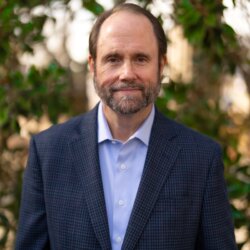

This photo combination shows Stephen Colbert, left, in Los Angeles, Sept. 12, 2022 and Texas Rep. James Talarico, Aug. 16, 2025, in Chicago. (AP Photo/Talia Sprague, Jae C. Hong, file)


It was the unseen interview seen “round the world.” On The Late Show Tuesday night, Stephen Colbert told viewers that CBS told him an interview he taped with Texas Democratic Senate candidate James Talarico could not be aired. According to Colbert, CBS was concerned about an FCC rule requiring broadcasters to give “equal time” to opposing candidates when an interview is broadcast with one of them.
The network, however, flatly denied Colbert’s claim, stating, “The Late Show was not prohibited by CBS from broadcasting the interview.” It added that the network “provided legal guidance” and “presented options for how the equal time for other candidates could be fulfilled.” The show then presented the interview through its YouTube channel, where FCC rules do not apply.
As of this morning, it has been viewed more than 7.4 million times, roughly triple what the CBS program draws each night. Mr. Talarico also reported that he raised $2.5 million in campaign donations in the first twenty-four hours after the interview.
You may side with Mr. Colbert in this ongoing dispute, you may side with CBS, or you may not care. But it’s worth noting that Mr. Colbert’s show will end in May. We might wonder if the fact that he has little to lose in his conflict with the network contributes to his willingness to stage it.
If so, this would be unsurprising. And a principle worth considering for reasons that far transcend the story that illustrates it.
The actor George Clooney famously stated, “I don’t believe in heaven and hell. I don’t know if I believe in God. All I know is that as an individual, I won’t allow this life—the only thing I know to exist—to be wasted.”
I strongly agree with his emphasis on the urgency of life, though for reasons that contradict his.
When the game of Monopoly is over
The philosopher Arthur Schopenhauer declared, “The shortness of life, so often lamented, may be the best thing about it.” We don’t have to adopt his pessimistic nihilism to appreciate the value in recognizing the brevity of our lives. (Or jobs, in the case of Stephen Colbert).
First, admitting the shortness of life should insulate us from the deceit of materialism. The psalmist spoke of those who “called lands by their own names,” but warned that this is futile: “Man in his pomp will not remain; he is like the beasts that perish” (Psalm 49:11–12). In fact, “when he dies he will carry nothing away” (v. 17).
Just because we name lands for ourselves doesn’t mean that we live on in the world. This is a vanity for the present, not a reality for the future. After we die, anyone can rename our “possessions” as they wish. We do not “own” as much as we think we do, at least not for long.
Like Monopoly, when the game is over, the money goes back into the box.
How a pastor survived Dachau
Second, when we embrace our finitude, the result should not be the nihilistic pessimism of atheism but the robust optimism of faith.
We should seek to live this day fully, knowing that it is the only day we know we have. But unlike those who have no relationship with the God of the universe, we can ask and trust him to redeem this day for his greatest glory and our greatest good.
We can live each moment by the motto, “My utmost for his highest,” as Oswald Chambers famously put it. We can say with Paul, “Whether you eat or drink, or whatever you do, do all to the glory of God” (1 Corinthians 10:31).
As Dwight Moody advised: “Let God have your life; he can do more with it than you can.”
The German pastor Martin Niemöller spent three years in the horrors of Dachau, kept in solitary confinement in one of the world’s worst concentration camps. According to pastor and author Paul Powell, an interviewer asked Pastor Niemöller years later how he retained his sanity. He answered: “You can stand far more than you think you can. You are much stronger than you think you are . . . if God is dwelling in your life.”
“Forgive me for being so ordinary”
There was a time when I would have agreed with George Clooney’s rejection of heaven and hell and his skepticism regarding the existence of God. But then I met Christians who refused to allow their lives to be “wasted.” It was the joy I saw in them that drew me to their Lord.
Christianity will appeal to skeptics to the degree that they see something in our lives they want for their own. Francis Chan was therefore right to say, “The world needs Christians who don’t tolerate the complacency of their own lives.”
The martyred missionary Jim Elliot is best known for his statement, “He is no fool who gives what he cannot keep to gain what he cannot lose.” But Elliot also prayed, “Forgive me for being so ordinary while claiming to know so extraordinary a God.”
If we are truly walking in intimate fellowship with the Son of God, how can we tolerate complacency or live lives that are ordinary? If we are empowered by his Spirit, we will manifest his “fruit”: “love, joy, peace, patience, kindness, goodness, faithfulness, gentleness, [and] self-control” (Galatians 5:22–23).
Can we then look and live like those who do not?
Billy Graham wrote:
Many people are willing to have Jesus as part of their lives—as long as it doesn’t cost them anything. They may even profess faith in Jesus and join a church. But Jesus to them is almost like an insurance policy—something they obtain and then forget about until they die. But Jesus calls us to follow him every day. What keeps you from being his disciple?
We have only this day to answer his question.
A stanza we don’t sing but should pray
Thomas Ken (1637–1711) penned “The Doxology,” one of the most famous hymns in Christian history. Like many congregations around the world, our church sings its first stanza to close our worship service each Sunday. It begins, “Praise God, from whom all blessings flow.” If the second phrase is true, the first is only logical.
But Ken wrote three other stanzas. Here’s the last:
Direct, control, suggest this day,
All I design or do or say,
That all my pow’rs, with all their might,
In thy sole glory may unite.
Will you make his prayer yours today?
Quote for the day:
“The more sand has escaped from the hourglass of our life, the clearer we should see through it.” —Niccolo Machiavelli
Our latest website resources:
- What does “I Can Only Imagine 2” teach us about faith and suffering?
- Why are the new voter ID laws so controversial?
- George Washington and the future of the “United” States
- Can caffeine and video games protect against dementia?
- Notre Dame professor advocates for abortion: Responding to her argument with scientific facts and a grieving heart













 Search