



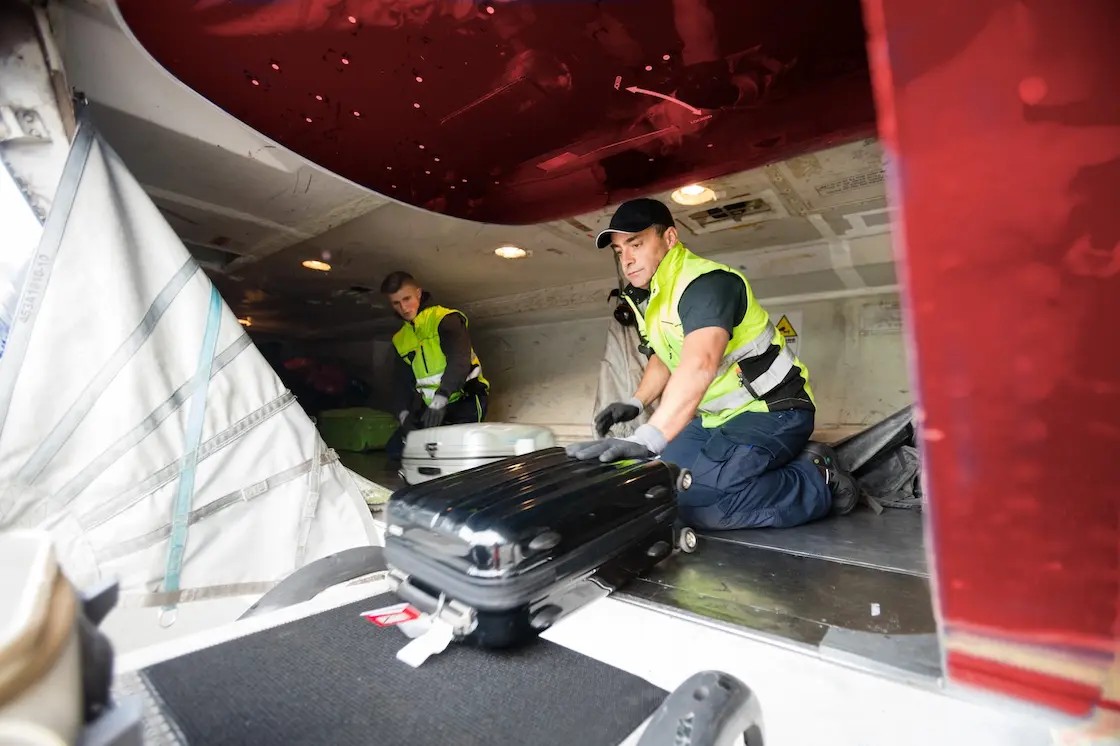
Workers Loading Luggage In Airplane By Tyler Olson/stock.adobe.com
A Delta pilot was spotted helping load luggage into his plane after a flight delay in Atlanta. He clearly didn’t know he was being caught on video and thus did not do this for the attention he is now receiving.
To act with humility and then be rewarded for humility is the best of both worlds, it seems to me.
We’ve probably all been there: someone recognizes us for something we did without expecting to be recognized. If we had sought attention, our ego would have been in control. When we received it unsought, our ego was gratified without being exposed.
This is a fact pattern worthy of some attention today.
Mayor Mamdani cannot arrest Benjamin Netanyahu
I shared with my coffee-drinking wife the news that up to five cups of coffee per day may potentially lower the risk of heart disease. She was glad to learn that she should keep doing what she was going to keep doing anyway.
Mayor Zohran Mamdani has been calling Benjamin Netanyahu a war criminal and claiming that he wanted to arrest the Israeli prime minister when he comes to New York City in September. Now he tells us that his city does not have “independent legal authority” to do so. He gets the affirmation of his antisemitic supporters without having to act on their behalf.
Sometimes we can arrange our lives in such a way as to achieve such consequences intentionally. It is unsurprising that a passenger would see a pilot outside the plane loading luggage and tell the world. It is even more unsurprising that a city cannot arrest an international leader for charges its mayor has no authority to bring.
I am no more immune to such duplicity than you are. Even now, I am tempted to impress you with my humility in writing that sentence so that my pride is gratified. And to impress you with the humility of the self-disclosure of that sentence. And so on.
Even if we do nothing lest we act out of ego, living in a cave where we have no interactions with others, this can be an ego-driven plan to gratify ourselves by discouraging our ego in this manner.
Talk about the “paralysis of analysis.”
“They cast their crowns before the throne”
As he so often does, CS Lewis helps me here. His understanding of humility is that we do not think less of ourselves—we think of ourselves less. The more we focus on loving our Lord and our neighbor, the less margin we have to think about whether we are loved in return.
An EMT team responding to a health crisis has little time to consider whether their work is appreciated by the person whose life they are trying to save. I cannot look out a window and in a mirror at the same time.
The familiar text in Micah 6 both commends and illustrates this principle: “What does the Lᴏʀᴅ require of you but to do justice, and to love kindness, and to walk humbly with your God?” (v. 8). If we do the first two, the third is the inevitable result.
It helps our humility to focus on God and see ourselves in light of his overwhelming majesty. For example, Revelation 4 reports that the “four living creatures” of heaven “never cease to say, ‘Holy, holy, holy is the Lord God Almighty, who was and is and is to come!’” (v. 8). In response,
The twenty-four elders fall down before him who is seated on the throne and worship him who lives forever and ever. They cast their crowns before the throne, saying, “Worthy are you, our Lord and God, to receive glory and honor and power, for you created all things, and by your will they existed and were created” (vv. 10–11).
If we see God as they saw him, we will respond with humility as they did.
“With the Lord begin thy task”
To this end, I saw recently a sixteenth-century hymn by the German professor Ambrosius Lobwasser that begins:
With the Lord begin thy task;
Jesus will direct it.
For his aid and counsel ask;
Jesus will perfect it.
Every morn with Jesus rise,
And when day is ended,
In his name then close thine eyes;
Be to him commended.
Now, as we practice his presence, we can claim his provision and protection:
With the Savior at thy side,
Foes need not alarm thee.
In his promises confide,
And no ill can harm thee.
All thy trust do thou repose
In the mighty Master,
Who in wisdom truly knows
How to stem disaster.
It concludes:
Thus, Lord Jesus, ev’ry task
Be to thee commended;
May thy will be done, I ask,
Until life is ended.
Jesus, in thy name begun
Be the day’s endeavor.
Grant that it may well be done
To thy praise forever.
Let’s make his prayer ours, to the glory of God.














 Search