




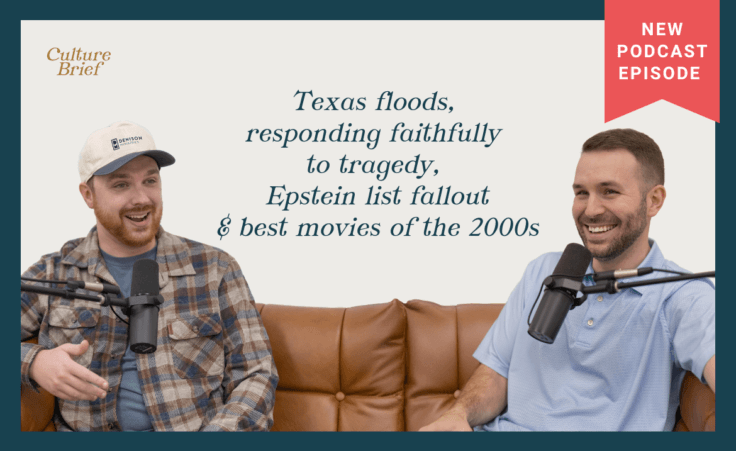
Culture Brief: Election season special! Midterm cynicism, how to research candidates & voting wisely | Ep. 91
In this week’s Brief: it’s midterm season, the ads are everywhere, and this episode is a little different. Conner is joined by Dr. Mark Turman, host of Denison Forum’s “Faith & Clarity” podcast, and Dr. Katie Frugé, director of the Christian Life Commission for the Baptist General Convention of Texas, for a special crossover episode. They start with the cynicism so many feel about politics — why it’s often just misplaced hope, and why the government’s frustratingly slow pace might actually be a feature, not a bug.
From there, they walk through how to research candidates and ballot measures before stepping into the voting booth (yes, Conner found a way to work in a movie analogy) and talk through the tension between a candidate’s character and their policies.
Plus, they address growing doubts about election integrity, why the sheer scale of our system (and a lesson from Watergate) is actually reason for confidence, and a heated debate over whether stew is acceptable in July.
Their encouragement: Christian hope has a better address than any ballot, so vote with discernment, not cynicism.



Topics
- (0:00) Introduction
- (0:35) Culture Brief and Faith & Clarity crossover episode setup
- (2:02) Midterms and cynicism
- (8:37) Why government moves slow
- (13:46) Fear, anger, and invisible government
- (18:24) How to be an informed voter
- (28:20) Research candidates directly
- (30:56) Truthful witness in voting
- (34:16) Character versus policy
- (38:20) Election integrity concerns
- (46:24) How elections actually work
- (53:39) Responding to fraud claims
- (56:20) Get involved as poll monitor
- (56:51) Since You Asked: fall favorites
- (59:42) Conclusion
Resources
- Send us your thoughts, questions, and topic ideas: [email protected]
- Culture Brief Instagram
- Watch on Youtube
- Sign-up for a Denison Forum newsletter: DenisonForum.org/subscribe
About Conner Jones
Conner is the Managing Editor of Denison Forum, host of the Culture Brief podcast and author of the In The Know newsletter. He graduated from Dallas Baptist University in 2019 and has spent his career at the intersection of faith, culture, and current events. Outside the office, he can usually be found at the movies, watching sports, or traveling with his wife, Raigan, and their sons, Nolan and Nash.
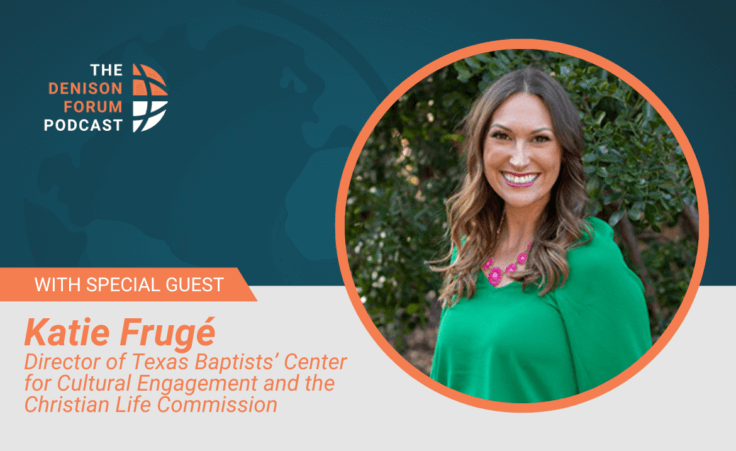
About Dr. Katie Frugé
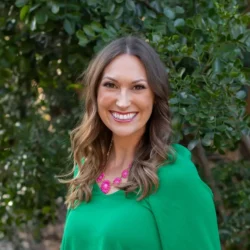
Katie Frugé, M.Div, Ph.D., serves over 5,000 Texas Baptist churches as the Director of the Christian Life Commission for the Baptist General Convention of Texas. In this role, she equips pastors and ministry leaders to navigate complex cultural, moral, and political issues with biblical faithfulness and pastoral wisdom. Specializing in the imago Dei and human dignity, Dr. Frugé's work addresses questions of human flourishing and faithful witness, informed by her personal journey as a stomach cancer survivor and parent to children with special needs. She is married to her college sweetheart; together they are raising three daughters in Fort Worth, Texas.
About Dr. Mark Turman
Dr. Mark Turman serves as the Executive Director of Denison Forum, where he leads with a passion for equipping believers to navigate today’s complex culture with biblical truth. He is best known as the host of the Faith & Clarity podcast and the lead pastor of the Possum Kingdom Lake Chapel, the in-person congregation of Denison Ministries.
Dr. Turman is the coauthor of Sacred Sexuality: Reclaiming God’s Design and Who Am I? What the Bible Says About Identity and Why it Matters. He earned his undergraduate degree from Howard Payne University in Brownwood, Texas, and received his Master of Divinity degree from Southwestern Baptist Theological Seminary in Fort Worth. He later completed his Doctor of Ministry degree at George W. Truett Theological Seminary at Baylor University in Waco.
Before joining Denison Forum, Mark served as a pastor for thirty-five years, including twenty-five years as the founding pastor of Crosspoint Church in McKinney, Texas. Mark and his high school sweetheart, Judi, married in 1986. They are proud parents of two adult children and grandparents to three grandchildren.
About Denison Forum
Denison Forum exists to thoughtfully engage the issues of the day from a biblical perspective through The Daily Article email newsletter and podcast, the Faith & Clarity podcast, as well as many books and additional resources.
All episodes are produced by Sound of a Rose. For more information, you can visit soundofarose.com.
EPISODE TRANSCRIPT
NOTE: This transcript was AI-generated and has not been fully edited.
Conner Jones: [00:00] I'm Conner Jones, and this is Culture Brief, a Denison Forum podcast where we navigate the constant stream of top stories in news, politics, sports, pop culture, and technology, and we do it all from a Christian perspective.
In today's episode, it's a little bit different than normal, and that's because if you're listening to this, it means my family welcomed our second child into the world this week. Oof, what a beautiful blessing that is! Can't wait for that moment. I'm sitting here thinking about it in the future, but if you're listening to this, it's happened! My wife and I are just so grateful for this beautiful blessing. So, you know, it's amazing, but we're also probably a little tired and chasing around a toddler. So, yeah, pray for us if you think of it.
Today's episode, though, is not exactly a breakdown of the week's top headlines because I'm obviously a little busy, but it is a very relevant conversation. A few weeks ago, I got to sit down with Dr. Mark Turman and Dr. Katie Frugé to discuss the midterm elections that are now just a few weeks or days out.
So if you listen to Faith & Clarity, maybe you already heard this. That's our other podcast here at Denison Forum hosted by Dr. Turman, and we posted this conversation a few weeks ago. But this was a joint episode between our two shows. So if you're watching this on YouTube or on Spotify, you'll see we're actually—we recorded in the Culture Corner, aka Culture Cabana as some of you all know it. We're recorded here in that side of the studio.
So all that to say, I hope it's a discussion that you find enlightening and informative and uplifting as we discuss elections and why we shouldn't be so cynical about them. And then we also talked about how to research for elections, how to discern well, how to be confident as you step into the ballot box and how you vote, either for candidates or for policies or measures that are on your ballot in your local community, in your state, and obviously federally as well.
Yeah, so it's a great conversation. I had a lot of fun talking to Dr. Frugé and Dr. Turman. They are both so knowledgeable and informative. I hope you guys enjoy this conversation as well. So, enjoy!
Dr. Mark Turman: [01:40] I'm Mark Turman, and this is Faith & Clarity. We're glad to have you back with us as we talk about things going on in our culture. Want to remind you what we're all about: we use the news and events of our day as a doorway into discipleship and into service. And so we're hoping to give you some hope behind the headlines today and equip you for what God wants you to do in your role as His servant and as His ambassador.
Today we're moving into that season called the midterm elections. You've probably already seen more than your fair share of ads that you wish would go away; they soon will. But we're going to talk today with a couple of friends about fighting off cynicism about politics and our government. How do we understand the pace of what goes on in our world? We're going to talk about being a more informed voter. And then how do we maintain or even increase our confidence that the voting and election processes of our country are actually something we can have a lot of confidence in? That's been a big question for a number of years now. And if we have a few minutes, we'll wrap up with what I call the Since You Asked segment.
So, joining us today, once again, Dr. Katie Frugé, who is the director of the Christian Life Commission of the Texas Baptist Convention. Katie, we're glad to have you back with us. Say hello.
Dr. Katie Frugé: [02:53] Hey, so good to be back with you! Thank you.
Dr. Mark Turman: [02:56] Yeah, we're looking forward to the conversation. We also have today Conner Jones, who is the editorial manager for Denison Forum. He is also the host of Culture Brief and, recently, our newest newsletter called In The Know. So, Conner, we're glad to have you with us. This is a first for us.
Conner Jones: [03:14] Glad to be here. And, Mark, we just got to say, welcome to my space that I'm in every week.
Dr. Mark Turman: [03:17] That's right.
Conner Jones: [03:18] You're here in the Culture Brief studio. So glad to have you over here. This is kind of a joint episode, I guess, right?
Dr. Mark Turman: [03:23] Yeah, this is our first crossover experience where we're going to release this podcast both on Conner's podcast called Culture Brief—I'm a little bit jealous; he has all this pretty artwork. You know, I didn't get that for mine yet. But we're releasing this on Faith & Clarity as well as on Culture Brief so that it'll get the largest audience. And because of that, Katie, that's why we knew we needed to have you, because we were going to go really big.
Dr. Katie Frugé: [03:45] Oh, great!
Dr. Mark Turman: [03:46] So, no pressure. No pressure on this at all.
Dr. Katie Frugé: [03:48] No pressure at all! Appreciate that.
Dr. Mark Turman: [03:51] Yeah. So we're looking forward to the conversation. But, Katie, just wanted to start with you. We've been talking about various things we could talk about in the season of midterms. And we just want to talk a little bit about how do we keep away from the gravity of cynicism when it comes to all things political in our country these days, and why it seems like things are so slow to change at times? Can you give us a little bit of perspective on that?
Dr. Katie Frugé: [04:19] Yeah, absolutely. So, kind of unofficially on the calendar of things, the reason a lot of people are probably sensing this or feeling it right now in this midterm season is after Labor Day is really when elections kind of go into high gear. So the ads get more intense, the, you know, the mailers come out more—you're probably getting some every single day. I live in a competitive district, and so I know I'm getting those things. And so you're just kind of starting to see that tension really kind of ratcheting up just kind of all over the place, kind of globally. Our nation is feeling this, but especially here in the state of Texas, people are starting to feel that.
And the temptation sometimes is just to be like, "Man, this just—what's the point of all this?" Like, we kind of really resonate with Ecclesiastes where just talks about just chasing the wind. Like, what are—is there really going to have an impact on any of this? Like is the, you know, the end game, they've already decided how they want this to end? Like, why do we even participate in that?
And so some of my thoughts are just kind of thinking about, like, why it's understandable, like why do we—why do we care about this? But also why we shouldn't stay there in that, that area of cynicism, and then maybe one surprising hope for it. So kind of just kind of talk through that.
The reason I think ultimately we care about this is because at the end of the day, we know that all of these policies touch into real people's lives, that these don't stay abstract, that this is real life for a lot of real people. That we have these elections, you see these cycles, you see them putting out all this information, but at the end of the day, they're going to be voting on things that impact foster families, our school districts, our local neighborhood things. That these are actually the people that are represented behind all of these different things.
And so that's why we care about it. Like that's kind of the sense or the pull that we're sensing for it, that the reason we—we care and it impacts our lives is because it does actually impact our lives. And when I go into a, you know, a committee hearing to give a testimony on something that sounds very abstract, but then people who are made in God's image come and give testimony to, you know, how these policies are going to impact them.
And so it makes a lot of sense that we would care about that. Jeremiah 29:7 talks about seeking the welfare of the city, and so we want to care for those things. So that's why—that's why we understand that. That's why it's understandable that we care about these things and why it kind of rubs us sometimes.
But I think to your point that you mentioned earlier, we have to be careful about guarding against this spirit of cynicism that I think that we sense sometimes. And this is not new to us. Again, going back to Ecclesiastes, we can be honest that there's a futility sometimes that we sense in the human condition, that we're just kind of going around the sun again and again and again, and like, is any of this really going to change?
But I think about the end of Ecclesiastes. As the teachers kind of walked us through the futility and, you know, we keep going over the sun, the very end of it says, at the all the end of this, fear God and keep His commandments, for this is the duty of all mankind. And so what we want to do is really lean into that, the duty of all mankind.
I think at the end of the day, what we're seeing is cynicism usually begins as what we'd say is misplaced hope. How often are we putting our hope into a candidate that's kind of promised to solve whatever the problem is that we have right in front of us? And we really know as believers, of course, that we cannot expect a candidate to save us. And when that happens, when the candidate doesn't save us, when the political party we wanted didn't win, disappointment just kind of starts coming in and curdling.
And then I think about how, as believers, we've got multiple places in Scripture, but especially Psalms 146 that reminds us, don't do that. Do not put your trust in princes, in human beings who cannot save. So it's misplaced hope that's really kind of leading to this air, of this spirit of cynicism I think we see sometimes. And so we want to be discerning like Ecclesiastes talks to. We want to be aware that we just keep going around the sun, but discernment still hopes.
Cynicism quits, right? It just withdraws from that. And I think about, you know, we've talked about on this podcast before, that Romans 15:13 talking about hope comes from our hope in Christ alone, that our hope, our Christian hope, has a better address than any ballot does at the end of the day. And so we can be discerning. We care about these things because they impact us, but we want to be discerning, not cynical, and not in that of misplacing our hope.
And so that's kind of two pieces. And then where we hope—this is going to be a little bit surprising. I know sometimes one of the things that people get frustrated with is just, again, you'd mentioned the slow movement of government. It does feel like sometimes it takes a long time for anything to get done quickly, right?
Dr. Mark Turman: [08:49] Yeah, I think a—I think a snail outruns the government all the time.
Dr. Katie Frugé: [08:52] And sometimes that's not wrong, and that can be so frustrating. But I also wonder, it seems to me that this was actually kind of baked into the American experiment. Our Founders built in friction on purpose. They wanted there to be some tension.
And then narrowing it down even further into Texas, it's kind of like we doubled down in Texas. Like we saw what they did up in New England, we're like, "Oh, we're going to do more than that. We're going to slow this way down. We're going to meet every other year. We're not going to have this ongoing Congress. We're just going to meet every other year." And you've got multiple high-level journal, you know, with our attorney general and different things that have key roles. So there's a lot of checks and balances baked into the system.
And the reason that's helpful is because slowness actually gives us time to be able to have meaningful impact. Slowness gives bad bills time to die. It gives churches time to speak into issues. It especially helps protect minorities or people who might be exploited by a system. It protects them from whoever might just be angry that year, that you can't have someone just come in and swooping changes, and then suddenly our people are taken advantage of, people are exploited or different things like that.
So I think about all the different times even in Scripture where it praises kind of that slow-moving pace. I think of even an engagement of James 1:19 where he says all of you should be slow to speak, slow to anger. I think there's wisdom, biblical wisdom, in just taking a slow approach, especially to some of these things that just matter.
And so we can appreciate that sometimes maybe it's a little too slow, but I think at the end of the day, it's the better of the two options. Because as much as it is the slowness that frustrates us when our side is winning, it also helps protect us when it isn't or when someone else is in power that maybe is advocating for things that we wouldn't want to hold onto or what want to speak against.
So I think that's kind of the tension that we have to live in. And so I think for believers this fall, you know, I think the question is, how do we—how do we live this out in a faithful way? How do we—how do we see this lived out in a midterm election cycle? So that's kind of some of my thoughts on that.
Dr. Mark Turman: [10:56] Yeah. Conner, have you been affected by that cynicism sometimes?
Conner Jones: [11:00] Oh, yeah. You mean the government's not always making me happy?
Dr. Mark Turman: [11:02] Yeah.
Conner Jones: [11:03] Right. No, but everything you just said was so—I think it was so important. I really do want to hit back on the slowness aspect that you mentioned. There is something so wise about that of, yeah, the government, if it moves fast and breaks things—like that's the mentality that Silicon Valley has, right? That's what they've always said out there in the tech world is, "Move fast and break things."
Dr. Katie Frugé: [11:21] Absolutely. Regardless of the consequences.
Dr. Mark Turman: [11:24] Yeah.
Conner Jones: [11:25] It might work in the tech world to an extent, but then, yeah, usually there's consequences down the line. It's not thinking long term, and so that short-term thinking can really have harmful impacts down the road. And we have seen that with politicians. We've seen that with bills that have gone through Congress probably too fast and weren't debated enough.
Yeah, you're right. Our system is built for debate and for legislation discussion, all of that stuff. And I think that's—that's crucial. And if we think only in a negative way of, "Aw, man, the government is just too big of a machine. There's too much red tape. It's too slow," then, yeah, it can easily bring about cynicism.
But I think there's actually a good point you're making of, it's the way it was designed and it's for a reason. And then, yeah, God's call on our hearts to be patient and to be, you know, to take the time to deliberate and take the time to discern is important. We need to do that with everything happening in politics, and I'd say it goes outside of politics, too. Every decision being made in your household, every decision being made in your church, in your community, it should be deliberated. It should be discerned.
But, man, especially when we're talking about something as big as midterm elections, and then in a couple years when we're talking about even bigger with presidential elections, yeah, we should—we should really take the time to consider. I'm going to hit on that again in a minute here when we talk a little bit further about researching, but, yeah, just great points.
Dr. Mark Turman: [12:38] Yeah, but it kind of—it kind of sets us up in some ways to be even at odds with ourself in terms of our policy. And we're going to talk about this in a minute, but, you know, we tend to elect people based on what they did.
Conner Jones: [12:51] Yep. Good point.
Dr. Mark Turman: [12:53] And it comes around every cycle, you know, whether you're elected for two years, three years, four years, six years, you get judged on your performance, and so you feel like you have only a small amount of time and you're trying to point to wins, right, so that you can get elected again.
But it's also remind—you know, sometimes we forget that this is a country of 335 million people in a world of eight billion in which we are, by very good argument, the player. And it's kind of like remembering, you know, the bigger the boat, the slower you need to turn it. Because, you know, as James reminds us, right, the ship has a small rudder, but it also has an engine. And the bigger the ship, the faster you turn it, the more likely you're going to throw some people off. And so like said, creating that friction helps us to have plenty of time.
And it's kind of interesting, Katie, I'd like to get you to respond to this. In the last few years, I'm just thinking last 25 years or so, we've energized a lot of people around government, politics, and elections. But we've mostly energized them, it seems, with fear and with anger. Is that fair?
Dr. Katie Frugé: [14:01] Yes. I would agree.
Dr. Mark Turman: [14:03] When most of—most of the best government in some ways may be the—the government that is generally boring and slow.
Dr. Katie Frugé: [14:13] Absolutely. Absolutely. Yeah, it—good government, it should be invisible in some ways. Like if you're not hearing about it, it probably means it's working really well and your life isn't being disrupted. And so we want to have that.
Dr. Mark Turman: [14:25] But we hear about it every single day, multiple times a day now.
Dr. Katie Frugé: [14:29] True, true, true. Yeah, I mean, for whatever reason, I would say that it probably appeals to our fallen nature of just wanting to engage in the rage or the conversations. Like we like to focus on the negative because it—it captures our attention more easily. It kind of brings in our nervous system and our flight or fight, and we want to fight, right? We want to talk about these things.
And it's kind of back to my first point: we talk about them because for good reasons! We care about these things. These actually do impact our lives. But it's easier to talk about things that we are against versus things we're for. It's more of a unifying message sometimes. We can all agree that we don't like this, but we may not all be able to articulate, "Oh, but we do all like this thing over here," because we may have nuance or complications or, you know, people are messy and there's a lot of gray area sometimes.
And so sometimes it's just focusing on the black and white. The black's a lot more easy to identify for a broader audience and be able to focus all our attention over there.
Dr. Mark Turman: [15:24] Yeah, but such a important thing to call out and remind us all that cynicism is never to be the spirit of a—of a Christian. That this is a—this a real opportunity of witness and testimony and light, right? That we can say, you know, "Hey," to our neighbors, to our family, you know, "Yeah, politics is important." As you said, we should care about these things, but they aren't our ultimate hope.
And I got to tell you, for now and forever, Katie, I'm going to be quoting you around the statement that you made a moment ago that disappointment curdles when it gets in your soul.
Conner Jones: [15:59] Yeah, it does.
Dr. Katie Frugé: You're welcome.
Dr. Mark Turman: [16:00] That's a—that's a big statement right there. Yeah.
Dr. Katie Frugé: [16:02] And it just festers in you.
Conner Jones: [16:04] Well, I really like your—your statement about like when—when government's invisible, that means it's probably actually working correctly. It doesn't feel like that ever happens, but it actually does happen a lot of times! When you think about it, our US government federally is the largest machine in the world. Our military is a huge, huge investment and piece of property of the United States government. There's over a million people involved in just our military alone. Now take all the federal government, take all the state governments and local governments—how much government is actually happening that we never hear about?
There's so much invisible work being done where people are doing great work, and there are great people who are running for either elected official positions or are part of, you know, an office and they're—they're hired on as staff in some capacity. There's a lot happening there. It reminds me of like in football: you don't usually know the names of offensive linemen if they're doing their job. If they're protecting the quarterback, you don't know their names. That's actually a good thing! They don't want you to know their names because that means they're doing really good. As long as their coaches know who they are, they don't care if the fan base really knows them super well; they're not going to be the star of the team.
Same thing with the—I think what you're saying here about government is, yeah, there's a lot of great work actually happening. And sometimes you do see stories of this department successfully pulled this project off, or the FBI successfully found a—a terrible operation going on and arrested all of these people. That's actually great stuff that we're not seeing the backside of a lot of the time.
So grateful for your statement on that. And, yeah, we just can't place our hope in those departments or candidates, but they're—there's great things always happening.
Dr. Katie Frugé: [17:26] There are. And I would even say there's a lot of, even in, you know, bringing it into Texas, for every elected official that you have, they're going to bring in with them a whole, like you'd mentioned, the staffers that they're going to bring in. Those staffers often are incredibly hard-working people and are actually really able to help make a pretty profound impact within even their—their office or the things that they're doing.
There's so many exciting, cool ways that people can even be involved to kind of help fight that cynicism, to connect with the multiple people who are really kind of behind the scenes, but doing really cool work. And I've seen that time and time again, especially in—in the Texas House.
Dr. Mark Turman: [17:59] Yeah, so many good opportunities going on. I love that, you know, you only know about the linemen when either the quarterback's getting sacked or the lineman's getting penalties.
Conner Jones: [18:07] Right.
Dr. Mark Turman: [18:08] You know, reminds me of my—I have a friend of mine that works in—in security and law enforcement. He's like, you know, "A successful day is when nothing happens on my job."
Dr. Katie Frugé: [18:17] True.
Dr. Mark Turman: [18:18] It's kind of the way that goes.
Conner Jones: [18:19] When they're just standing—yeah, when they're just able to stand around and watch over things, but not have to act in any way.
Dr. Mark Turman: [18:23] Exactly. A moment ago, we brought this up about about candidates and politicians. Conner, this was one of the things I'm glad that you wanted to talk about, which is, you know, so many times I go into a voting booth and I might know something about two or three of the races, and there's 20 races or 20 things on the ballot, and I'm like, "Should I do anything with—with these other things or just not vote at all, because I really have almost no idea about who's running, what they're running for, or what this proposition is about?" How can you help us with that?
Conner Jones: [18:55] I think that's a totally fair question. In fact, there is an element of particularly local elections, usually when it is names you don't know and positions you've never heard of that you're supposed to vote on, where people really just hope that their name is the one at the top of the list to vote on because they're like, "More people will select that one." And that happens.
But let's think about this on a grander scale. I would like to just posit this theory, and it's that it's critical believers, as Christians, we should know who we are voting for and what we are voting for. And the what, a lot of times, comes with the who. Based on who we're voting for, we know what they will represent for us in Congress or the Senate or our state legislature or maybe it's even our town council. The who and the what tie together.
So, Katie, you may not know this. I don't know how much you've ever listened to Culture Brief, but all the Culture Brief listeners will know I'm a massive movie lover, and so I had to draw in an illustration here that ties back to movies as I often do.
Dr. Mark Turman: [19:48] I'm not surprised.
Conner Jones: [19:49] Right. See, Mark knows. So here's my illustration. I would say you would probably not walk into a movie theater with your box of popcorn and plop down in a movie theater seat and just have no idea what movie you were there to see. If you sit down in the seat, you probably have—
Dr. Katie Frugé: [20:02] Sounds like a horror situation!
Conner Jones: [20:04] It sounds like a really bad situation, right? Right, it gives me anxiety just to think of it. I could never do that. No, you've probably at least done some sort of research on the movie, right? You've researched the showtimes and you've selected this seat for a reason.
But that's how a lot of voters go to the ballot is they don't actually know what they're going to the ballot to vote for. And that's not to cast any judgment on anybody; this is just the reality of the situation is that is the lowest form of voter engagement is somebody who's just—they know it's election day. Maybe friend or family said, "Go vote. It's a thing to go do. Everybody says just get out the vote." You've been moved by that, you show up to the ballot box, but you don't know any of the names or any of the measures that are being voted on on the ballot box.
Now maybe you go to the movie theater and you are generally aware of just what movies are out there this week, and so you're like, "The chances of me seeing a movie that I've heard the title of are kind of high." I think a lot of voters do that as well. They go to the ballot box and like, "I've heard these names. Maybe I've seen some billboards or signs, but I don't really know what these people stand for." That's a lower-information voter. They've got some information, but they're pretty low.
Now what if you saw a 30-second ad for the movie and that convinced you to go sit in the movie theater seat? And it's like, "Ah, you have a general idea of what this movie is about. You know the title, maybe you saw the movie star that's in it, and you've got a general theme understanding." If you go to the ballot box with that in mind, maybe you just saw a 30-second ad, which, you mentioned, Mark, we are just getting blasted with political ads right now, especially the three of us here in Texas. It is because we're in a battleground state right now. Every football game, everything on TV, even on social media, it's just so many ads. A lot of people are getting that, and that's the information a lot of people are going to the ballot with is just what they've seen in those ads, which those are edited and cut to make you see the most kind of rage-baiting things about the other candidate a lot of the times. Or about—if it's their own ad, they're going to say what they know will be a sound bite to stick in your mind.
So you've got some information there on on the candidate or candidates, but then maybe you really went to the movie theater with a deeply conscious decision of, "I know what this movie is. I know the stars, I know the director, I listened to a podcast interview with the director or one of the stars, I know what it's about, I read the book," whatever it is. You've got the information and you are ready for this movie. You sat down with the full intention of being there and knowing, based off your research, what to expect.
Now the movie could surprise you. It may not go the way you think it's going to go, and you come out either really—you're happy about it or you're disappointed in what the movie ended up doing. That's the same thing with voting as well. We can go to the ballot box at least with an understanding of: here's what I know I'm voting for because I researched this candidate, I researched this measure that I'm going to be voting on, I researched what will be on the ballot box before I arrived there, and I'm going to do my best judgment and mark the ballot box as I believe I should with personal and biblical conviction behind those decisions. But you've at least done the research.
And the candidate might disappoint you down the line. You know, a year from now, you might be like, "Man, I wish they had actually stood by what I thought that I was voting for and they don't do that." But nonetheless, voting is a big decision. It's a much bigger decision than what you're going to see for three hours on a Friday night in a movie theater. So if you're going to do research for all kinds of different things in your life every day, I would say it's worth doing the research behind how you're going to vote and who you're going to vote for. I don't know, does that concept make sense to you guys?
Dr. Mark Turman: [23:20] Yeah. Yeah, I just—I still don't know how I'm going to read all those books before election day.
Conner Jones: [23:26] Oh, yeah. Well, yeah, maybe not all the books, but I'll give some tips here, too, on what you can do to to do some research here in a second, but I just want to see what y'all thought of the general idea.
Dr. Mark Turman: [23:34] No, I think you're absolutely right. I mean, it's—it's important enough, and we all have busy lives and lots going on, but this does matter. And we ought to be active and engaged voters, but we need to have a better depth of understanding before we walk in that booth.
Dr. Katie Frugé: [23:49] Yeah, earlier I had referenced even just the Jeremiah passage about seeking the welfare of the city. I think a responsible Christian needs to be intentional, like what is the welfare of the city? What is in the best interest of my neighbors? How do I actually live this out and how do I advocate and speak on their behalf? And so I think it's a part of just kind of living out our Christian faith to be intentional in cultivating information and resources and knowledge to make sure that whatever I'm voting for is going to probably impact maybe a seven-year-old kid in first grade in my local school. So like I need to be thinking of their welfare as well.
And so I think that's—it's a piece to that, recognizing that our vote is a, you know, a way of living out loving our neighbors ourselves.
Conner Jones: [24:26] Really good point.
Yeah, and I would just say that this all calls to mind Proverbs 18:13, and that says, "If one gives an answer before he hears, it is his folly and shame." So if you're going to fill out a little ballot box and you have—
Dr. Katie Frugé: [24:37] Ouch, Conner!
Conner Jones: [24:39] Look, this is—look, this is my own conviction, too. Like I was—I was prepping for this, I was like, "Ooh, man, I really need to make sure I'm—I'm living by these things, too." I mean, it's good Scripture.
Dr. Mark Turman: [24:48] Yeah, it may—also let me interject this, Conner. It reminds me of something that Ryan Denison wrote in his newsletter The Focus, one of our coworkers, that he—he wrote about this article about by by real analysis, only about 10% of the country is either truly conservative or truly liberal.
Conner Jones: [25:07] Yep.
Dr. Mark Turman: [25:08] And that's not by them self-identifying; it's by them responding to a series of questions that indicated where they would be on a spectrum. And so—and we we have been living for a couple of decades in the the loudness of the extremes on both sides of things. But what what Ryan's article talked about this week in The Focus was that most of us have a lot more nuance in our lives. We're much more complicated than that. Most Americans are not sold out to any either of the extreme positions. And and that we we do think at a differ—a different and deeper and more complex level if we decide to pay attention. And I think that's what you're arguing for is that we need to pay more attention.
Conner Jones: [25:51] I think we do, and I think that also hits on the discernment aspect. If when you pay attention, you do your research, you're able to then discern what the the right kind of decision is. And that's what we talked about in the first part of this episode as well. But 1 Kings 3:9, it records King Solomon at the beginning of his reign saying, "Give your servant therefore an understanding mind to govern your people, that I may discern between good and evil, for who is able to govern this your great people?"
And then Philippians 1:9-10, many of us know, it says, "And it is my prayer that your love may abound more and more, with knowledge and all discernment, so that you may approve what is excellent, and so be pure and blameless for the day of Christ." And so I think there's this emphasis from God in Scripture to be discerning.
So my question then would be, well, how do we do that? How do we discern? What what are—
Dr. Mark Turman: [26:34] Yeah, I'm hoping you're getting to that!
Conner Jones: [26:35] Yeah, what are the what are the practical tips? Yeah, I'm not going to leave everybody hanging here. I would say, one, always stick to biblical truths. There will be convictions that are very clear in the Bible. We know those. We've talked about those many times on our podcast and our articles. A lot of you listen this will know what we're talking about.
But there are so many issues in our political world, in our modern world, that are not addressed in the Bible. As Dr. Jim Denison pointed out last week many times, the Bible does not dress address artificial intelligence, right? So like there are aspects like that and so many other things in our modern-day world that Scripture doesn't give us an exact playbook for. There's no blueprint of exactly how to think about this or vote on this or legislate this specific issue.
So consider that because issues are going to be different in everybody's minds and perspectives based off of their their background, their upbringing, their race, their income, the region that they live in. Everybody will have different perspectives, and I would encourage us to engage with other perspectives and not—not solo our or silo ourselves into what some would call an echo chamber, but even just one-sided information. Allow yourself to step in the shoes of other people and understand why this piece of legislation or why this candidate would be popular with another group of people that you're struggling to understand. It helps, even if you don't agree with it, it helps just to get in a general understanding.
And this is really true with candidates. When you're trying to understand, why is this candidate so popular? Why are people going to vote for this person? I can't seem to grasp it. Well, I would—I would encourage you to go and do some research and try to figure out, what is it about their policies or their stances that they do have some sort of appeal to a big crowd of the American public or a big crowd of your local public?
And I would just say we need to educate ourselves on candidates' policies, asking the question really: what are the candidates' main visions for their prospective term in office, and where do they land on the issues that matter to you most? Those are great questions to ask, and then to find the answers to that, you can do several things.
You can, one, listen to the candidate. If they're giving a speech, if they're on a debate stage, if they are on social media doing a 60-second clip on a specific topic—a lot of them do that now. They've all got these Gen Z staffers who are helping them do TikTok and Instagram—
Dr. Mark Turman: [28:47] Are you telling me I have to go to social media, Conner?
Conner Jones: [28:49] I'm telling you you got to go to social media, Mark. No! No, not at all. Definitely listen to like podcasts. A lot of them are doing long-form, sit-down interviews on podcasts, or maybe it is a TV interview. But if you watch somebody on CNN or Fox News, they're usually getting five minutes. If you can go to find them on a podcast, they're getting an hour to two hours to really dive into multiple different topics, and you can learn about a candidate better that way oftentimes.
And then really, their websites. I always encourage people to go to candidates' websites because they list out for you to read every single issue. And if they don't hit on all the issues, that means they may not be completely forthcoming about that issue, and so you could question that. But if you are very concerned about immigration, well, go to their website. Find their immigration policy, what they want to do about that. If you're very concerned about the economy and gas prices, well, go find that part of their website. They usually list out all this information, which is great for us as voters, because it gives us the opportunity to go say, "Hey, I know what this person stands on this specific subject or issue. Now I feel confident in my vote when I go to the ballot box on this person, or I don't feel confident and I know for sure I don't want to vote for this individual."
Those are just some of the the things. And then like I said, just trust the sources that you're getting this from. If it's a news outlet, make sure you trust their information. There are a lot of people out there, especially in today's social media world, who claim to be specifically political commentators or what not, and you got to just be careful with what they're saying. They're not always factual in their basis, and so make sure you are listening to a trusted person or news outlet or podcaster or TikTok political analyst, whoever it is.
Dr. Katie Frugé: [30:22] Is that an official title? TikTok political analyst? I like it.
Conner Jones: [30:25] If it is, I kind of want that title. Sounds fun.
Dr. Mark Turman: [30:26] That one shows up on the resume that way, yeah.
Conner Jones: [30:28] All that to say—
Dr. Mark Turman: [30:29] Probably does, unfortunately.
Conner Jones: [30:30] Trust the sources. And if you're looking for a place to to get some great information, always go straight to the candidates' websites and sources, or, you know, I always like to point people to Denison Forum. You know, we're not always diving directly into exact candidate stuff, but we are diving into the issues a lot of the times that are on the ballot. So trying to provide a nonpartisan, biblical perspective on stuff, and there are other places doing similar work as well. So there's plenty of places out there that you can trust, but go—go do the research, go study up.
Dr. Mark Turman: [30:56] Absolutely. Katie, what do you think?
Dr. Katie Frugé: [30:58] I I really appreciate you especially pointing to going to the candidates themselves and not what other people are saying about that candidate. You so frequently see people kind of painting candidates, especially the real high-profile ones that are really popular. I probably see more from other people saying, "Well, this candidate says XYZ. This candidate says XYZ." I just think our Christian witness as truth-tellers, or people who follow the Way, the Truth, and the Life, we have to be really kind of stubbornly committed to seeking truth and making sure that we understand what the truth is in any given situation, and especially in something as important as a vote.
Going directly to the candidates so that you can say, "I'm voting for this person because, you know, here's this and this, and I've done the research." I just think it even just from a gospel perspective, that helps give quality to your testimony, that people can, even if they don't agree with you, can respect maybe the difference of opinion because you put the work in to be able to do that. That you were committed enough to go directly to sources to hear what you wanted to hear, and you'd refuse to hear the sound bites of kind of the noise around us right now, that the rage-baiting and all the things like that.
You know, people, you know, are living in this attention kind of economy right now, and so I really like the idea of just making sure that you're going directly to the candidates, whether that be on a podcast, on their website, or wherever that needs to be. I think hearing directly from both of them, if you're trying to decide between two different candidates, so that you've kind of got that informed perspective, just so critical. Just so critical to be able to do that.
Dr. Mark Turman: [32:26] Katie, does this kind of echo some of what you hear? You spend more time than the average person talking with people in government positions, legislative bodies, particularly in the state of Texas, the capitol in Austin. If they were to say to you, "I wish voters would do one thing," would it—would it be this? Would it be, "Hey, listen to me, not to people talking about me"?
Dr. Katie Frugé: [32:48] Absolutely. I think just even being able to connect to specifically with your local representative or something like that, that's really what I hear a lot of times of them saying. They they want to hear from you, and it's really helpful for you to hear from them as you're kind of trying to make an informed decision. I think if you're looking for your bang for your buck, that's probably where your voice is probably going to have the best impact and you're going to be able to really kind of get connection to a candidate that you may not be able to have otherwise.
I may not be able to pick up the phone call and, you know, say you've got a national election going on, I may not be able to call the presidential candidate and kind of get a one-on-one conversation with them. But pretty good chance that if you want to reach out to someone who is actually running to represent you, you could probably get some type of a conversation with somebody.
Dr. Mark Turman: [33:31] Yeah, and I think most of us kind of have the perspective that, "Well, I could never—I could never get into a meaningful conversation with a candidate, an officeholder, or somebody close to them, so I won't even try." And, you know, one of the things when I was pastoring churches I tried to consistently encourage my people to do is you should get to know the names of your representative at the, you know, do you know the people on your school board? Do you know the people on your city council, your county commissioners, all the way up to the highest offices? Because if we're commanded to pray for them, then we ought to know their names instead of praying for them wholesale.
Conner Jones: [34:07] It's a good point.
Dr. Mark Turman: [34:08] And so tried to tried to practice that myself. Took a little bit of research sometimes, but the internet can really help you get to those names faster than you think.
Let me ask you both to react to a question or or a perspective that a friend of mine offered to me recently. We were talking about this, and so he said, "When it comes to elections, when we're in primaries, I vote on the person and what I can learn about their character. But when it comes to the general election, I vote on the party or the policies." What do you think about that perspective?
Conner Jones: [34:44] Well, I I totally understand that because, one, the primary, usually you've got more people that you're choosing from, you know, so you can be a little more selective. By the time you get to the general election, that person's been chosen, whether it's the person you voted for in the primary or not, so you're a little limited on who you get to vote between. It's usually, you know, for instance, if it's a Senate position, you're typically between two people. There could be an independent or a libertarian candidate, but it's generally between the Democrat and the Republican candidate.
So you are being told a little bit, you've got to vote for one of these two. Don't have to, just saying. You don't have to. But if you are expecting to see one of those people in in power, you might want to to consider which of those two people you'd want to vote for.
I do understand this. Man, it's a tough thing, and we've discussed this here in our own internal meetings of like, how do you address a candidate that maybe does not have the character that you like, but their policies match up with what you feel convictions towards? Some of that might be the biblical convictions we discussed initially. Some of it might be things you've prayed through and you feel like God is pressing on your heart, "I feel this way. I may not like the the vessel to get this done, but I do like where this would head."
You know, and I think this is one of those decisions that you have to pray through and think through. And this is the discernment aspect as well, is like, do you have a good conscience about voting for this person because you know what their policies stand for? You don't like that individual's character, you don't agree with the way they lead their lives or the way that they worship or do not worship God, but you realize that maybe God can work through them still and use them towards whatever your biblical convictions are on specific issues that are important to you.
Dr. Katie Frugé: [36:23] You know, in some ways, I I completely understand like what Conner was saying. There is a little piece to me that just would push back a little bit and just say not ever at the expense of maybe our convictions or just kind of where we feel like the Holy Spirit is leading us. I don't ever would want to be at a position where kind of where you'd see faith members kind of using end-justifies-the-means type of a language. I think our witness is on the line for something like that.
Ultimately at the end of the day, also, believers, our citizenship to heaven should be superior to all others. I'm proud to be an American, I'm thankful to be an American and patriotic, but ultimately I'm very aware that my my citizenship to heaven needs to trump everything else beyond that, right? And so in in the process of voting, I would just say, just approach it with so much wisdom, prayer, asking for wisdom on that.
There's been plenty of times where I I showed up at the ballot box, but, you know, maybe either abstained from voting on a specific thing or was able to just kind of vote a third issue, just because in good conscience like I was like, "I can't support either one of these things. I'm still going to show up. I'm still going to participate in this. But my—I cannot violate my conscience to be able to, you know, cast a vote one way or the other on this because I saw two flawed—two things that neither of which I could get behind."
And so I think that there is a space for Christians to be able to do that every now and then. I don't—I don't think people should just kind of withdraw; I don't think that's the solution either necessarily. But I think there's a time that where we can just have a principled stance of saying, you know, "I'm going to participate in this right here, but I'm intentionally withdrawing from, you know, supporting either one of these, because both of them I see as having some type of this thing that I just can't in good conscience vote for."
Dr. Mark Turman: [37:59] That's great. And, I mean, this is something—this is an issue I think that will just continue to evolve in our conversations about just this tension between policy, party, and personal character. I think it's—it's always been here, but it seems because of access that we have digitally, we're more aware of it than ever before, and I think it's a challenging thing.
Well, we're going to take up one more topic while we're here, which is just confidence in the ballot, what some people sometimes call behind the ballot or integrity in our elections. A a verse that I came across that might speak to this, again Proverbs—we've been there a little bit today already—Proverbs 11:1 says, "A false balance is an abomination to the Lord, but the—but a delight is a just weight." Several times the book of Proverbs talks about the integrity of scales and weights and measures. And if you broadly apply that to the concept of elections, obviously having free, fair, and accurate elections are critical in a country like ours with a democracy.
Sometimes Dr. Denison and others talk about, you know, if the apostle Paul or Peter were in this conversation, they would just be laughing at us with the idea that, "What, you're going to complain or be frustrated about the opportunity of voting?"
Conner Jones: [39:18] Sure.
Dr. Mark Turman: [39:19] There was no voting for the government in their day, and they found they found a way to live compelling lives, inspirational lives for Christ. And we can do that. We have a much more—much greater opportunity.
But this topic about free and fair, accurate elections, foundational, fundamental to a free government like we have, seems like in my life that election integrity was always just a given in most ways, except for the last 25 years. Many of us in the last decade or so have really kind of forgotten the Bush-Gore 2000 election where we literally were hanging—we had almost every person I knew had their television on all the time waiting to see how we were going to resolve this issue in Florida. And this whole hanging chad thing, and the Supreme Court gets involved. And and we thought, "Well, it'll never get more weird and more complicated than this."
And it got a lot more weird and a lot more contentious—
Dr. Katie Frugé: [40:23] We were so naive! We were so naive!
Dr. Mark Turman: [40:24] We were so naive thinking, "Well, we'll never see anything like this ever again in our lifetime."
Dr. Katie Frugé: [40:30] Mhm.
Dr. Mark Turman: [40:31] But from the 2000 election with Bush and Gore, lots of controversy in 2008, 2016, 2020, and many people are apparently anticipating that it's going to be that way again.
Three different studies that I came across: one from the Gallup organization shows that people's confidence in voting is somewhere around 63%. I'll let you know, that's the high number among these three surveys. Another survey done by the University of California San Diego put that number at about 49%. That's the low number that our this upcoming election is actually going to be accurate, it's going to be free, and it's going to be fair. And then another study by Pew puts the number at 55%, kind of in the middle, that people think it's going to actually be what it's supposed to be, which: everybody that can vote and is eligible to vote should be able to vote, and that it is going to be handled in a way that is accurate.
If you kind of boil this down into a more simplified version, the the tension seems to be the access of every eligible citizen to get to vote in an appropriate and reasonable way versus a perspective on ballot security.
So let me flesh that a little bit. If you ask voters, Gallup asked voters, what are they really anxious about when it comes to the integrity of an election like we're about to have? Listen to this list of anxieties: political forces or people pressuring election officials; ballots, physical ballots, actually being handled properly; voters being intimidated when they show up to a polling location; AI creating false information about candidates and about their positions and about the voting process;
There's new concerns about election officials betting on the elections that they're orchestrating on Polymarket and that kind of thing; foreign interference has been a conversation in many ways; mail-in ballots is its own self an anxiety; changing rules at the last minute; and even the topic of election officials having a lot of turnover in their positions because they are simply exhausted from the from the experience that they are now enduring.
Does that in any way surprise either of you that people are feeling this way?
Dr. Katie Frugé: [43:04] It doesn't. What's interesting to me in some of the the things that you cited, what stood out, too, was I heard concerns that kind of more resonated on the right and the left. That this seems to be a truly bipartisan concern that people on one end of the spectrum have some concerns about the election for this these reasons, and people on the other side of the spectrum have concerns on the other. So to me, it's like, man, this is a systemic issue now. Like this isn't something that's just, you know, resonating with one political party. I'm hearing, "Oh, no, that concern really resonates with this side," and this concern really resonates on this side. So how do we—how do we restore just even confidence that, you know, we trust this system is going to go the way it's supposed to go?
Dr. Mark Turman: [43:44] Conner, are you surprised at all by this list?
Conner Jones: [43:46] No! No, this—how long have we been hearing all of these things? Actually, some of them we haven't been hearing all that long. The prediction market and the AI aspect is probably new to this election.
Dr. Mark Turman: [43:56] That's the one I hadn't heard until I started doing this research, that: wait a minute, election officials are going to actually bet on the elections that they're supervising?
Dr. Katie Frugé: [43:59] How does that make sense?
Conner Jones: [44:04] Yeah. Well, and, Katie, you wrote an article for us on prediction markets, what they are and how they're upending our society in many horrific ways because people are voting on or are betting on all kinds of terrible things: suffering and wars and all that. But not just sports anymore. We're now talking about like people are betting on actual elections.
So, yeah, if you're an election official and you've got some inside information maybe on how ballots are going, why would you not be tempted to go place a bet on what you know the results will be just five minutes ahead of when they're getting publicized? That's a side tangent. AI as well. I get that, man. It's hard to trust something that is in such a big—it's so big, right? Like you're talking about millions upon millions of ballots. It's hard to trust that all of that's going to be done exactly correctly. And chances are it won't be. There's always like a the 1% chance that something goes wrong. But there's also, you know, a lot of people have the fear because of recent years of history and different things that have been out there in the media and in the political sphere that, yeah, should we trust the elections?
That's a—that's a great question that people are going to ask and will continue to ask. And until we have some like magical machine that tracks every single tabulated vote on our phones or something, it's going to always be a question. So the question that we have to ask ourselves is: are we going to be fearful of voting because we're always going to be scared that elections may not be full—what's the word here—have the full integrity?
Dr. Mark Turman: [45:24] Yeah.
Conner Jones: [45:25] Or are we just going to or are we going to go vote because we know we got to trust it as much as we possibly can? Personally, I have strong faith in our election system and in the great people who are working these election polls. Have you ever gone to a little polling station? It's always the nicest people, at least for me.
Dr. Katie Frugé: [45:40] They are so nice, aren't they, Conner? They are so lovely!
Conner Jones: [45:42] It's usually like—they're like retirees usually, and they're just hanging—this is what they—this is how they get to serve their, you know, their community. I'm like, in fact, I've talked to them before. I'm like, "Maybe I'll come do this when I'm retired one day." This seems fun. You drink your coffee, you just help people vote all day, and then they get to go home and watch the results pull come in.
Dr. Mark Turman: [45:57] Now there's somebody in Silicon Valley that's already reacting to your comments. They're saying, "Yes, we're going to invent the super-box that you just mentioned."
Conner Jones: [46:05] Yeah, well, everybody's told me magic box.
Dr. Katie Frugé: [46:06] I don't know if I trust the retiree a lot more than I would an AI agent to do that!
Conner Jones: [46:09] Yeah, I do, too. It really should not be on our phones. In fact, you know, you bring up the hanging chad. Everybody's like, "Well, then the solution will bring will be computerized voting machines." And that's turned into a whole 'nother ball game.
Dr. Mark Turman: [46:20] That starts a whole other—
Conner Jones: [46:21] It could be paper, it could be computers, there will always be questions.
Dr. Mark Turman: [46:24] Yeah, but you you brought up—so I I really wanted to talk about this topic for my own benefit, right, of: well, what gives me confidence? And this really kind of relates to where we started with Katie about how many people are involved and how—and what you just mentioned a second ago about how many millions of people, how many millions of ballots are involved.
And really the right way—I love the the the article that I read that referred to this whole system as an ecosystem. It's not one thing; it's many things. I listened briefly to a podcast where one of the local voting officials said, "You know what? I had to bring people into my office because they thought that the computers that are used for voting machines were actually hooked to the internet, and they thought I only had one computer and I used it for my personal life, I used it for my for my election work." She said, "I had to come in here and show them there are these computers over here that never get connected to the internet, they can't even be connected to the internet because they're for polling stations. And then I have a computer over here for my personal life, and I have another computer over here for my administrative life." It's like, "I have 10 computers in my in my office for different things as a local polling official in one city, one county in our country."
And that's really maybe one of those places where, strangely enough, counterintuitively, we can find some comfort. There are about 10,000 local jurisdictions across the country. And one of the things that is important for all of us to remember, the federal government doesn't run elections. They set some broad policies, and they do have some enforcement investigative responsibility if they suspect that something's going wrong. But it is the states and the local communities that actually run elections in our country. Secretaries of State in all of the states oversee these things, but it really gets down to those people you were just talking about, most of those retirees who are a part of local election processes. They have county clerks, they have boards of election, and they they are the ones who actually oversee the voting, they certify the results, they manage voter rolls, and they audit their machines if they're actually using those kinds of machines.
And all of that really comes back to me and reminds me of something I learned long ago, which is: it is very hard to perpetrate a crime or a conspiracy over a large number of people and over a sustained amount of time. And where I first learned this was when I was in college and we were talking about Watergate.
Conner Jones: [49:03] Oh, yeah.
Dr. Mark Turman: And the—you know, y'all probably heard the story of Chuck Colson, the guy who was one of the Watergate conspirators, ended up becoming a fabulous, very influential Christian. He said, "You know what? We had 11 men who had absolutely everything to lose, and the 11 of us could not keep that secret."
Dr. Katie Frugé: [49:21] Mhm.
Conner Jones: [49:22] Crazy. Yeah.
Dr. Mark Turman: [49:23] Okay, these were these were 11 people or 10 people surrounding the most powerful person in the world. We had the we had the biggest secret ever, and we couldn't keep the confidence.
Kind of reminds me of what we read on the Easter story. When Jesus is resurrected and the people who put Him on the cross and buried Him in the grave want to try to come up with some kind of a story that will convince everybody, "Well, no, He's not alive. He was stolen or He walked out of here on His own." They bribed guards, they did—they tried to come up with some kind of a cover story and they couldn't make that work either.
So there's actually something comforting about how big and how complex and how nuanced this is. Now, to your point, Conner, there's never been, never will be, a perfect election. There's always corruption at some level, whether it's a machine that doesn't work right or there is an individual who's not handling ballots correctly. There's always that thing going on in our world, but we've yet to see in in all of our struggles a a a problem or a corruption that was big enough to actually impact the outcome of an election.
And so some of the things that are layered in here for security, like I said, you got all these local and state officials. You've got the Department of Justice at the federal level who does investigate potential corruption and offenses. You have a part of the Homeland Security department that has a cybercrime element that's that's focused completely on elections. And then you have other organizations that work with voting systems and all those kinds of things. So there are checks and balances all up and down this whole level.
And one of the things I've been thinking about in the last couple years is how scale changes everything. But that doesn't mean that you can't do things well, even on a very massive level. I think we see that in the Bible. We see that with Moses trying to lead the tribes of Israel until his father-in-law comes and says, "Look, you're going to—you're going to die trying to do all this by yourself. You've got to appoint people who are godly, good, in good character." And he organizes Israel so that he doesn't have to do all the work.
You see a New Testament example of that in Acts 6. The the church is scaling, and they get upset about there's not—doesn't appear to be the right distribution of of food among the widows and the needy. And so what do they do? They appoint seven men of good and godly character to take over that responsibility and to create a system that will work for everybody.
So, having said all of that, have I increased your confidence in the voting processes today?
Dr. Katie Frugé: [52:11] I I'd say yes. It reminded me of a story I heard of a young woman, too, who, after the 2020 election, was very concerned about just the outcome in her area. And so she went and actually educated herself on just all of the things that you just went through, Mark. And not only did she walk away from that fully affirming and believing and having confidence in her local elections, she ended up being involved in the process and being able to be a participant in it.
So I think it just really kind of demonstrates to me that really being able to grasp and see the full picture of it really can help ease the anxieties that people are feeling right now. That just because you're concerned that something was going to happen doesn't actually mean that thing is happening or that thing is going to happen. Just even being able to know of the guardrails and all the different scales and the different things that all go into pulling something like an election off really can help increase our confidence to know that we can—we can trust that at the end of the day, that this outcome can be reliable and has integrity.
Conner Jones: [53:10] I tend to agree with that. I think back to earlier in our conversation: when it's invisible, that means the job is being done correctly. And I mean, most of us don't know what goes into the background of all the votes being counted, right? And that's good, I think! It's because we're—it's our it's our way of saying, "Yeah, we do trust the system. We're handing you our ballot. We trust that you're going to take care of it and that my vote will be counted correctly."
And so I I think that's it's just kind of back to that same principle: it's doing what it's supposed to do.
Dr. Mark Turman: [53:39] Do you all think that we need to hold up this idea that, not in totality, but in most ways, it just seems the reality is this: whoever loses an election, the easiest thing for them to do is to say it was fraudulent. That's the easiest thing for any person who loses.
Do we need to really caution ourselves and everyone that that's the easiest route and really the worst route? Now, if that's the case, if somebody is concerned about that, we have mechanisms. We've seen these mechanisms in play, okay? But that's really the worst reaction that I think any person, any candidate, any party can have anytime they lose an election at any level, because they're calling into question the very fundamental mechanism that makes the system work.
Dr. Katie Frugé: [54:30] Mhm.
Dr. Mark Turman: Is that fair?
Dr. Katie Frugé: [54:31] Absolutely. It reminds me of growing up—I have three brothers and they all like to play Xbox and Nintendo. And I remember one time my brother was playing just by himself, like against the system itself, and he like threw his little controller, and he said, "That's not fair!" And I was like, this is fundamentally not how the—Nintendo is not cheating against you right now! I think there's just something in our system, like when something doesn't go well, we just like to just kind of throw our hands up and say, "This isn't fair." It's kind of a cop-out sometimes to just be able to say that, but instead of taking ownership of my—you know, I'm not playing this game as well as the computer system is, and so instead of owning that I'm not as skilled a politician, instead of not owning that I didn't fundraise as much as I did or I didn't have a compelling argument, I'm just going to throw my hands up and say, "This isn't fair."
Dr. Mark Turman: [55:18] I think that's a real challenge for us in every—
Conner Jones: [55:20] No, I I just was going to say, I tend to agree with that exact assessment that you're saying. It can be easy to call fraud, and unless you've got actual true evidence—like you said, there's mechanisms. The court will investigate if you have true evidence of fraud—then, yeah, it's just an easy way to try to rile up controversy or extend the campaign a little bit before you get like, you know, quote-unquote "final results."
Dr. Mark Turman: [55:41] Yeah.
Dr. Katie Frugé: [55:42] Well, I was going to say, just I think it's also important, if there is true concern about fraud, I think the details matter in that. That if you're listening for someone who has concerns, are they specific? Can they point to a specific thing that they said, "This seems very fishy, and here's what I'm observing, here's why I'm concerned about it"? Where I think it really just kind of becomes the cop-out is when they just immediately default to, "This wasn't fair. This was fraud," or something happened like that. When it stays generalized like that, to me, that's a pretty good indicator that this is just them kind of throwing a temper fit versus having legitimate concerns over something that may have actually been corrupt or impacted in some meaningful way.
Dr. Mark Turman: [56:19] Yeah, that's a good word. A good word. One of the things I learned in doing some research for this conversation is one of the things you can do is you can actually be engaged as a poll monitor. Your job is to go and just to watch what's going on in the room and to make sure that things are going by the rules. That's one of the positions that you can actually become a part of.
Conner Jones: [56:39] That sounds like the perfect job for every big sibling that's ever been out there. That's right. You know? You're the one in charge of making sure everybody else is obeying you.
Dr. Mark Turman: [56:46] You make sure that everybody follows the rules in this room.
So, well, guys, thank you for the conversation today. Been really great. So before we go, I love to kind of finish round table conversations with this segment called Since You Asked. So I gave you a little bit of a heads up: we're, you know, one of the things about elections, at least national elections, they happen in the fall. Name two things that you love about the fall. And, Katie, we'll let you go first.
Dr. Katie Frugé: [57:10] Mark, you're triggering me because we're calling it fall, but my Apple Watch says it's 94 degrees outside here in Dallas, Texas! And it's hurting my heart because one of my favorite things is the cooler fall weather. I just thrive in that environment. I love going on walks. I actually like raking my yard when it's nice and kind of crisp outside. And so I'm just begging the Lord at this point to either send me somewhere cooler to serve or to bring the cool weather here. So I'm very—
Dr. Mark Turman: [57:41] You and I know that, you know, you really haven't lived until you've sweated completely through your Halloween costume.
Dr. Katie Frugé: [57:48] You know, last Christmas, we actually sweated through our Christmas dinner. That's what I remember!
Dr. Mark Turman: [57:52] Yeah, that's—
Conner Jones: [57:54] For some reason, it always feels like in Texas, November gets kind of cool and it's pretty nice, and then December heats back up and then January is just a blizzard. So I'm right there with you. I'm just ready for cooler weather. It is brutal here. This has been a particularly brutal summer in Texas. I know even across the country people are having weird weather experiences. They say it's something called El Niño that's causing everything to be disrupted this year.
Dr. Katie Frugé: [58:12] El Niño year, yeah.
Dr. Mark Turman: [58:15] Conner, what do you love about the fall?
Conner Jones: [58:16] Football, you know me.
Dr. Mark Turman: [58:17] I knew it was going to be football. Football had to be one of them.
Conner Jones: [58:19] Football all day long, and Oscar-bait movies. I go see those, so, you know, that's that's that's the fall. And generally cooler weather, but just we're still in summer here on September 23rd. So, yeah, fall's a great time, though.
Dr. Mark Turman: [58:31] Well, for me, it it's really about stew. I don't know why people think they can't eat stew in the summer, but my wife never fixes stew!
Dr. Katie Frugé: [58:39] It's so hot!
Dr. Mark Turman: [58:41] We don't eat stew until the temperature goes under 70 degrees.
Conner Jones: [58:45] Who wants a hot soup or stew when it's 100 degrees outside?
Dr. Katie Frugé: [58:48] I don't want my dinner to make me start sweating! That's my problem.
Conner Jones: [58:51] Literally, that's—you do that when it's cold outside. You want to warm the insides of your body up.
Dr. Mark Turman: [58:55] Everybody wants a warm hamburger every month of the year. I don't know why we can't have stew in July. Why can't we have stew?
Conner Jones: [59:02] It sits in your stomach differently or something.
Dr. Mark Turman: [59:04] And and the same goes for hot chocolate. Why can't you have hot chocolate when it's July? I just, you know, but that's one of the things that comes out sometime in the fall. You know, we don't ever have winter here really, except for like 10 days in February. That's the only time we have. But I don't understand why these things have to be restricted the way they are.
Conner Jones: [59:21] Well, they don't have to. You can enjoy it, but I just don't think you'll have anybody else join you for a hot cup of stew.
Dr. Katie Frugé: [59:25] We will judge you as you have your stew in July.
Dr. Mark Turman: [59:29] Well, at least now I know who I actually have the opportunity of working with, so.
Conner Jones: [59:33] I know who Mark's going to vote for: whatever candidate runs on the platform of stew year-round.
Dr. Mark Turman: [59:38] Stew year-round, yes!
Conner Jones: [59:39] That's who he'll be voting for these midterms.
Dr. Mark Turman: [59:41] Exactly. All right. Want to thank you again, guys, and thank our audience for tuning in. Been a great conversation. We hope as you participate in this mid-year election experience that God will give you clarity, that He'll give you discernment, that He'll give you wisdom about where, when, and how you should participate, who you should vote for, what you should vote for in your elections, and we'll hopefully work together in an even more productive way. If you'd like to know more and find other resources, you can do that at denisonforum.org. You can follow Katie at texasbaptists.org. And we'll see you next time on Faith & Clarity. God bless you.
Conner Jones: [1:00:16] Thank you for joining us on this week's episode of Culture Brief, a Denison Forum podcast. All articles and videos mentioned in this episode will be linked in the show notes. If you want to help us reach more believers with truth in today's chaotic culture, please share this podcast around and leave a five-star rating or review.
All episodes are produced by Sound of a Rose. For more information, you can visit soundofarose.com. And see you next Thursday.







 Search