


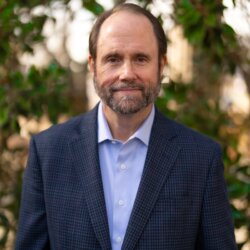

ESPN Monday Night Football commentator Troy Aikman works before an NFL football game between the New Orleans Saints and the Atlanta Falcons in New Orleans, Monday, Oct. 5, 2026. (AP Photo/Tyler Kaufman)
It’s been a tough week to be a Dallas Cowboys quarterback, past or present. Speaking of the past: CBS Sports just named JJ Watt its lead analyst for the NFL on CBS. This codifies what the network has been doing since the beginning of the season. But it is the final card in the deck with regard to former Cowboys quarterback Tony Romo and his relationship with the network. After he was ticketed for driving while intoxicated in Milwaukee last July, the network suspended him and later terminated his contract.
Prior to today’s announcement, many had speculated that Troy Aikman might move to CBS to take the lead analyst role. This came after a very public blow-up between Aikman and his ESPN broadcasting partner, Joe Buck, when the latter signed a new deal. Since Aikman has not been offered a contract beyond this season, he is a free agent and might move to another network.
And of course, there is the present Cowboys quarterback, Dak Prescott, whose team is currently 2–4 and the subject of much frustration among their fans. Such angst is understandable for a team that has not been to the Super Bowl in thirty years.
Now, you’re probably not grieving for any of the above. They are all multimillionaires (Prescott currently makes $60 million a year, for example) and are among the most visible celebrities in sports. Rather, I tell their stories to make the point that if they can face challenges and setbacks, anyone can and will.
This is unsurprising for you, I’m sure, since you can likely name your own examples today. Let’s call them to mind, then see how to use them to experience a joyfully transforming relationship with our Lord.
“Come, let us argue it out, says the Lord”
When I became a Christian, I thought my new faith would answer all my questions and prevent all my fears. If I still had questions about God, this meant that I did not trust him enough. If I still had fears in my life, this meant that my faith was weak.
My reasoning makes sense. If we are truly trusting in an omniscient God, his mind should answer any doubts in ours, or so we might think. If we are depending on an omnipotent Lord, his power should prevent any fears, or so it might seem.
Of course, you won’t be surprised to learn that my questions persisted and my fears remained. Over time, I came to understand that questions about our faith are a vital part of our faith. If Jesus could cry from the cross, “My God, my God, why have you forsaken me?” (Matthew 27:46) while remaining sinless (Hebrews 4:15), I can ask my “whys” as well. I discovered Isaiah 1:18, which, in the Hebrew, is translated literally as “Come, let us argue it out, says the Lord.”
I also learned that fear is an emotion, and emotions are our natural responses to our circumstances and are not, in themselves, sinful. If we face danger, we will instinctively be afraid. The sin comes when we respond to our fear in sinful ways—by trusting in ourselves rather than in God, for example. It’s not “if” but “when” we are afraid, and what we do then that is the question.
The path to “perfect peace”
David is our model here. When he was fleeing from Saul and sought refuge among the Philistines, he became afraid for his life (1 Samuel 21:10–15). He noted at the time, “My enemies trample on me all day long, for many attack me proudly” (Psalm 56: 2).
The key was his response to God: “When I am afraid, I put my trust in you” (v. 3). “I put my trust” translates a Hebrew word meaning “to choose to place our confidence fully and only in” someone or something, in this case, the Lord. This was David’s decision, made when he was in peril for his life.
And it worked. He then testified: “In God, whose word I praise, in God I trust; I shall not be afraid. What can flesh do to me?” (v. 4).
The prophet applied this decision to us all when he prayed, “You will keep him in perfect peace whose mind is stayed on you, because he trusts in you” (Isaiah 26:3). Such a person “is not afraid of bad news; his heart is firm, trusting in the Lᴏʀᴅ” (Psalm 112:7). As David testified, “The Lᴏʀᴅ is my light and my salvation; whom shall I fear? The Lᴏʀᴅ is the stronghold of my life; of whom shall I be afraid” (Psalm 27:1).
Finding “streams in the desert”
So name your fears and define your doubts, then bring them to your Father. Ask him for the courage and wisdom you need. Expect to need him every day, which is why Jesus taught us to pray, “Give us this day our daily bread” (Matthew 6:11).
If we leverage our fears and doubts as opportunities to draw closer to our Lord, we discover that even in “the valley of the shadow of death,” he is with us and we “fear no evil” (Psalm 23:4). The hardest days in our lives can be the best days for our souls. What the world means for evil, God means for good (cf. Genesis 50:20).
And we find “streams in the desert” (Isaiah 35:6), wherever the desert is found.













 Search