




A 3D render of a human brain in an ice cube, representing Neurocryopreservation: a high-tech attempt to "pause" biological time and preserve the mind for the future. By Love Employee/stock.adobe.com
In 2018, tech billionaire Sam Altman became the twenty-fifth person to arrange for his brain to be frozen when he dies. The idea is that the brain would be preserved so as to retain neural information for future revival.
One approach is to remove blood from the patient’s body and replace it with a solution of cryoprotectant chemicals that act like biological antifreeze. Another is to attempt brain emulation, which involves creating a high-resolution digital replica of the brain. This replica could perhaps then be used to recreate the person’s memories and even to become conscious.
Here’s the problem: to this point, no one who arranges for this procedure will know it worked until it is too late to change their mind. This is because no one has died and come back to life in this manner.
If someone did, that would be different, of course. Those who knew them would likely want others to know and benefit from their story. As business author Michael LeBoeuf famously noted, “A satisfied customer is the best business strategy of all.”
How is this strategy relevant to our risen Lord and our kingdom service today?
I am now the opposite of a “raging fan”
When my wife and I moved to our current home more than three years ago, fiber internet service was not available in our area, so we signed up with a local cable provider. When a different company made fiber available last week, we switched. I thought connecting their fiber to our existing technology would be our biggest problem, but I was emphatically wrong.
When I called the original provider to cancel their internet service, the agent hung up, called back ten minutes later, hung up again, and then never called back. I started over, and this agent made me sit through twenty-five minutes of sales pitches and attempts to change my mind, then forwarded me to a supervisor who made me wait another ten minutes before finally canceling the account. I will also be required to pay for their service for another twenty-three days until their billing cycle is completed.
None of this is information you needed to read, but I’m actually writing to do more than vent. For as long as I can foresee, if someone asks me about my experience with our original provider, my response will be less than encouraging. Their handling of my account cancellation turned me into the opposite of a “raging fan,” whatever that person might be called.
However, no one at their company, apart from the three agents with whom I spoke, will likely know of my frustration. As a result, I will be their critic for life, and there’s nothing I can think of that they can do to remedy this situation. I do not carry malice toward them, but I would not want friends or family members to have my experience.
The last thing lost people need
I say all of that to ask this question: Have I alienated anyone from Christ by the way I (mis)represented him to them? People understandably judge Christ by Christians, just as we judge Islam by Muslims and Judaism by Jews. And one bad experience can undo years of conscientious and consistent witness.
What’s more, I was predisposed to be favorable toward the internet provider whose service I canceled, since it was not their fault that they didn’t offer fiber. But many lost people are predisposed against the repentance and submission of life that is central to Christianity. They aren’t looking for something to do on Sunday mornings. To their mind, giving up a casual morning to dress up, sit in a pew, and listen to a sermon is the opposite of enticing.
I know because, before I met Jesus, I felt the same way.
As a result, many skeptics are programmed with excuses that excuse their skepticism. “The church is full of hypocrites,” they might say, though if you asked them for examples, they would likely stammer. “The Bible is filled with contradictions,” they’ll allege, though, again, if you ask them for examples, they won’t have any. “Science disproves the Bible” is another claim that its advocates cannot prove because it is unprovable.
Not to mention the spiritual warfare that is going on every moment of every day. The Bible says that Satan “prowls around like a roaring lion, seeking someone to devour” (1 Peter 5:8). As “a liar and the father of lies” (John 8:44), he “disguises himself as an angel of light” (2 Corinthians 11:14) and “has blinded the minds of the unbelievers, to keep them from seeing the light of the gospel of the glory of Christ, who is the image of God” (2 Corinthians 4:4).
In a postmodern, post-Christian, highly secularized culture, the last thing lost people need is a failed witness from believers.
Billy Graham’s greatest fear
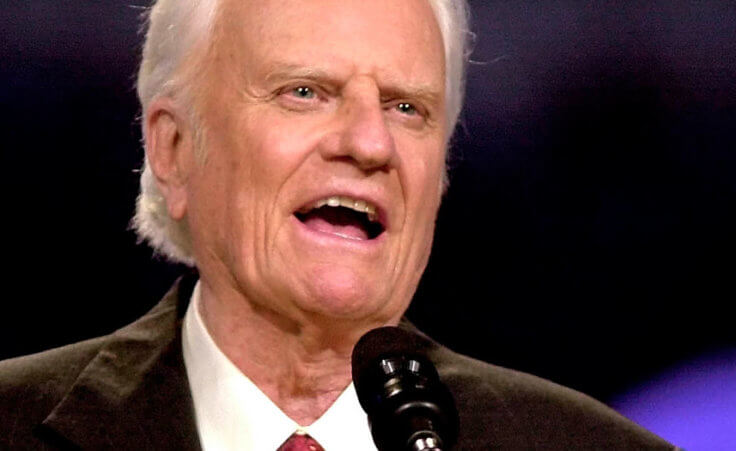
In a 1991 interview, Billy Graham said, “My greatest fear is that I’ll do something that will bring disrepute on the gospel of Christ before I go.” In my mind, this fear is akin to the fear that we have committed the so-called “unpardonable sin.”
The only sin God cannot forgive is the sin of rejecting the Holy Spirit’s conviction of sin and call to faith (cf. Matthew 12:31–32). It is unforgivable, not because God rejects us, but because we reject his forgiveness. As a result, I always tell people who worry that they have committed this sin: “If you think you have, you haven’t.” If you’re afraid of rejecting Jesus, you haven’t rejected Jesus.
Billy Graham’s fear is like that: so long as our “greatest fear” is that we’ll “do something that will bring disrepute on the gospel of Christ,” we are unlikely to do so. As long as we are afraid of sinning in a way that hinders the faith of others, we are motivated not to sin in such a way.
If “knowing God is your single greatest privilege as a Christian,” as theologian Sinclair Ferguson suggested, helping others know him must be our second-greatest privilege. If we make it our life purpose to know Jesus and make him known, this not only simplifies our lives—it forbids all that intrudes on this purpose.
We cannot lead people where we are unwilling to go or give what we do not have. It is far easier to lead people to Jesus if we are walking with him ourselves. We are much more likely to make “raging fans” for our Lord if we are “raging fans” of our Lord.
The famed church historian Kenneth Latourette observed,
The chief agents in the expansion of Christianity appear not to have been those who made it a profession or a major part of their occupation, but men and women who earned their livelihood in some purely secular manner and spoke of their faith to those whom they met in this natural fashion.
Let’s be such “chief agents in the expansion of Christianity” today, to the glory of God.













 Search